
Cat House
The corner terrace is located in the old residential enclave of Salak South, which seemed like an odd choice for a young couple who had worked overseas for last two decades. But if one were to consider the proximity to neighbourhood shops and work, and throw in the nostalgia of having grown up in this area - then it seems like a perfectly sensible idea. Especially if one appreciates a locality with history and local colour. It is probably part of the movement to re-inhabit the city, to return to it and fill in the gaps left by the departed (to a better place or to the suburban sprawl).
The existing house was one we had all visited before, during our Chinese New Year visits to often-forgotten aunties in a difficult-to-find maze of a housing estate. It was a single-story terrace with a 6.7 m frontage, divided into two sections to accommodate the living room and the master bedroom, both accessible from the front of the house. Following the living room was another bedroom that gradually transformed into a dining space with the help of a room divider/shelf. Adjacent to the kitchen and toilets, there was a third room that faced the back lane. The house featured two compartments for toilets and bathrooms, a testament to its design catering to a larger number of occupants. This type of housing and planning was part of the early wave of ‘taman’ development, which aimed to accommodate a newly prosperous Malaysia.
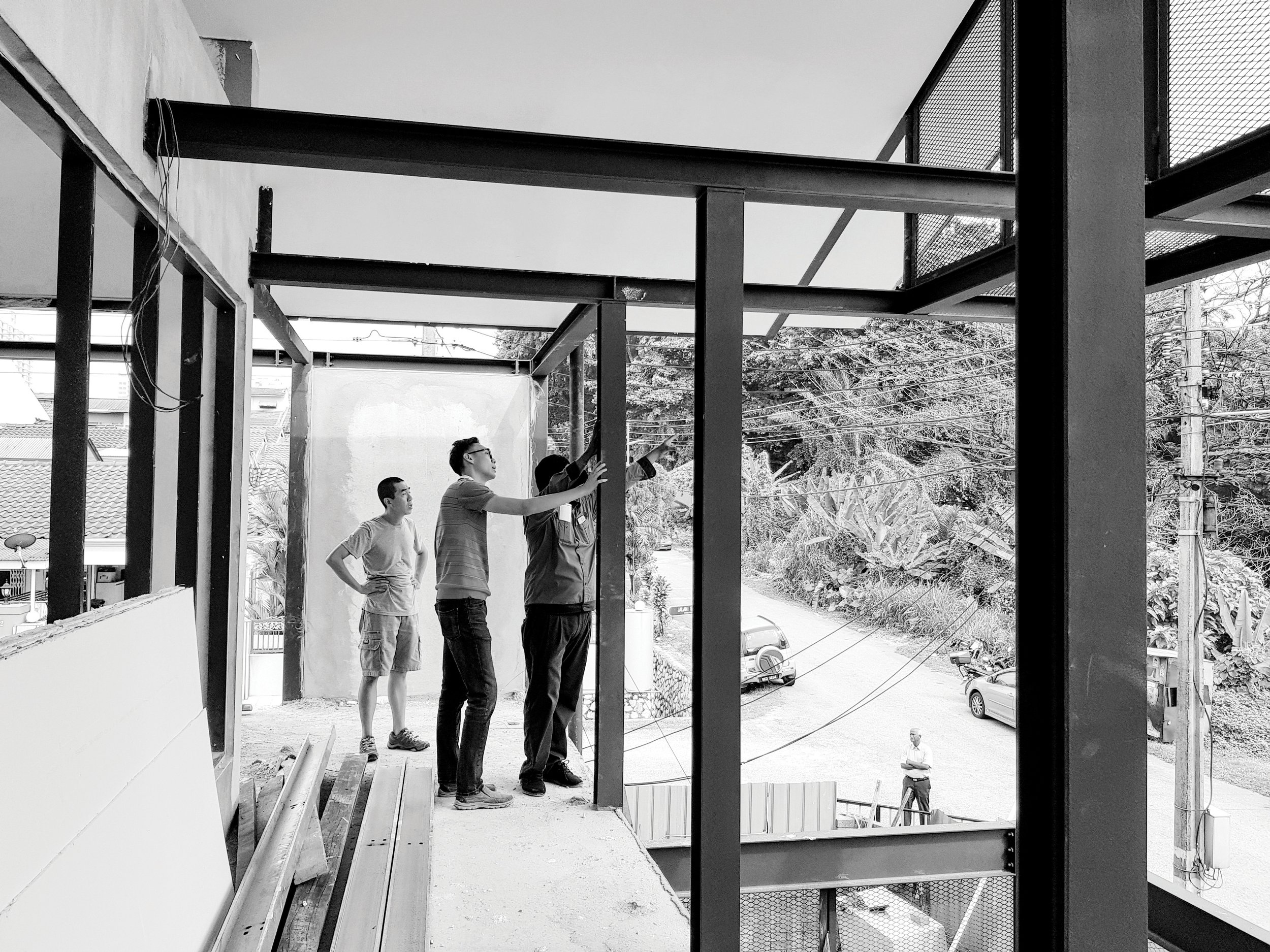
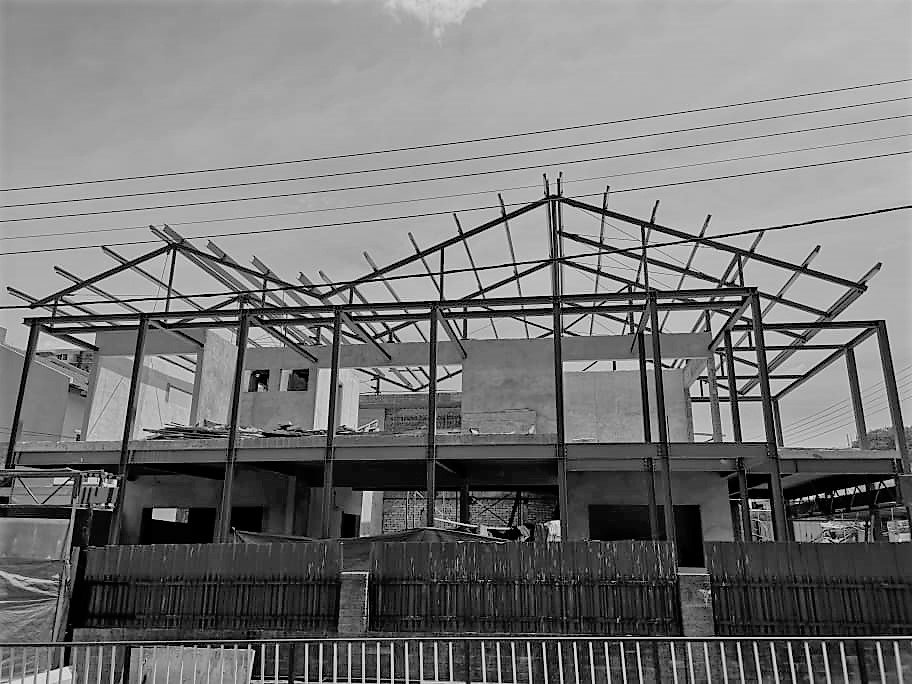
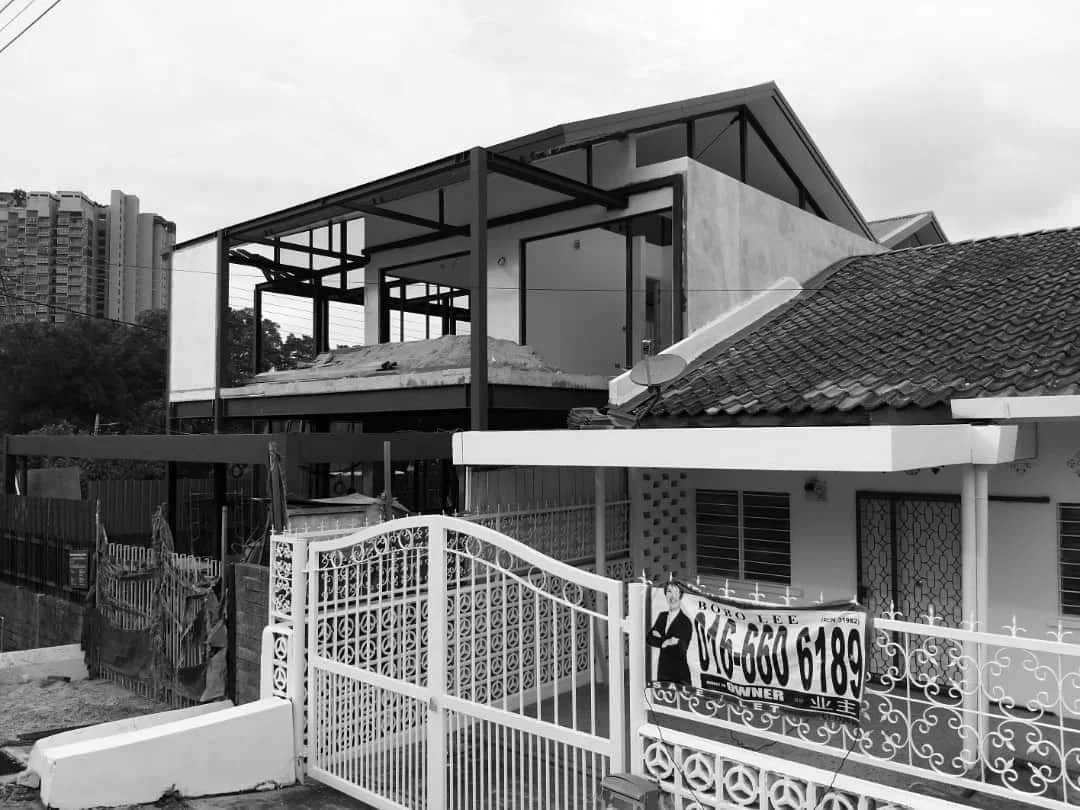
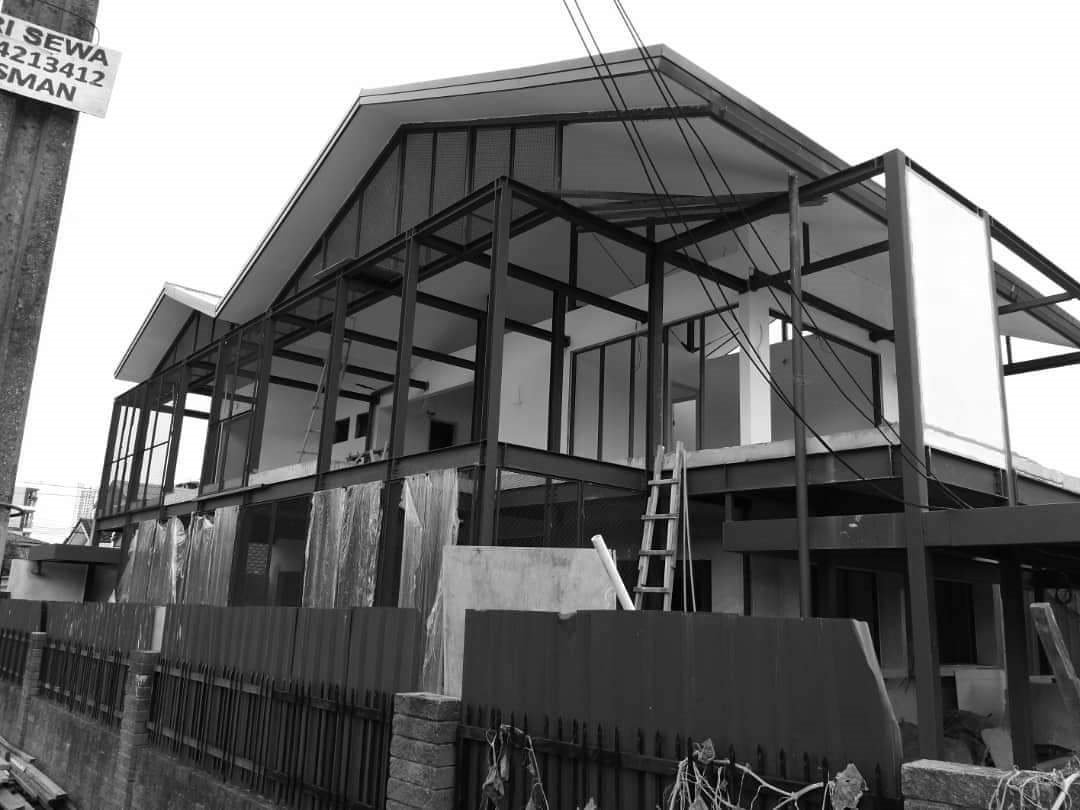
The brief was to design a house for a dozen cats, several dogs, and three humans. The primary focus was on creating different zones for the feline and canine residents, ensuring proper segregation. Additionally, the design involved extending the floor area of the existing house by adding another floor. To achieve this, we utilized steel primarily to reduce the overall construction’s structural weight.
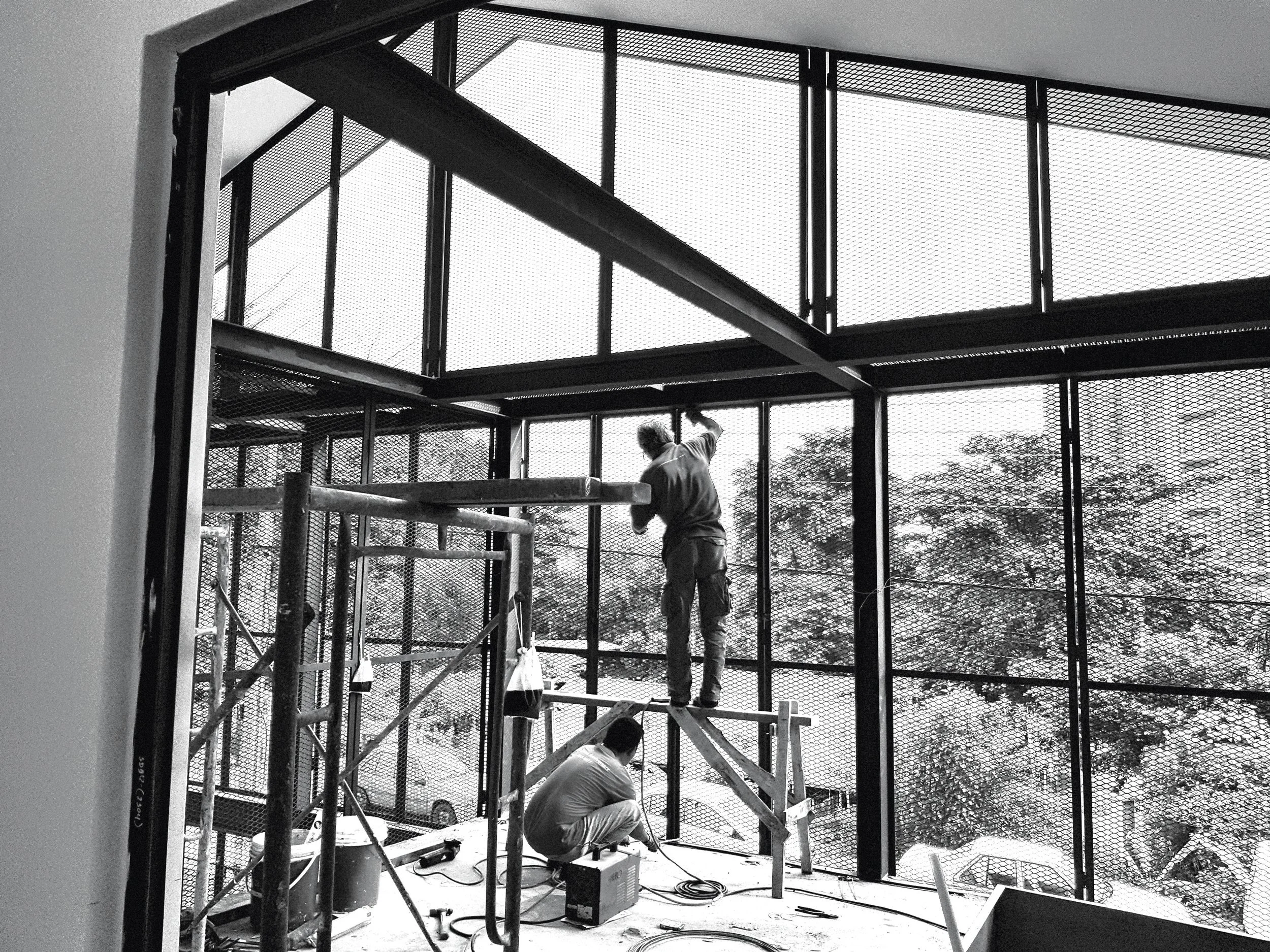
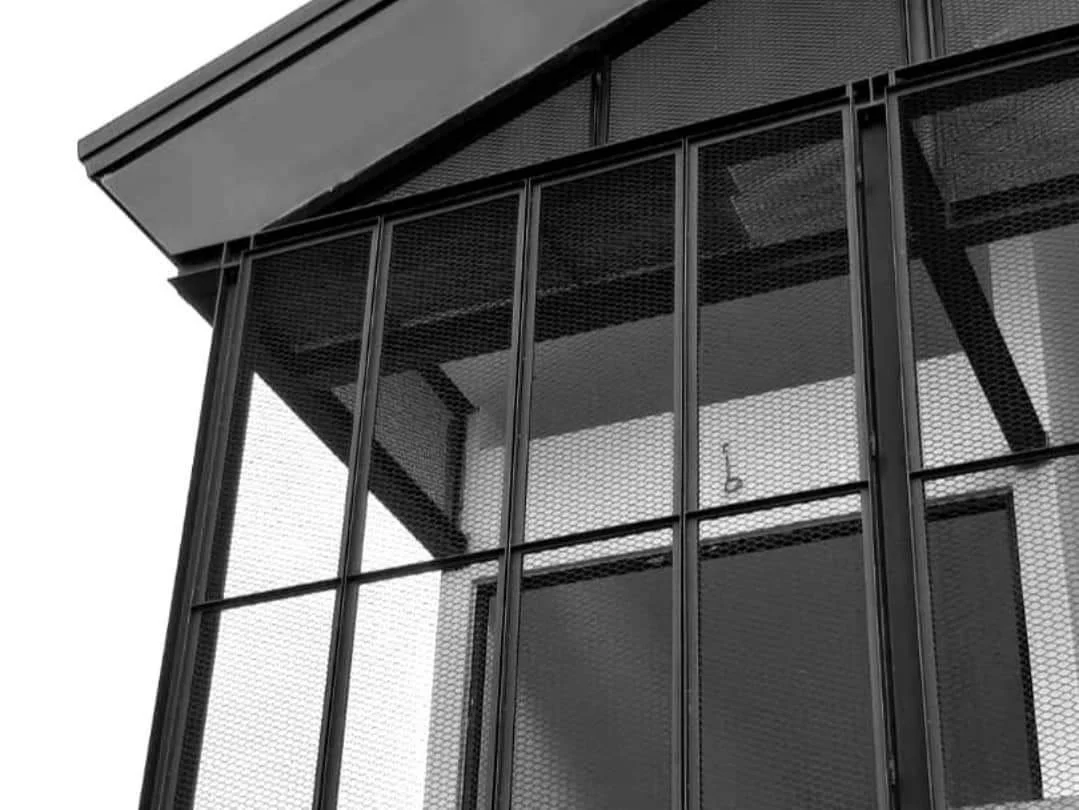
There was an understanding on creating a house that would be easy to clean and maintain, while also ensuring good ventilation due to the significant number of cats (18) and dogs (2). To achieve this, we designed the external enclosure using a light steel frame with expanded metal mesh. This not only provided a sense of lightness and airiness but also offered visibility without intruding on the privacy of the home. For the human owners’ spaces, we opted for more traditional construction, using brick and plaster.
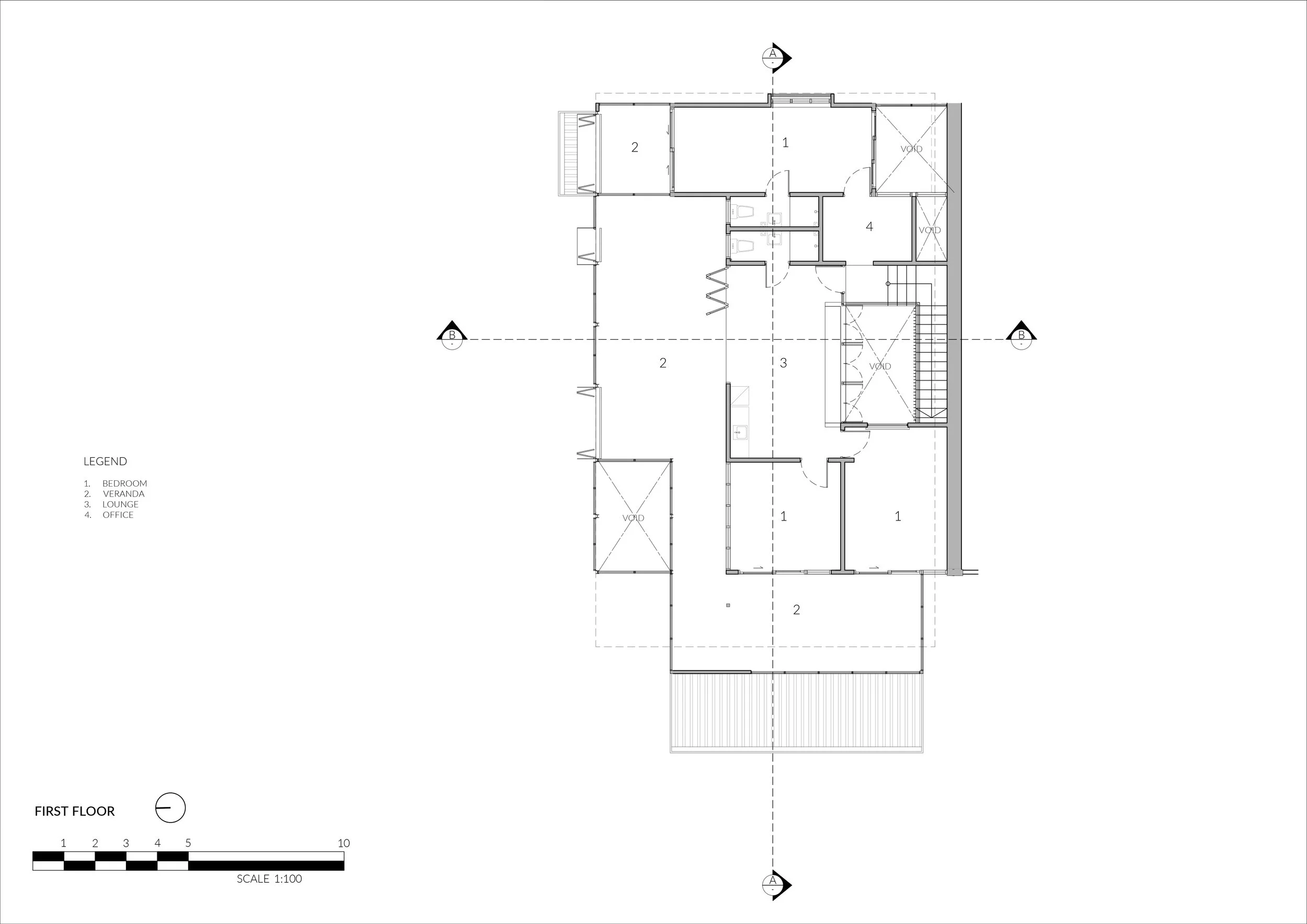
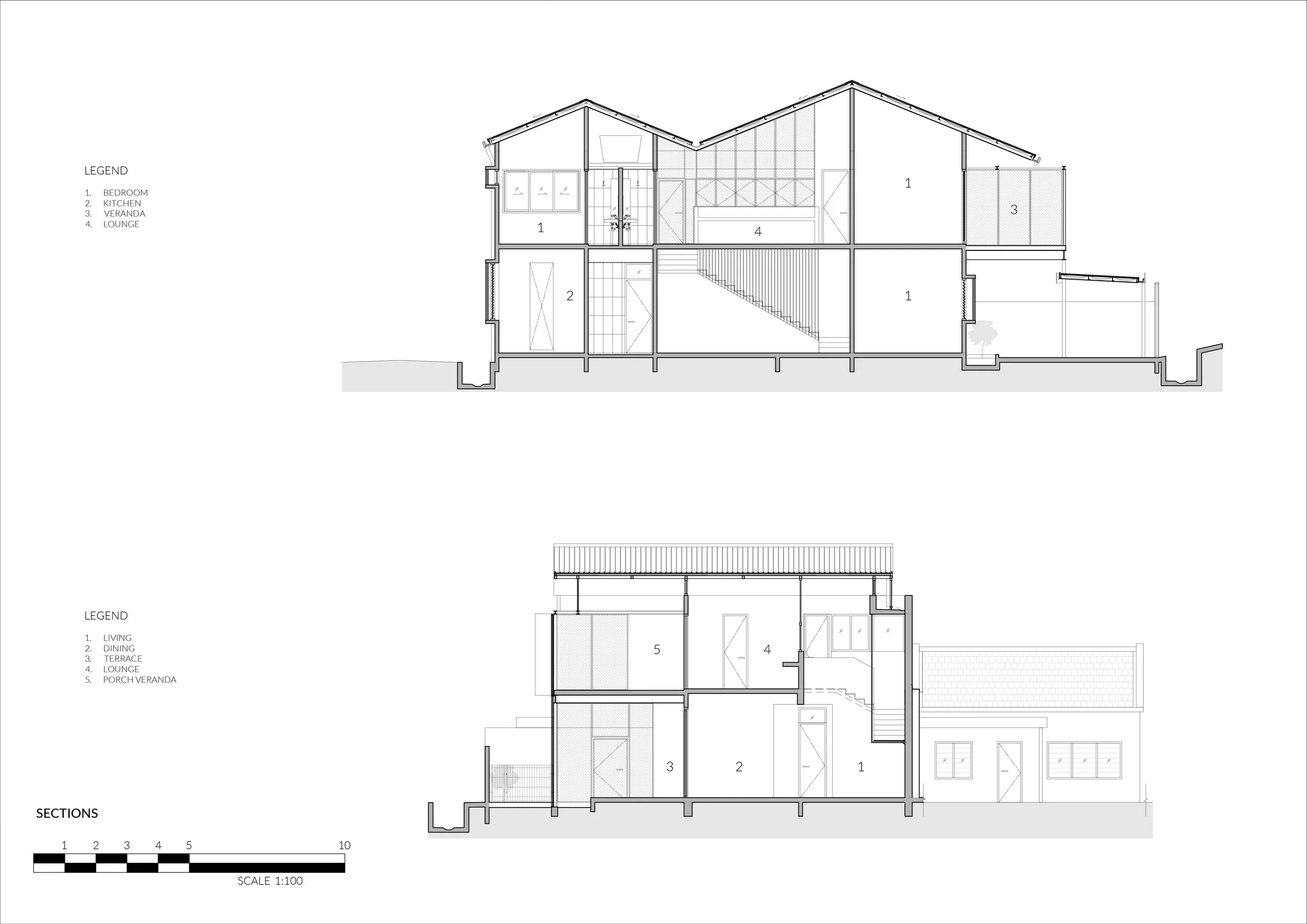
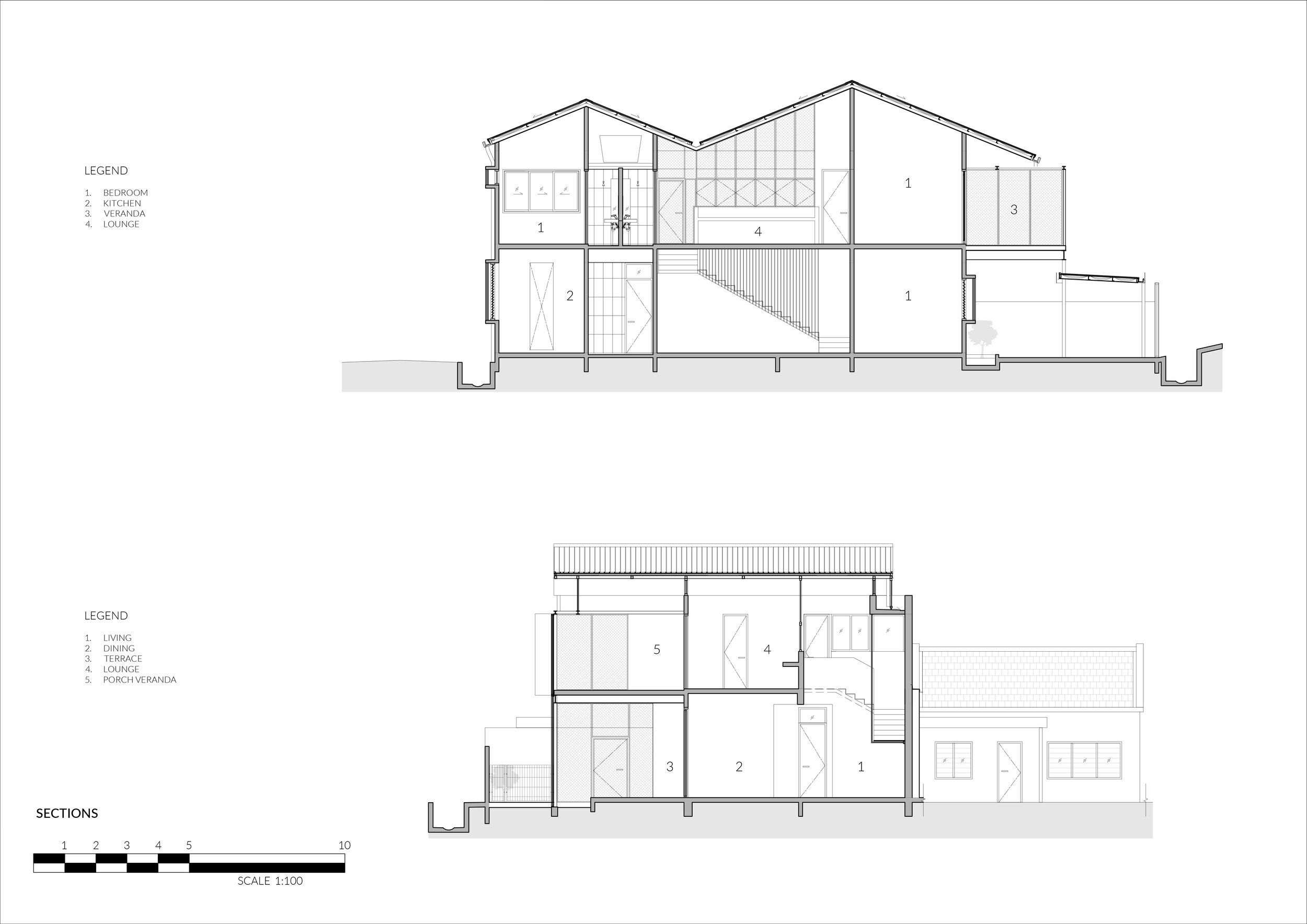
We changed the entrance to the house from the front to the center of the house, entering through a covered landscaped court. This central entrance allowed us to place the habitable rooms at the four corners of the floor plan, offering both views and privacy. The heart of the house revolves around the living and dining space, serving as an indoor area with an outdoor component—the screened terrace extending into the garden when the steel mesh doors are opened. The kitchen and toilet are retained in their original position with the new toilets stacked on top of the existing ones to ease piping connections. A small courtyard is carved out of the building envelope next to the kitchen, to provide cross ventilation, and house water tanks and pumps.
The upstairs floor plan is almost identical to the ground floor, with one difference where the kitchen is replaced by a studio and work space. It overlooks the courtyard which helps to ventilate the space and provides a secondary source of natural light. The family space upstairs is mostly for the feline family, it is where they are housed and fed, sleep and play, etc.
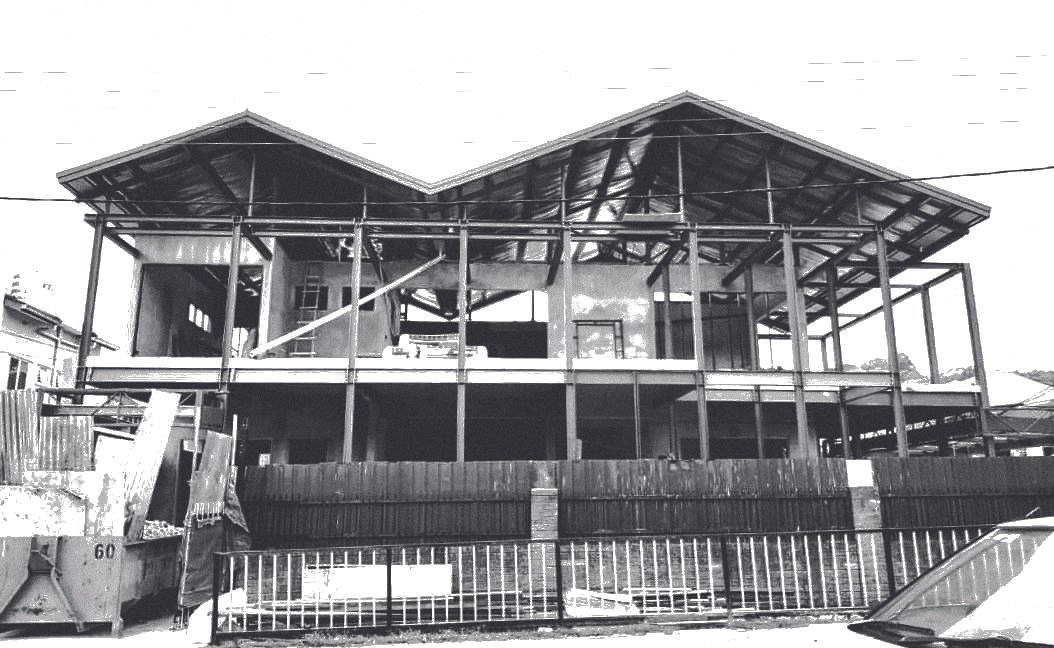
We initially had a more dynamic architectural outlook for the house – but the local authorities required us to emulate the existing pitched roof-scape of the neighbourhood. This explains the roof-form of the new house; the double gables running along the length of the house. We used this to our great advantage in creating tall vaulted ceilings for the upstairs rooms, adding again to the overall lightness of the house.
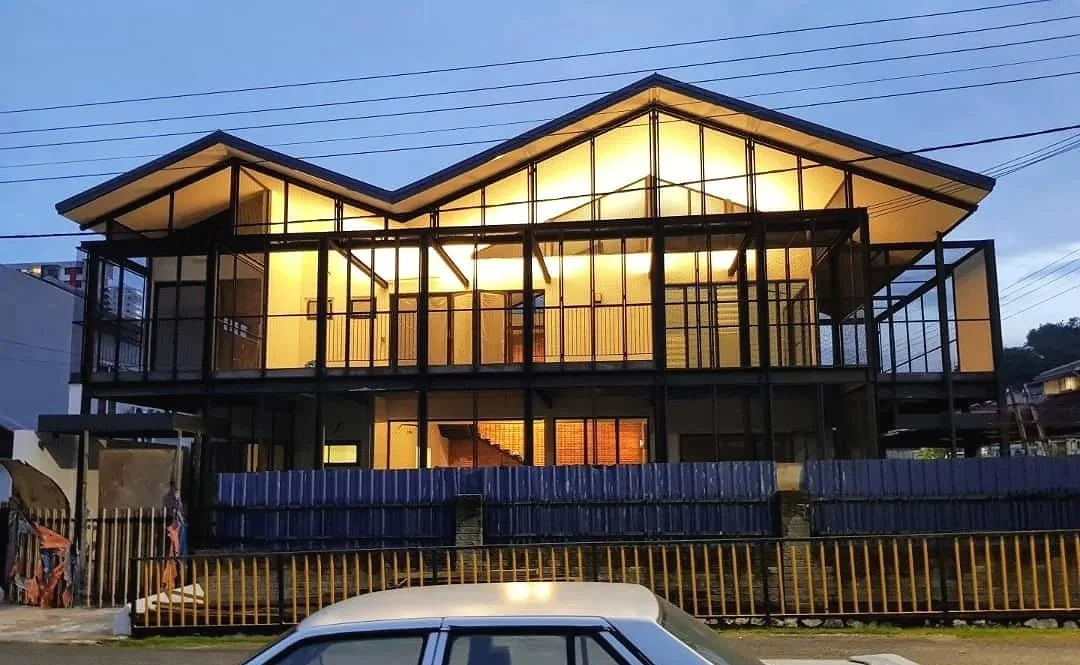
A steel frame establishes order, supporting a light, permeable envelope
The construction budget was very small despite the relatively large floor areas; the floor finish is cement render and the soffits of concrete slabs are left unfinished. There are small areas of extravagance such as the suspended steel stairs (easier to clean under) against a backdrop of bare red brick (we retained the existing party wall and built an independent structure front of it). Otherwise the house is an exercise in restraint, using only 5 major materials – concrete, steel, aluminium and glass, brick. The old roof tiles were re-constructed as the front gate post.
The owners moved in at the end of 2019, and appear to have settled into their routine. The cats live upstairs separated by a steel mesh screen from the dogs who live downstairs; the humans live in the rooms when they are allowed (by the cats).
Text by the architect
PROJECT GALLERY
-
Architect : MinWee Architect
Client : Mike and Winnie
Area : 106.86 m²
Project Location : Kuala Lumpur | Malaysia
Year : 2019 -
C&S Engineer : CJ Consult Sdn Bhd
Contractor : Chew Heng Yip
Design Team : Wee Hii Min | Lee Peng Hui | Ileana Quiroz | Sean Wee -
—
Share this project