
SPARK Gallery
SPARK Gallery is a revamped project that reimagines a developer’s office and event space through the lens of material continuity, spatial openness, and multifunctionality — using a minimal yet expressive palette of terracotta and metal. Within a compact footprint, the design creates a flexible, visually engaging environment that shifts fluidly between workplace and exhibition.
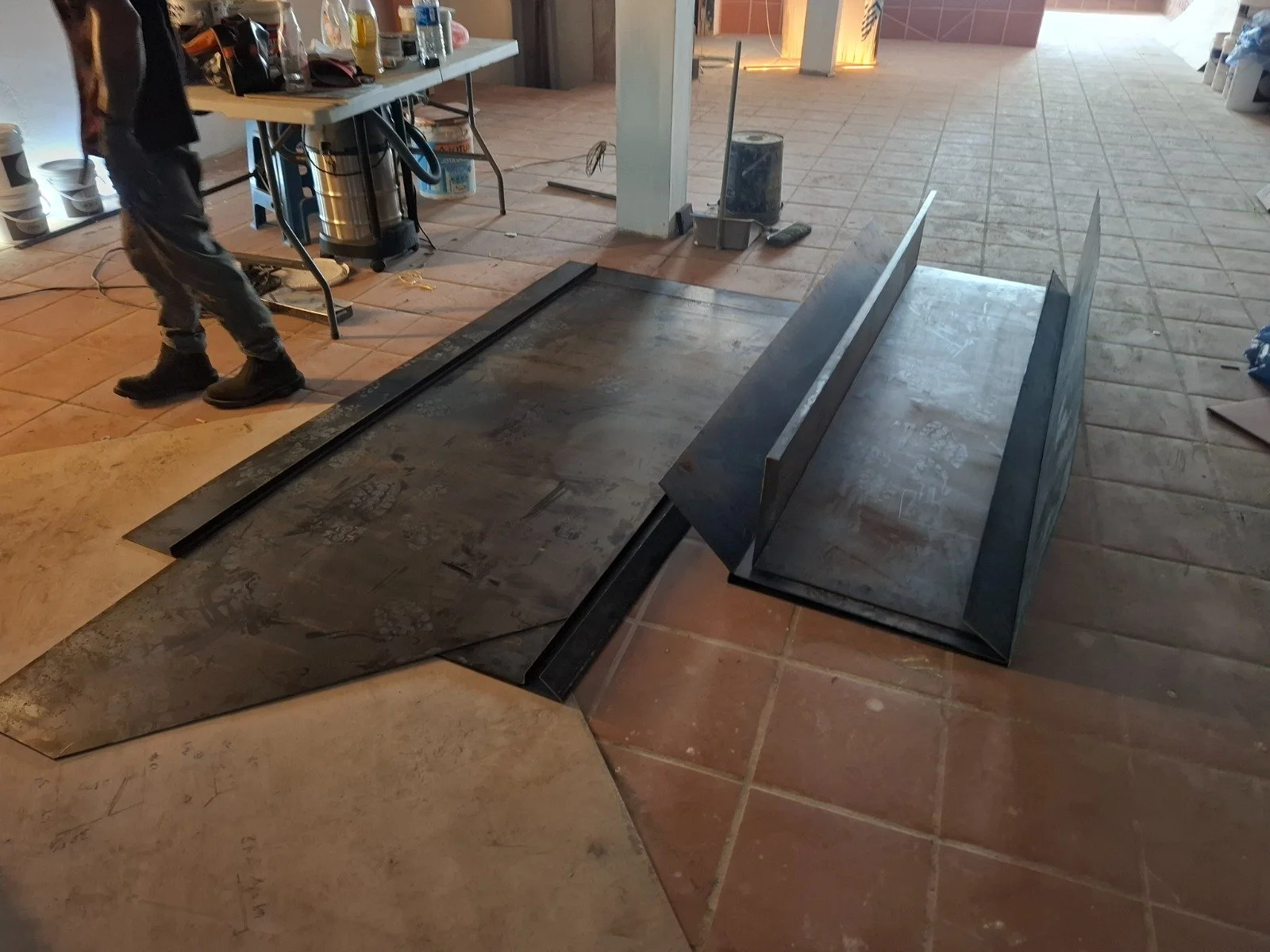
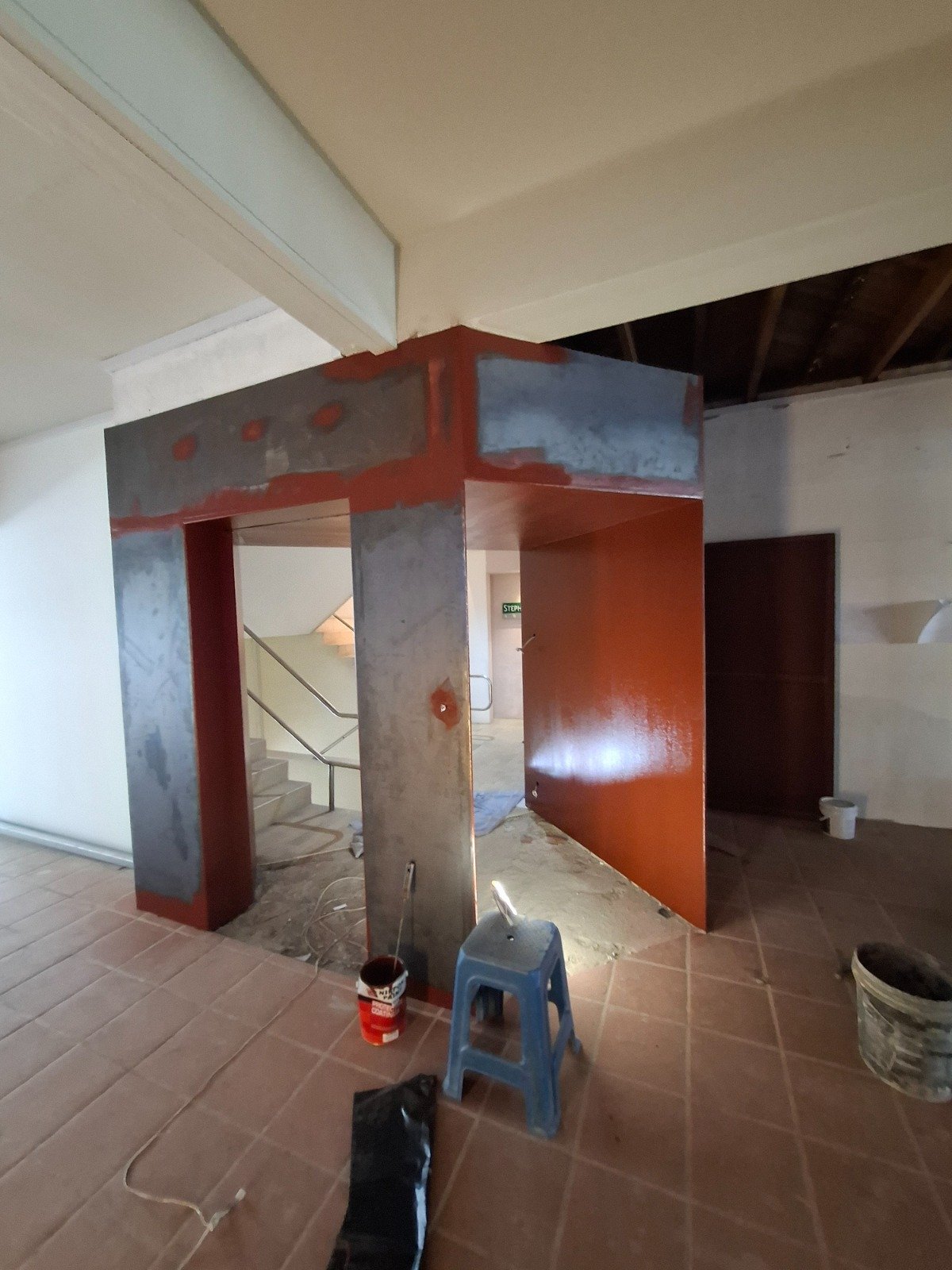
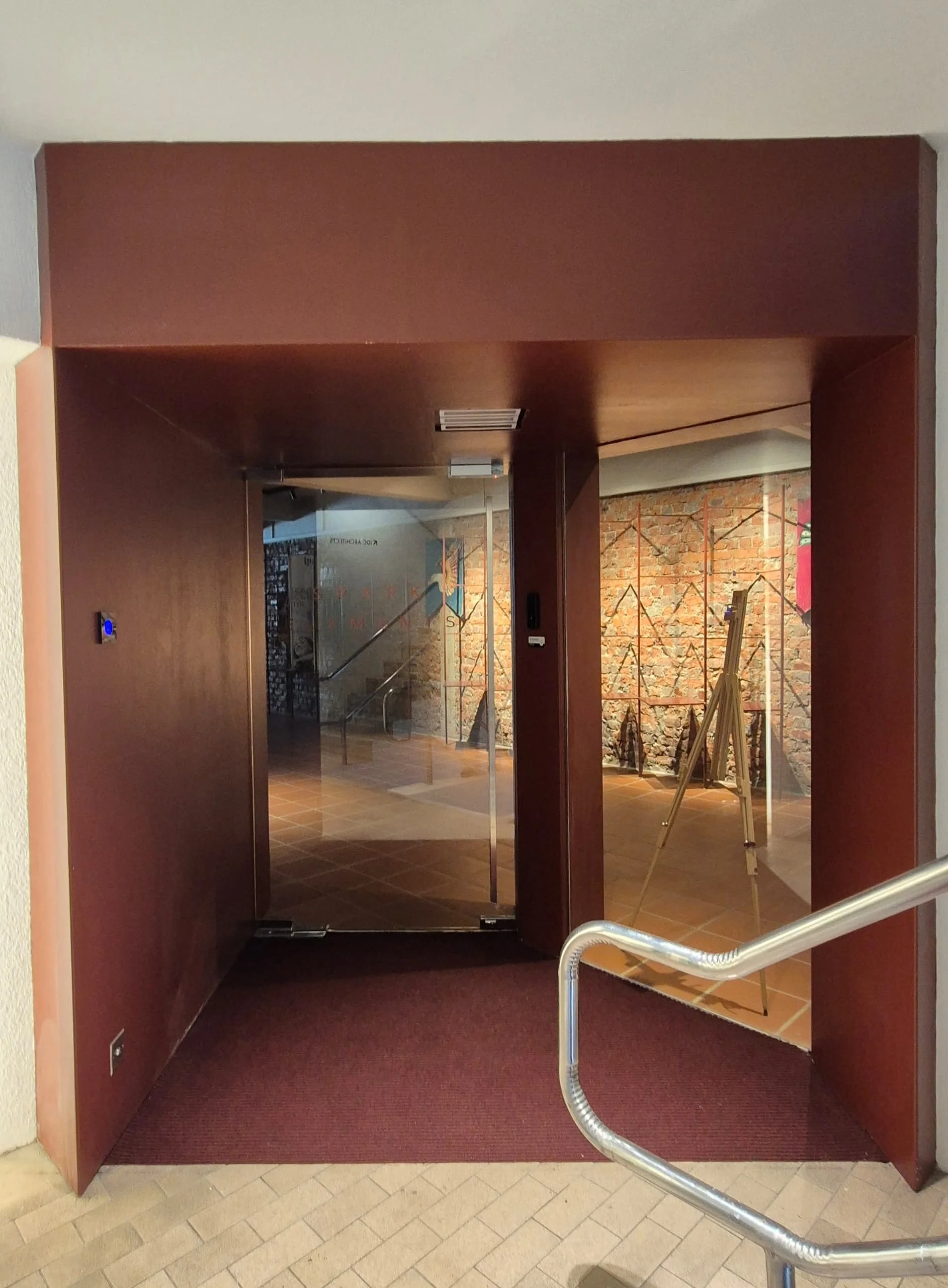
Rather than a typical solid door, the entrance is conceived as an origami-like threshold made entirely of custom-folded 3mm metal sheets, finished in deep maroon marine-grade paint and tempered glass. This bold gesture sets the tone for the spatial language inside. Oriented 45 degrees toward the heart of the gallery and aligned with the warmth of the terracotta palette, the entry visually integrates with the interior despite the contrasting material. It softens the transition between outside and in, while offering a first glimpse of the artwork positioned on the metal framework that defines the space. More than a doorway, it becomes a moment of anticipation and spatial reveal.
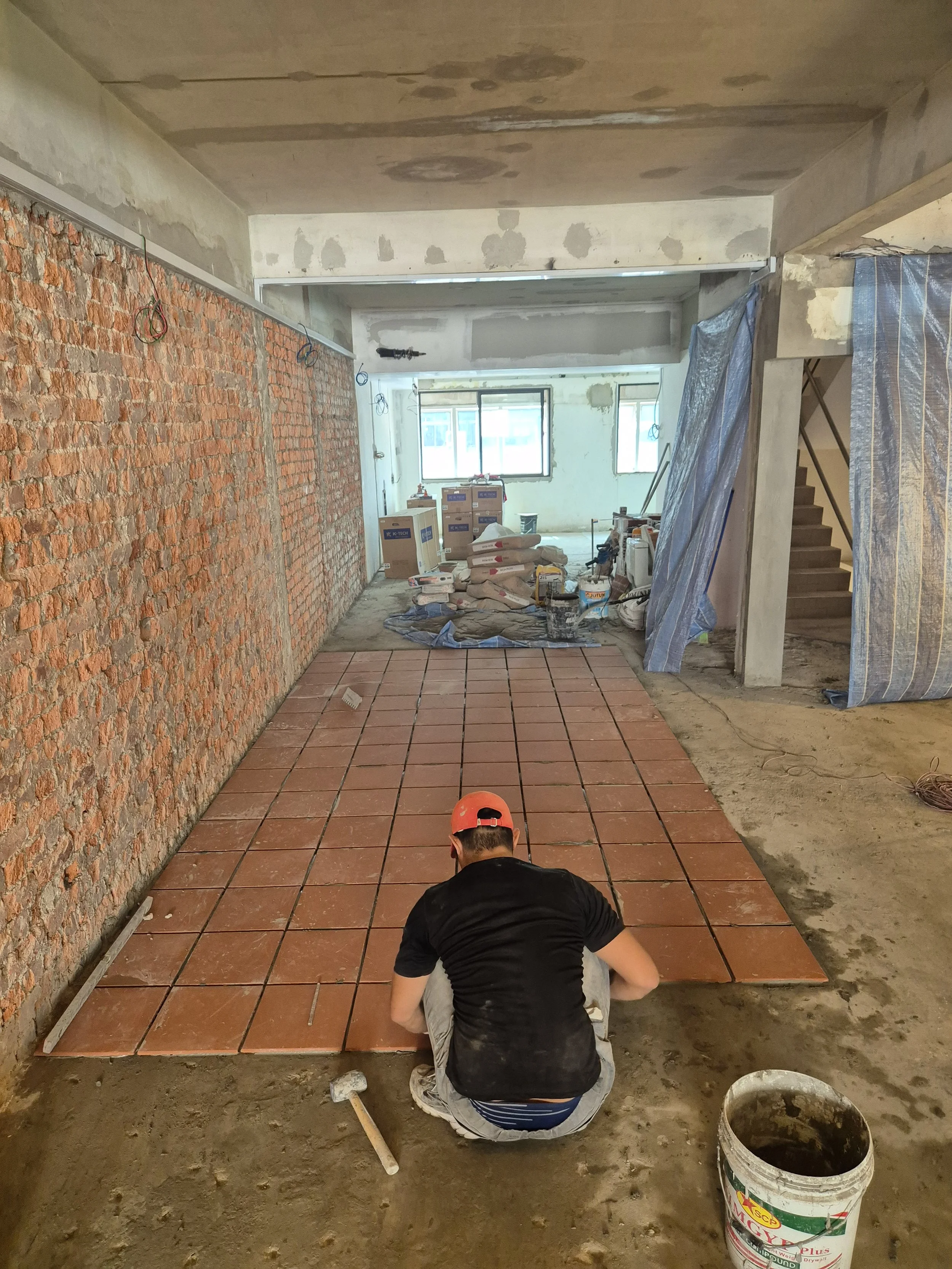
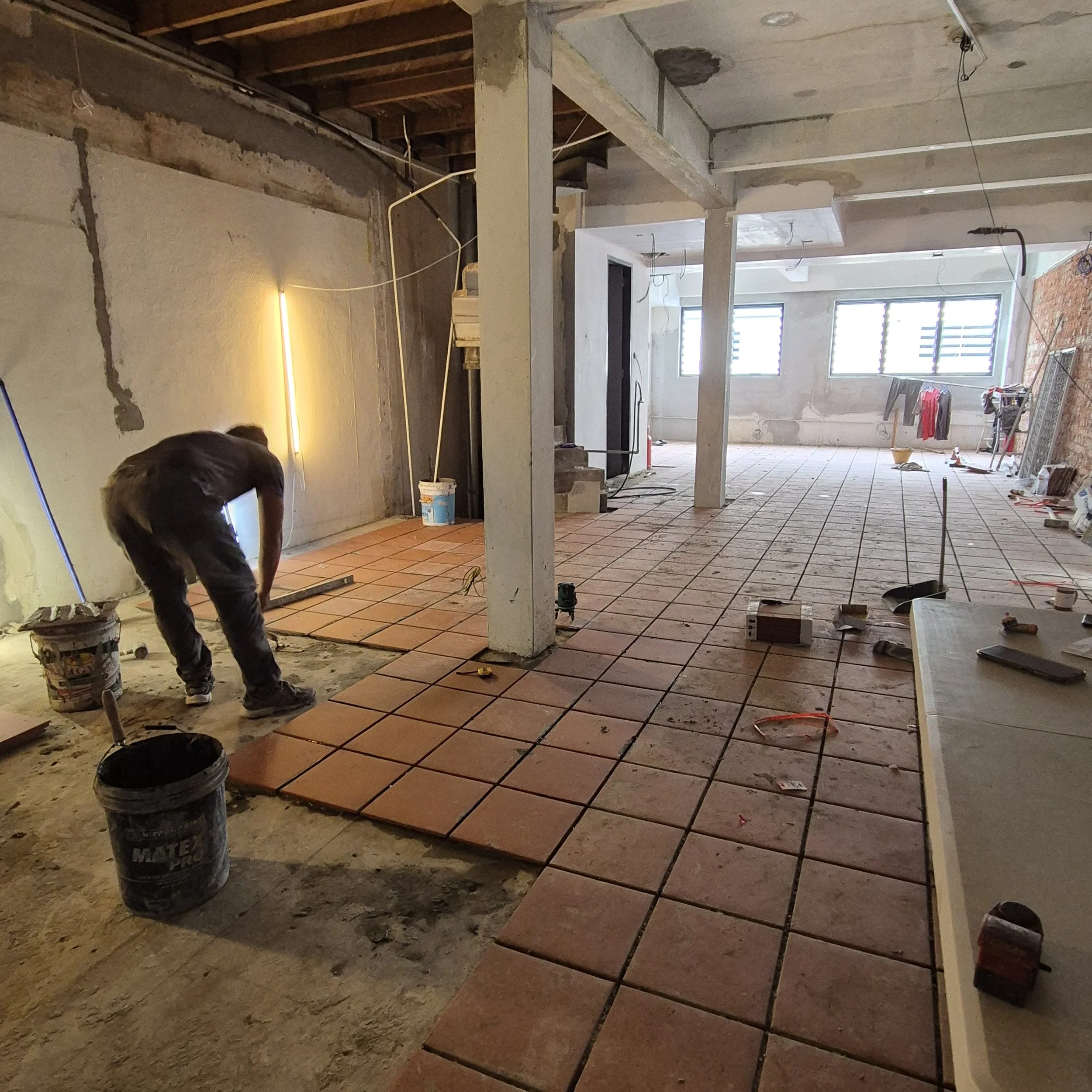
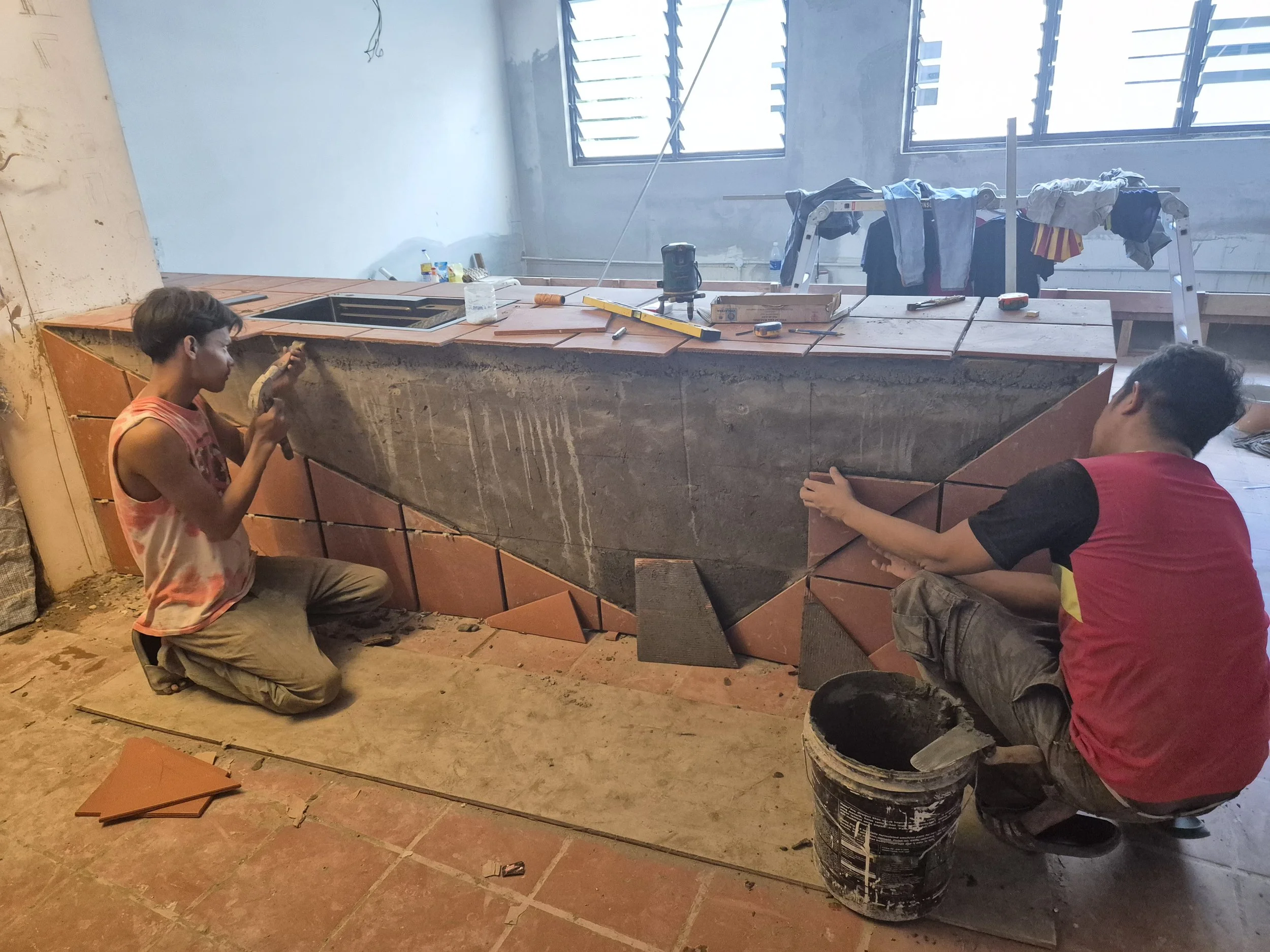
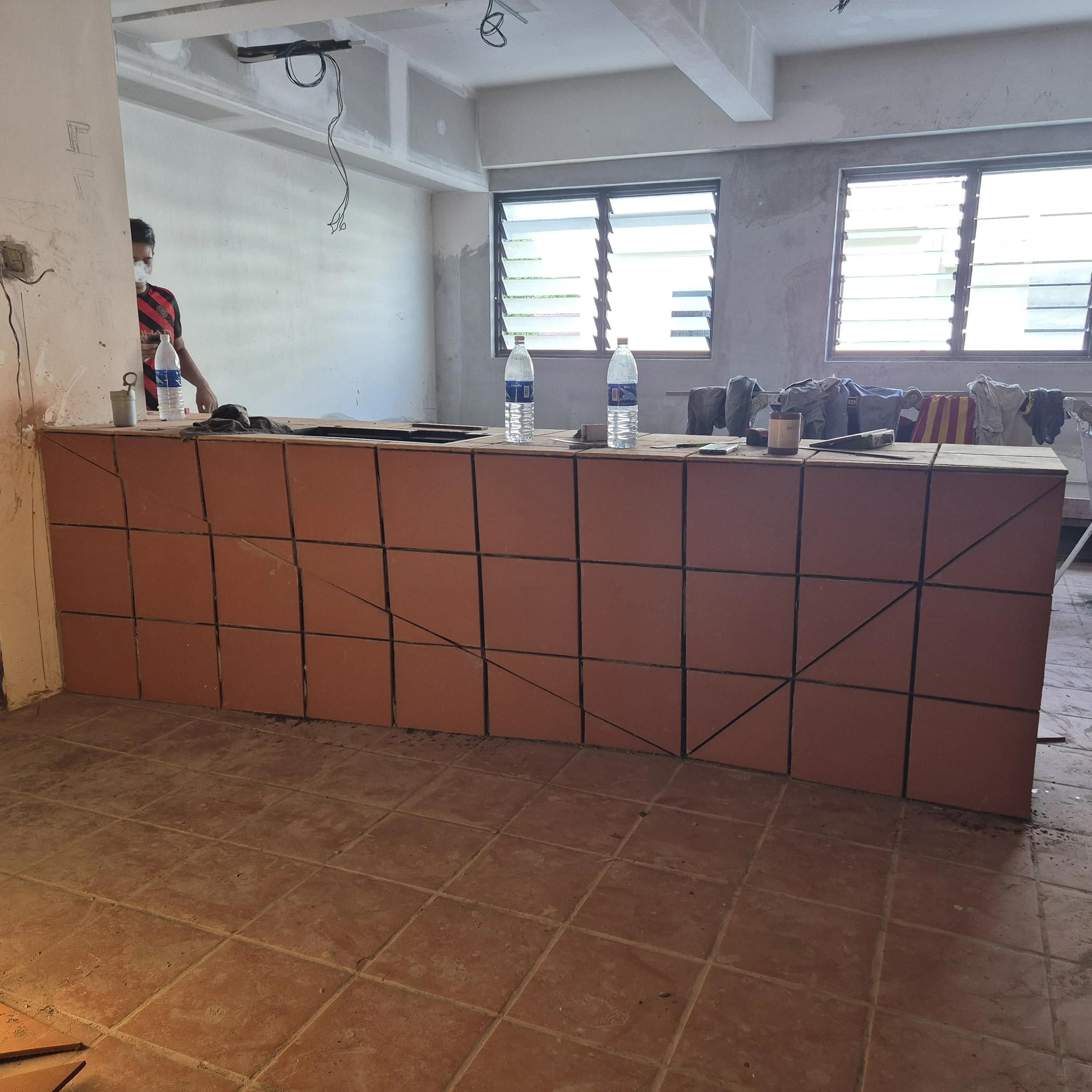
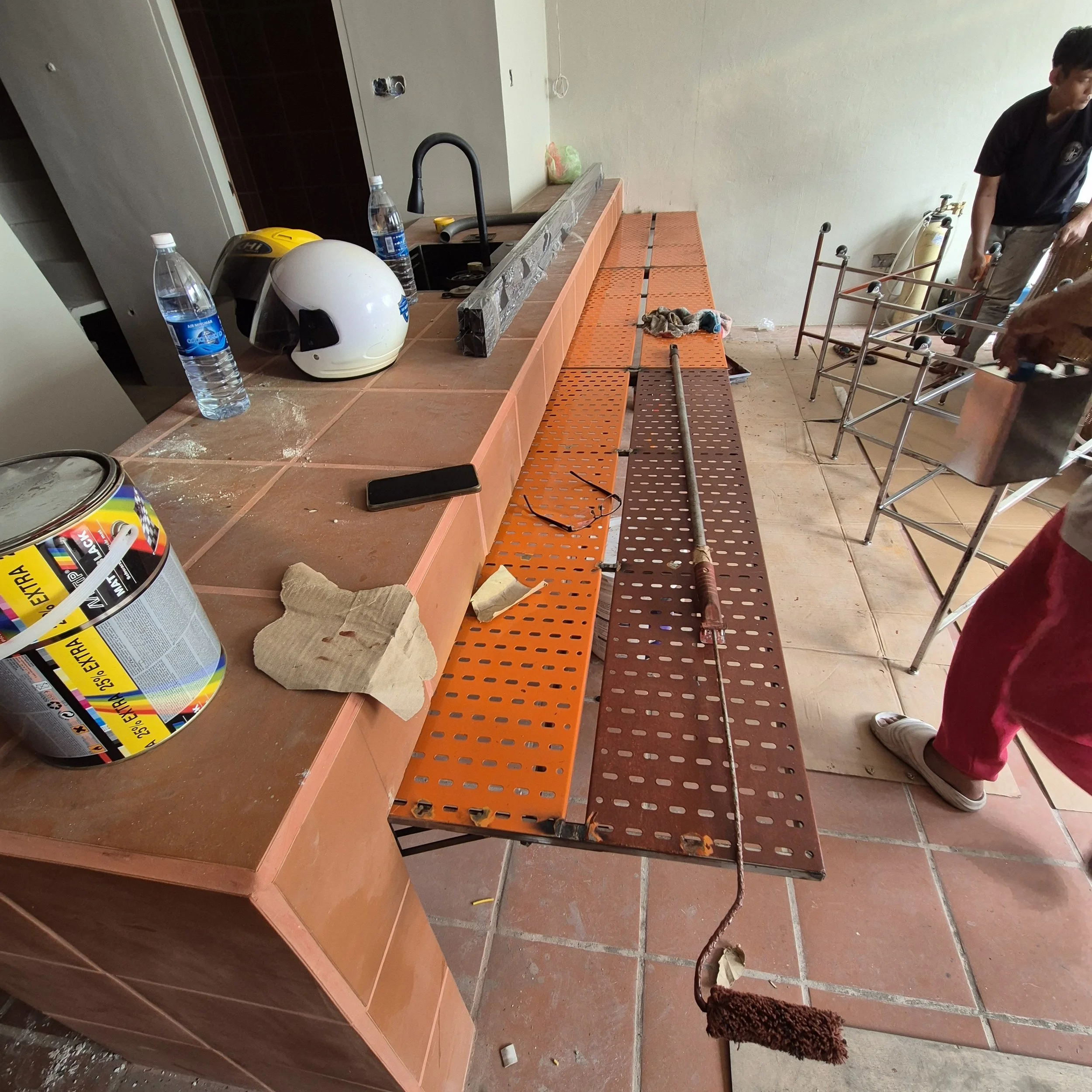
Terracotta tiles act as both structure and surface, grounding the space in a tone that feels earthy yet contemporary. In the pantry, they extend from floor to bench, integrating a planter that shades the morning sun while adding a biophilic touch. The island rises monolithically from the same tiles, with a recessed sink section for comfort, maintaining its sculptural presence.
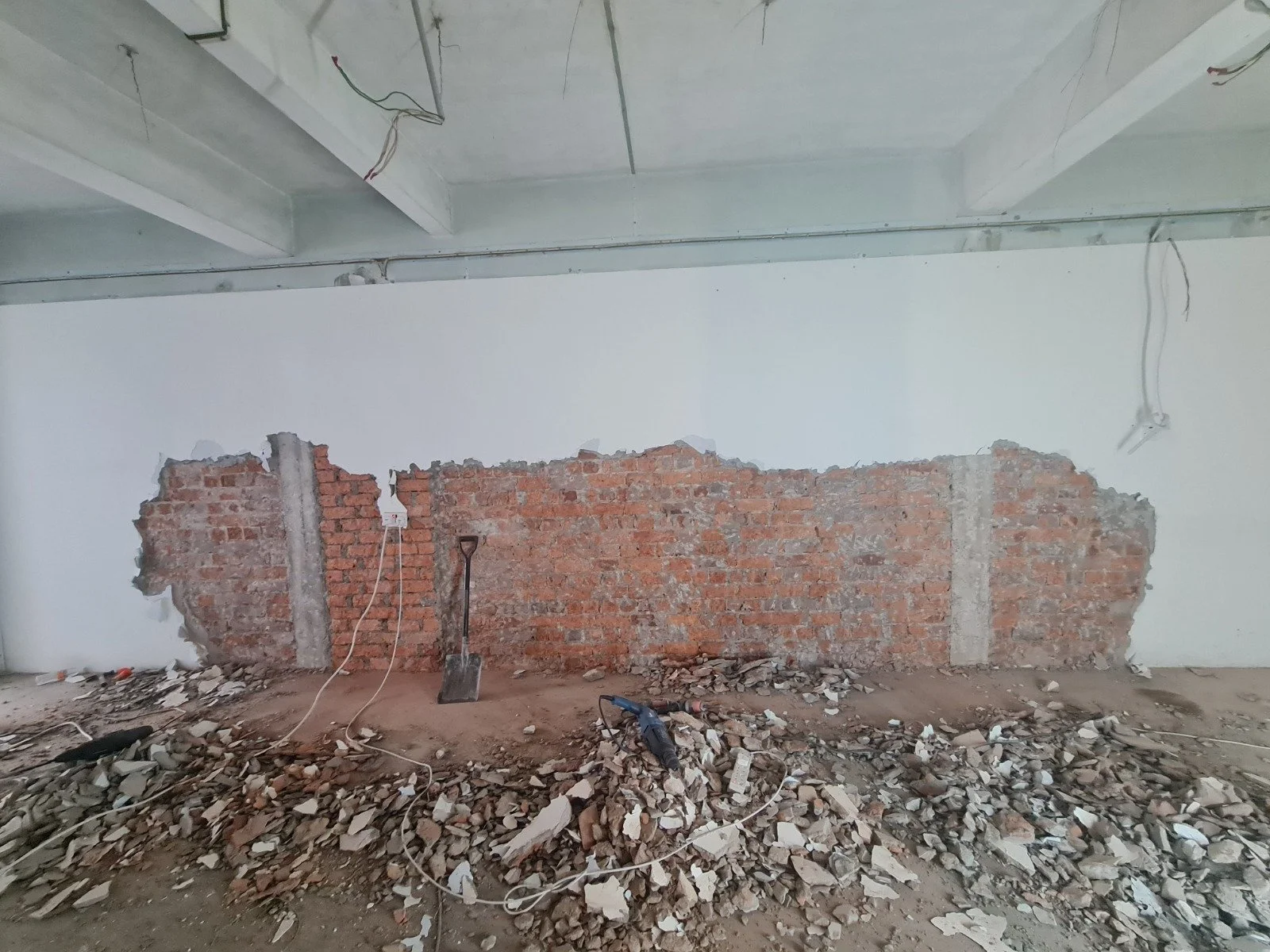
On one side of the gallery, an existing plastered brick wall is deliberately exposed to celebrate the raw elements of the original structure. The plaster was removed to reveal a textured, weathered surface — a tactile reference to the upstairs office's earlier design. Workers carefully chipped away at the rendered surface, revealing the original craftsmanship of the brickwork. This raw exposure forms a dialogue with the newer elements of the gallery — smooth walls, clean lines, and refined finishes.
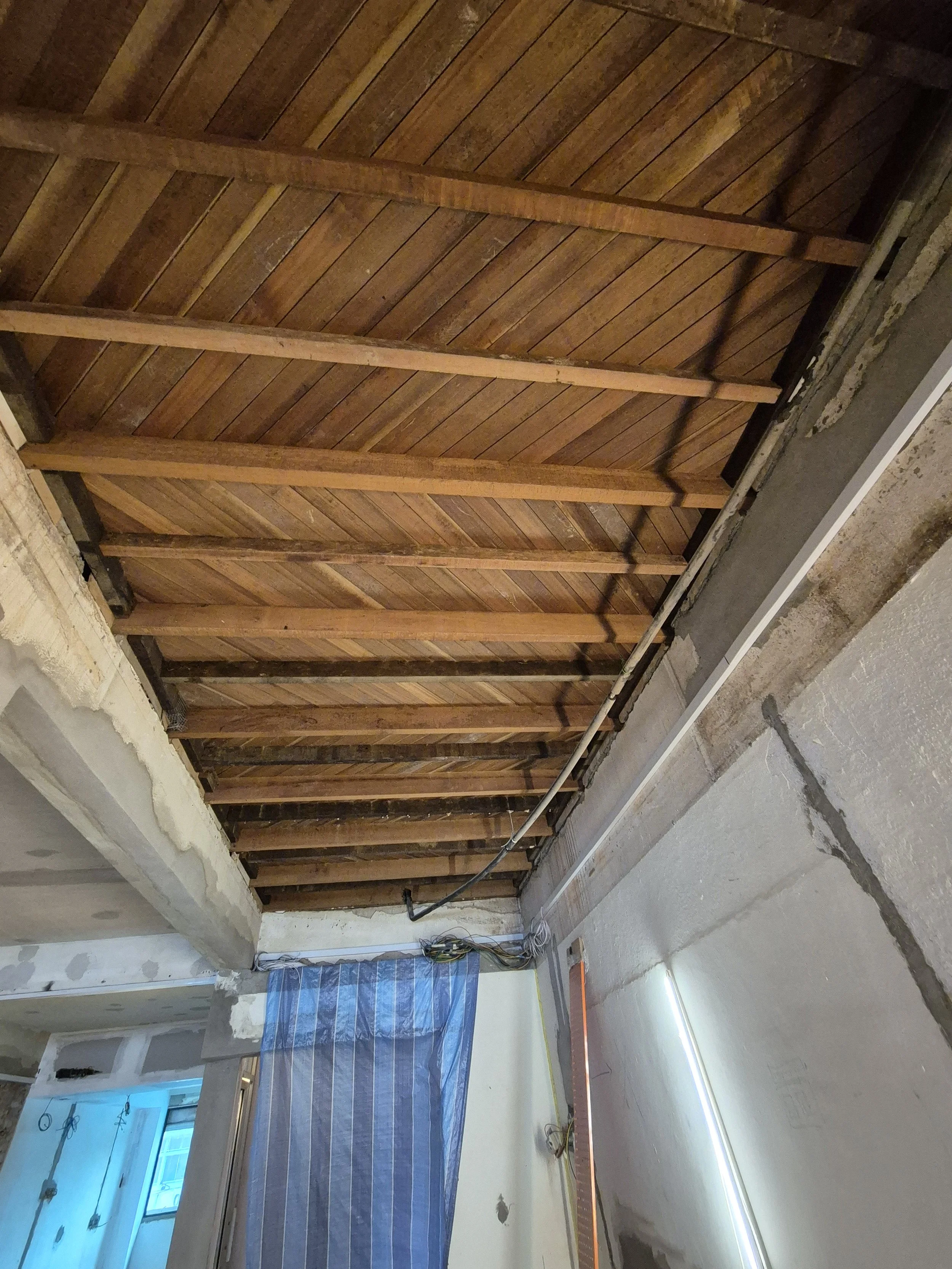
This material honesty continues overhead, where a portion of the original timber deck at the upper level remains visible. While the rest of the ceiling has been stripped back to expose the raw concrete slab, this section retains its aged timber, purposefully left uncovered to reveal the building’s layered history while subtly enhancing the space’s acoustic quality. The juxtaposition of raw and refined, old and new, enriches the spatial experience with depth and memory.
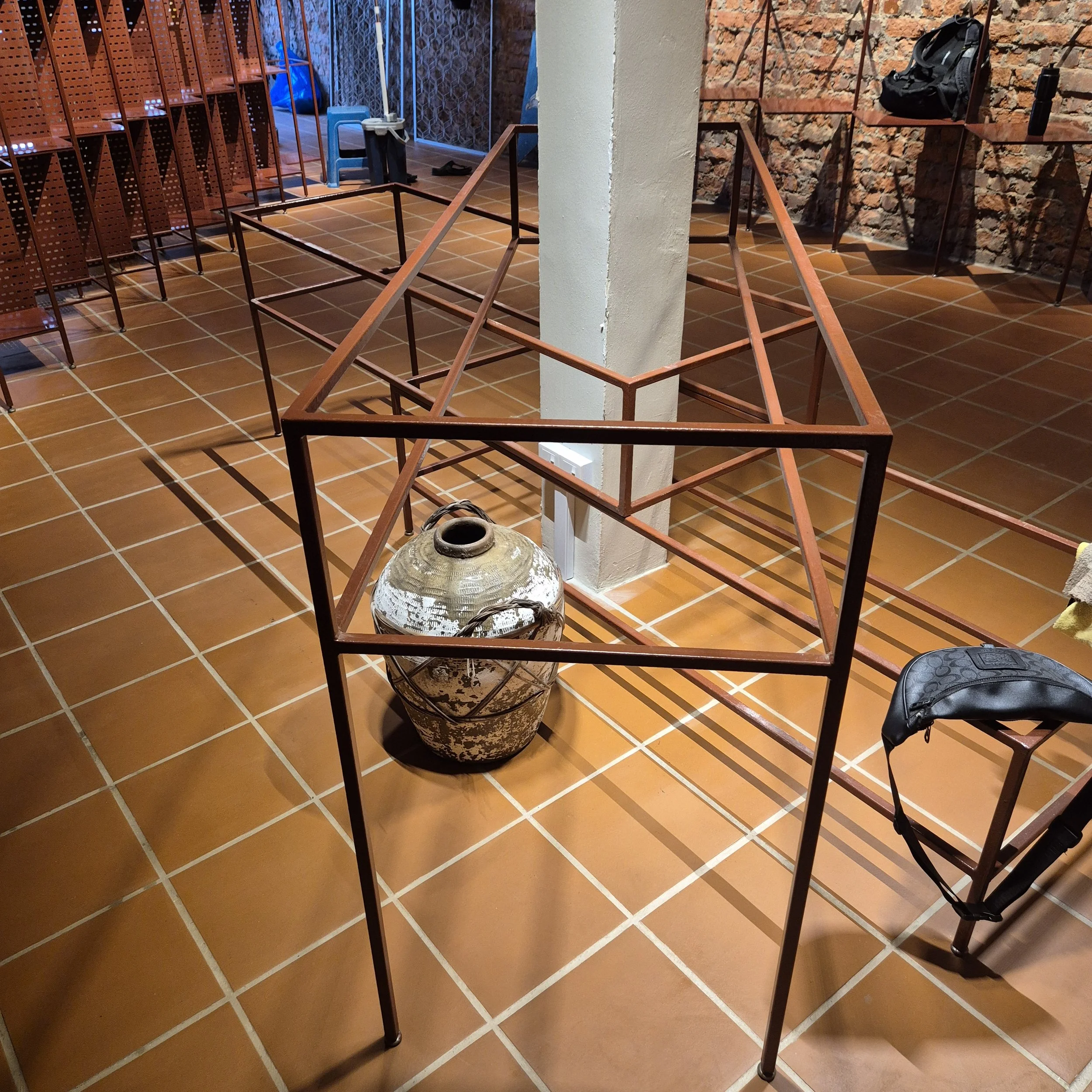
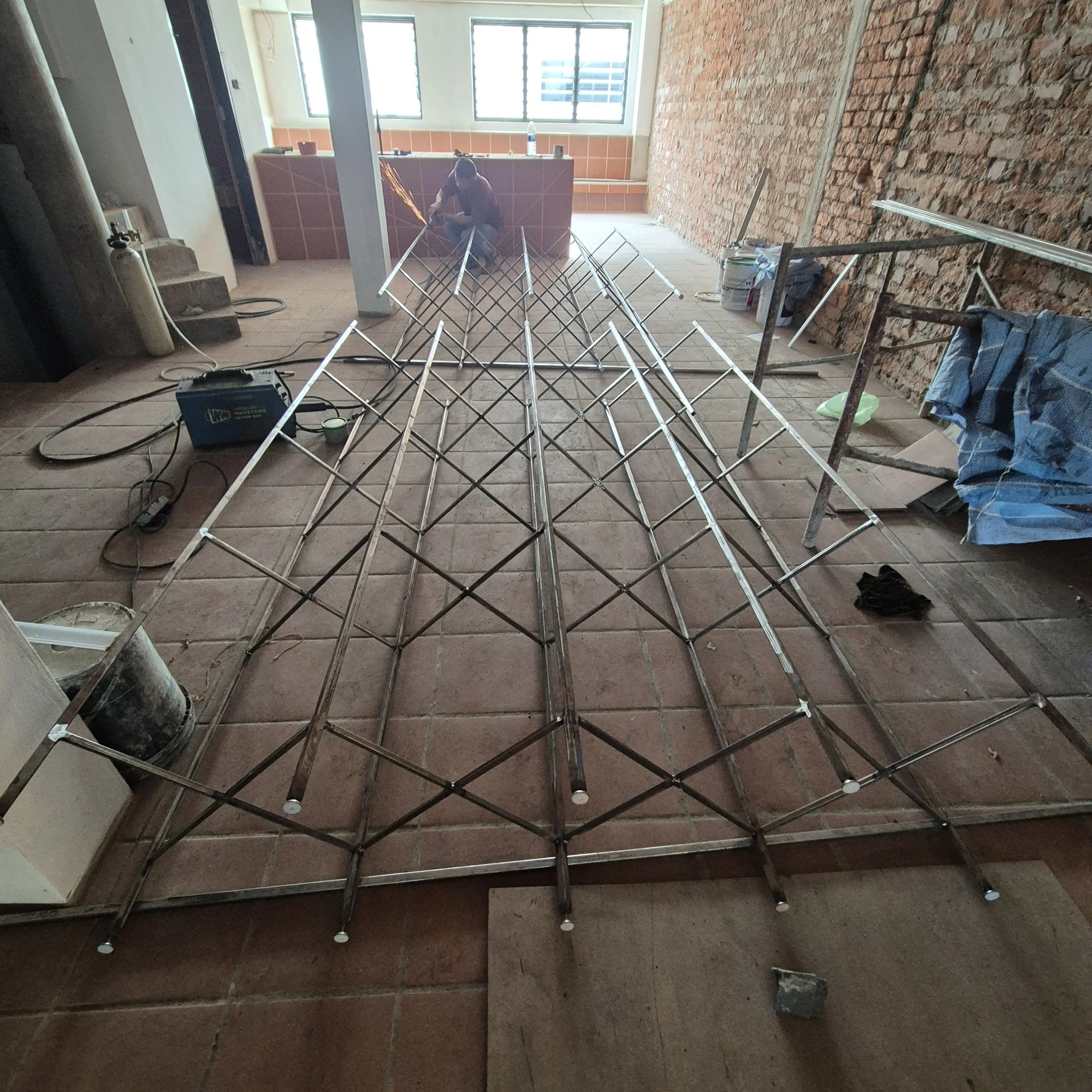
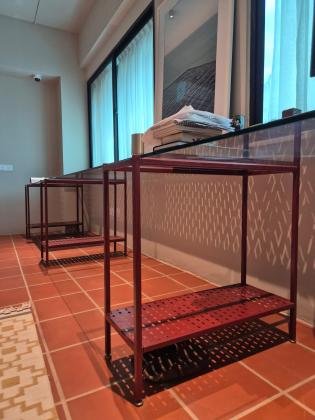
Instead of traditional walls or doors to divide zones, a custom metal frame structure defines the layout — separating the meeting room, exhibition area, and workspace — while also functioning as storage and display. Configured in a dynamic zig-zag formation, the SHS (square hollow section) frame becomes both sculptural and functional. It allows posters, building materials, and objects to be showcased on multiple planes, increasing visibility and interaction from various angles. Clad in off-the-shelf cable trays, the perforated panels also act as lighting elements — filtering light to cast soft, patterned shadows across the terracotta floor and walls, subtly animating the space.
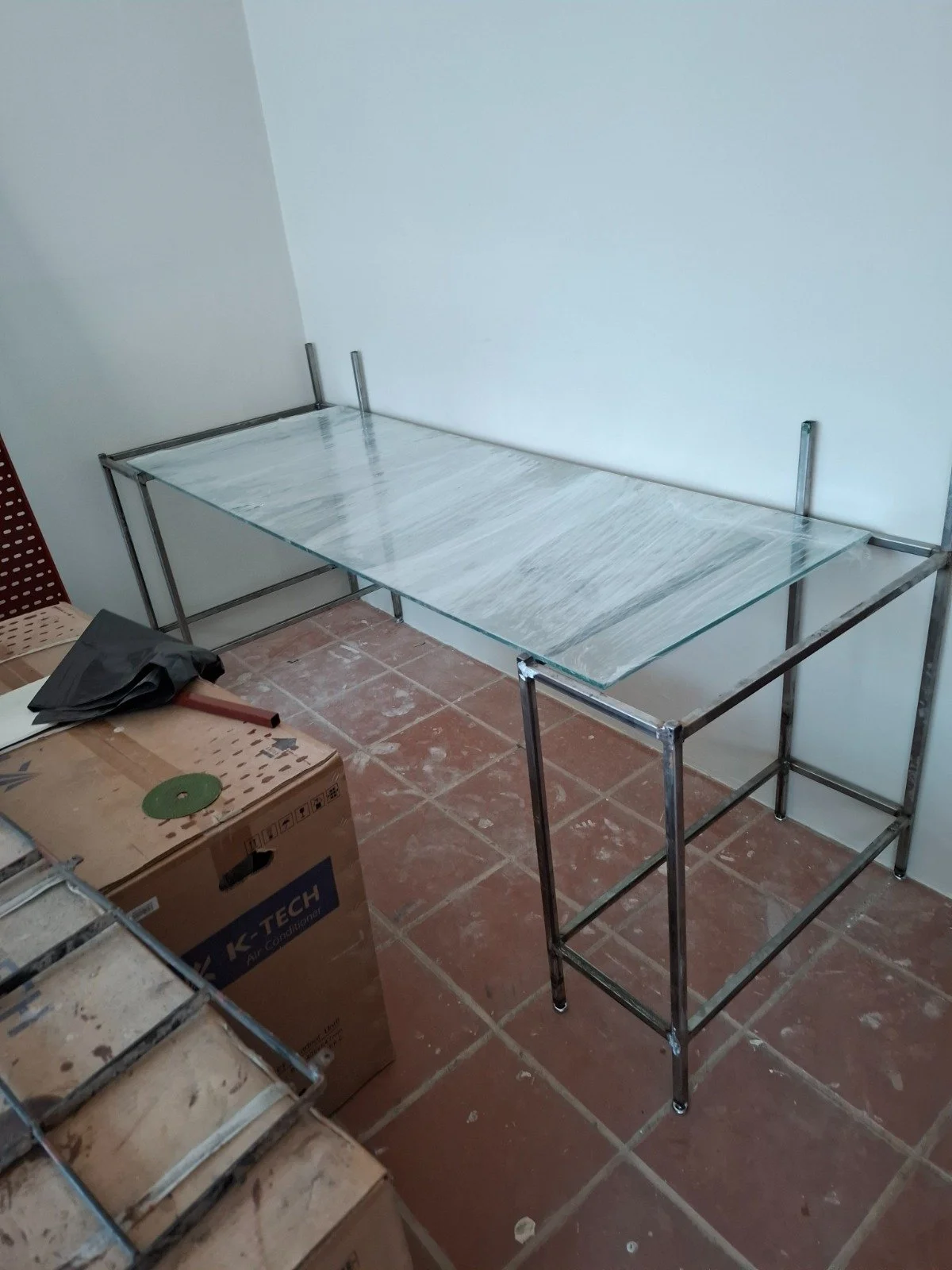
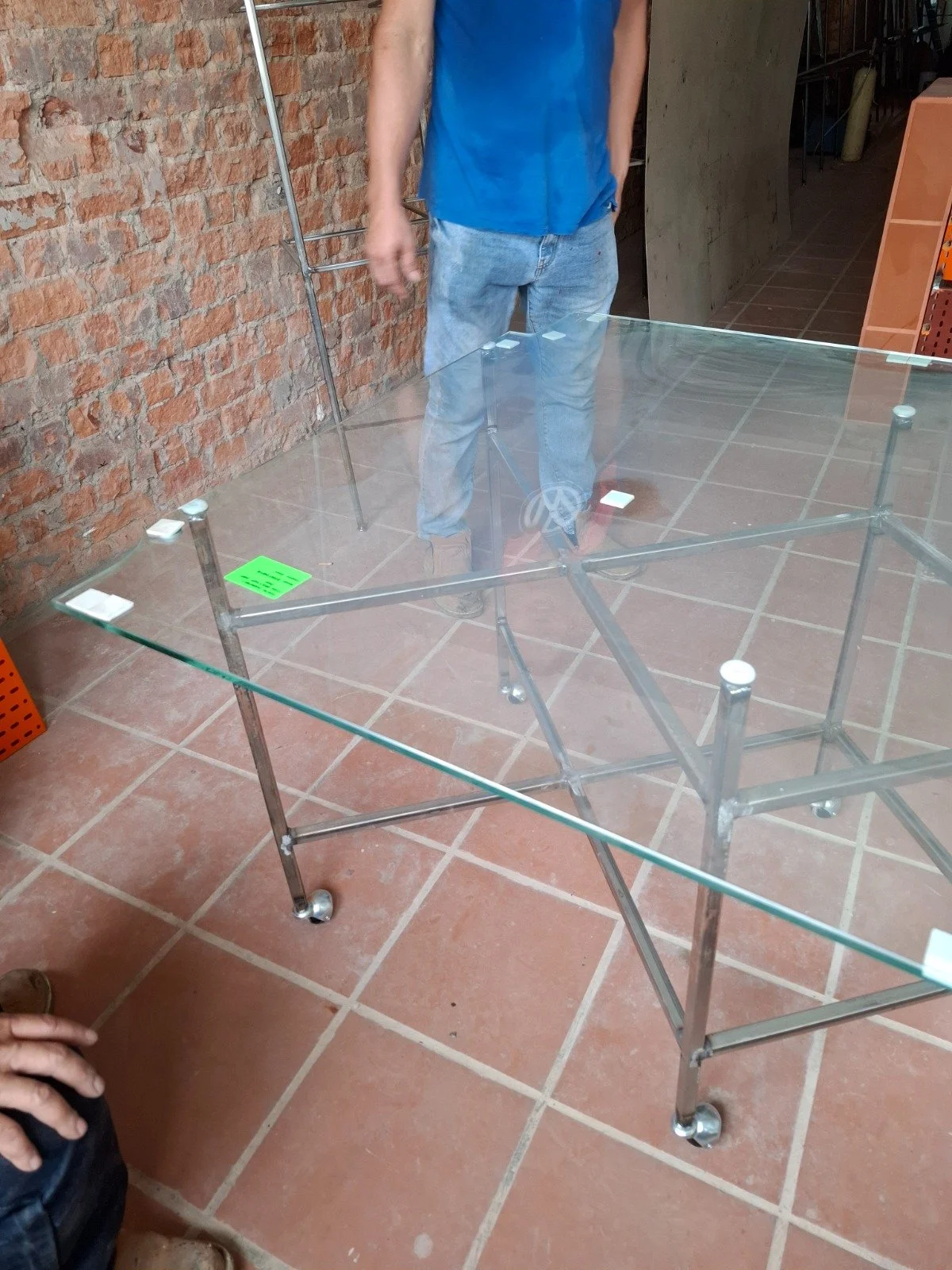
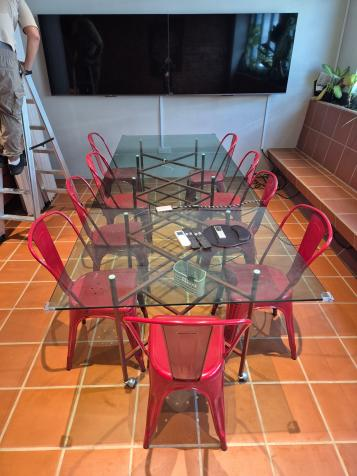
The material and structural language extends to the custom-built furniture. A set of custom office desks, made from the same metal SHS sections and topped with recycled tempered glass, offers minimal and durable work surfaces. A larger version of the table anchors the pantry, with legs that echo the zig-zag language of the metal partitions to ensure visual continuity. Mounted on caster wheels, the meeting table can be easily repositioned — enabling flexible configurations for collaborative work or presentations. The clear glass top preserves the space’s open feel while highlighting the sculptural frame below.
This renovation deliberately steps away from the conventions of a typical developer’s office — rejecting opaque boundaries, enclosed rooms, and generic finishes. In their place are openness, material honesty, and multifunctional design. By using terracotta as both surface and structure, and a custom metal framework in place of partitions, the space challenges expectations while maintaining warmth and cohesion. The result is a space that feels more like a curated spatial narrative than a conventional office — blurring the boundaries between exhibition, interaction, and daily function.
Text by the architect
PROJECT GALLERY


-
Architect : Little Elemnts Sdn Bhd
Client : Elemnts Sdn Bhd
Area : 125.35 m²
Project Location : Kuching | Sarawak
Year : 2025 -
Interior Designer : IDC Architects | Elemnts Sdn Bhd
Landscape Architect : Plants for Plastic
Contractor : Little Elemnts Sdn Bhd
Design Team : IDC Architects | Elemnts Sdn Bhd -
Floor | Floor Finishes
• Tile : Terracotta | Kuasada Sdn Bhd
Paint Systems : Murobond Paints Sdn Bhd
Waterproofing | Coating Systems : Moress Resources
Ceiling | Ceiling Systems : Blessed Plasterworks Enterprise
Lighting Design | Fittings : Justlight Sdn Bhd
Share this project