
SMK Lundu
SMK Lundu is designed to move away from colonial architectural models that emphasise order, hierarchy and authority. In contrast, it focuses on spatial richness, encouraging movement, pause and reflection. The architecture invites students and teachers to explore the campus freely, forming both individual and shared memories that, over time, become part of one's nostalgia. While the form of a school can be drawn and built, its true meaning lies in how the space is experienced.
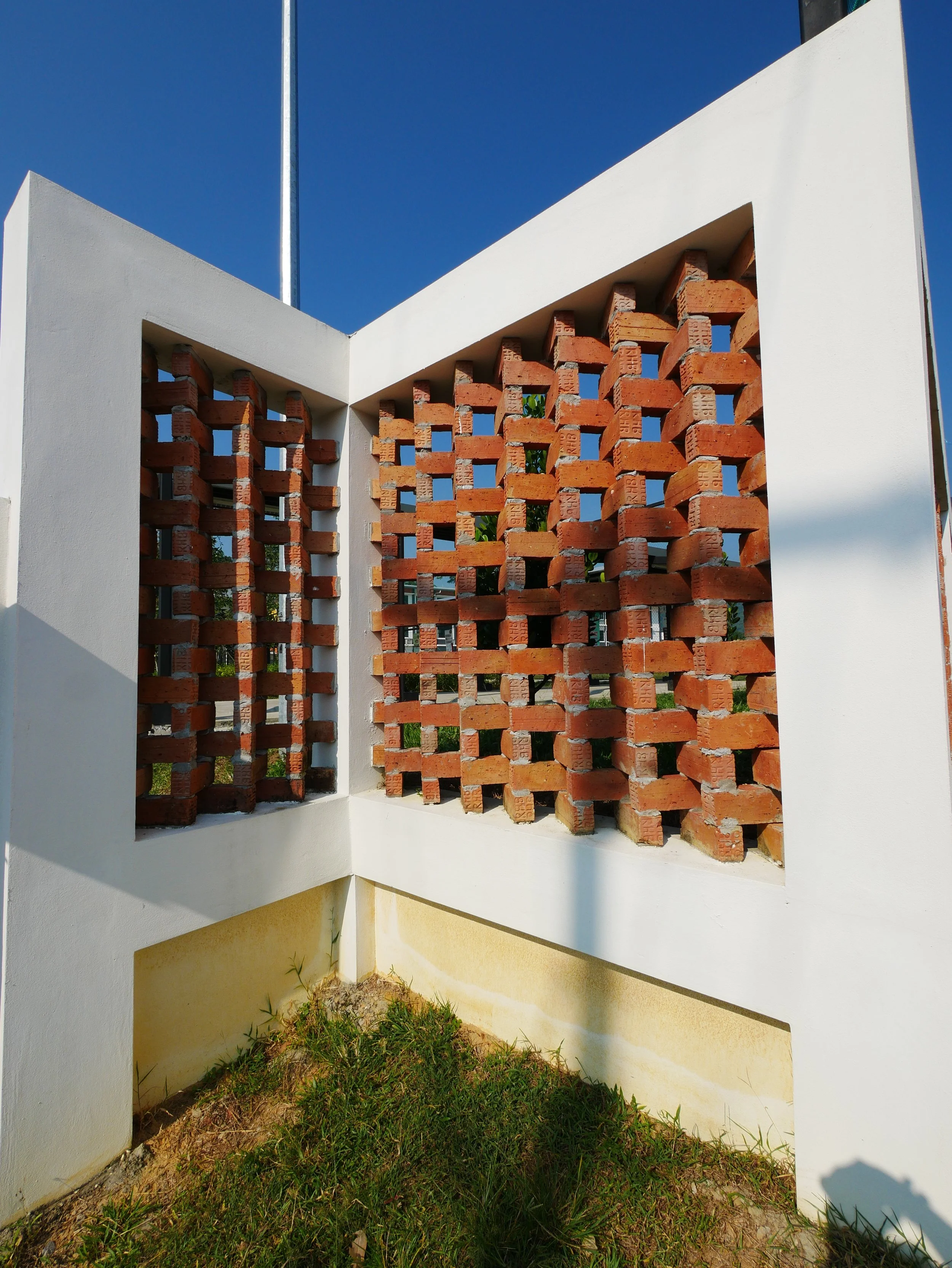
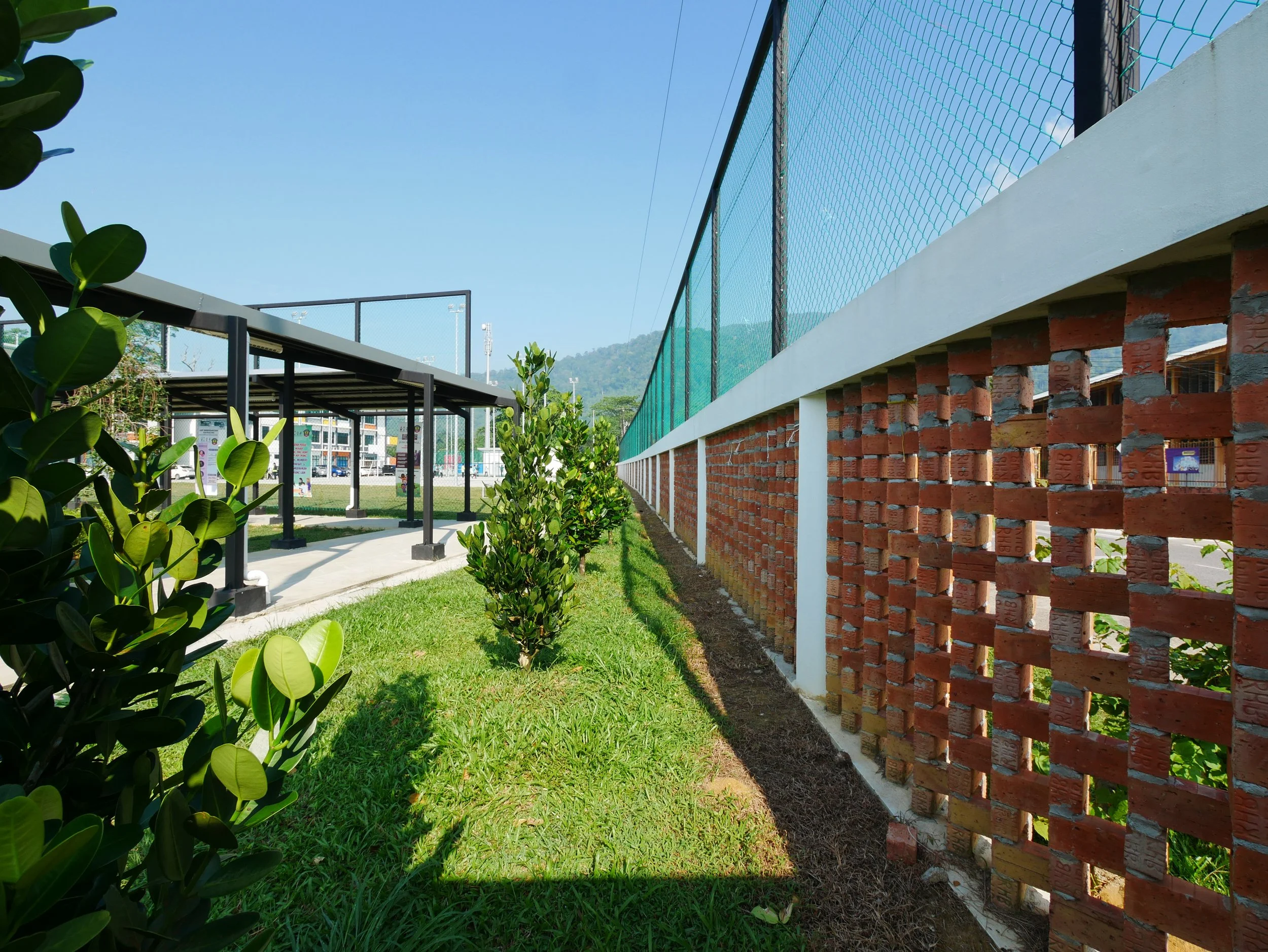
One of the key architectural elements is the brick lattice wall. Left exposed and uncoated, the brick is intended to change with time. The wall that students saw in 2024 would look different in ten or twenty years. Over the decades, it will record the passing of time through subtle shifts in colour, texture, and tone. Rather than a static backdrop, the wall becomes a living part of the school’s story.
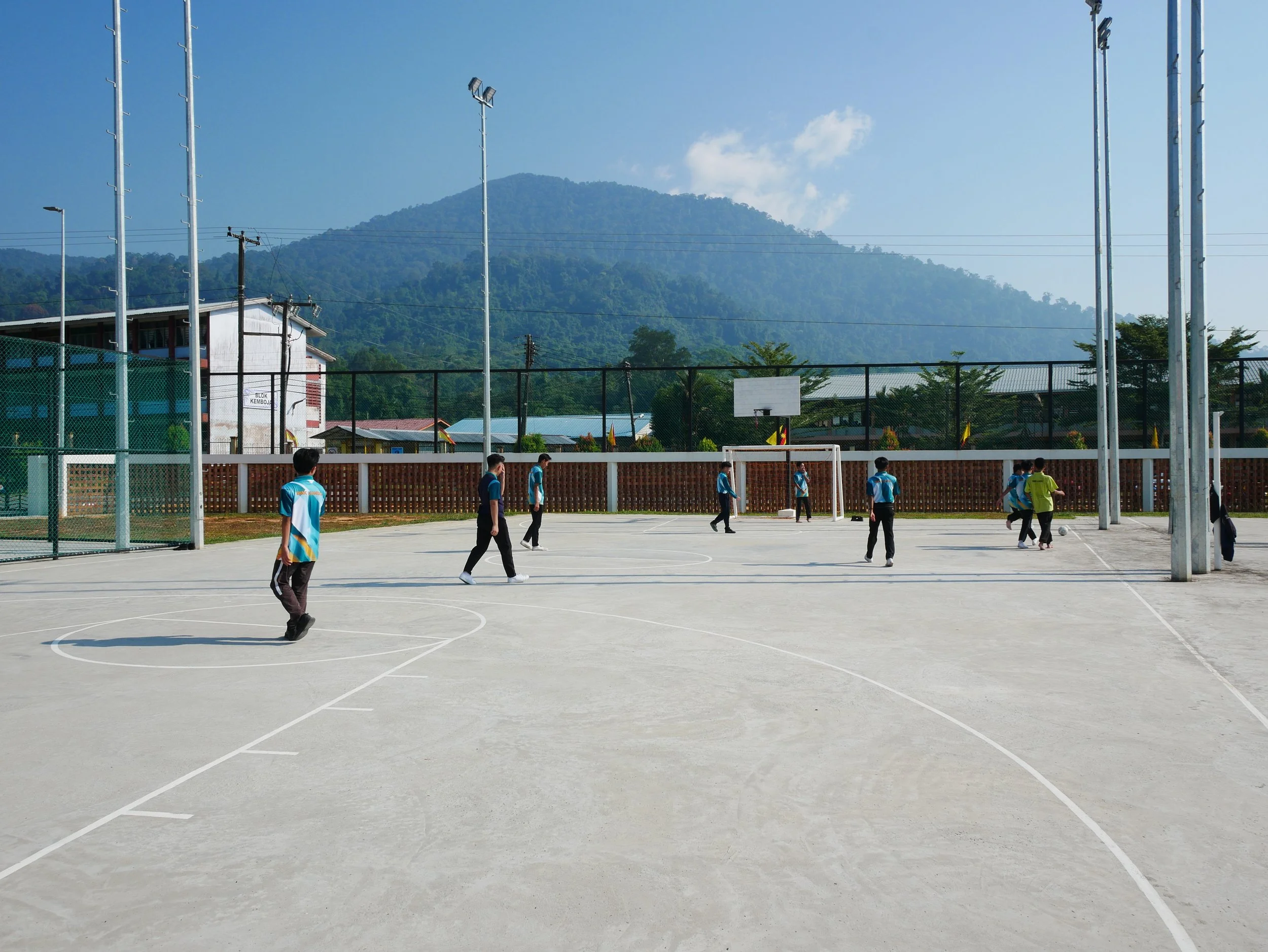
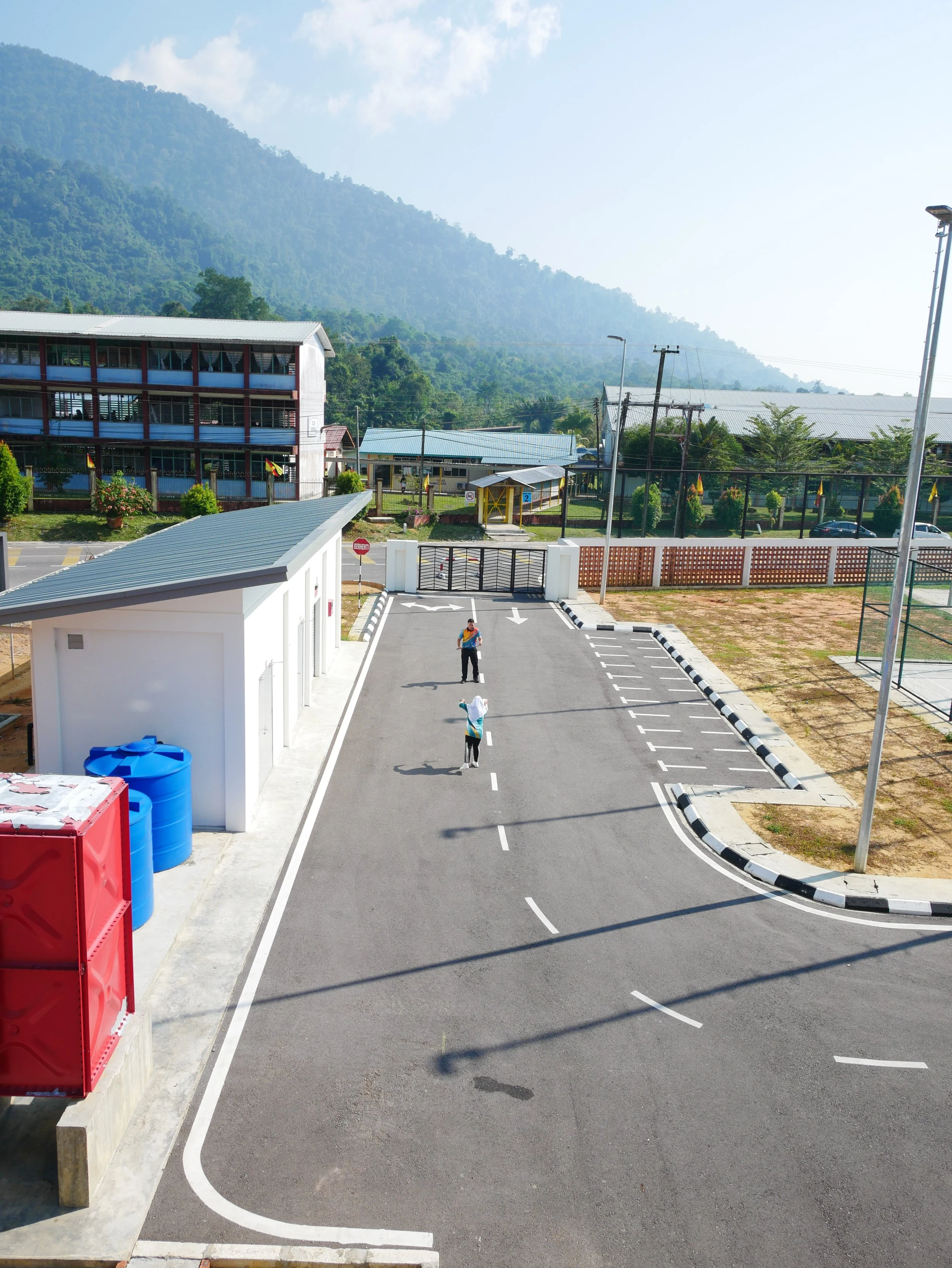
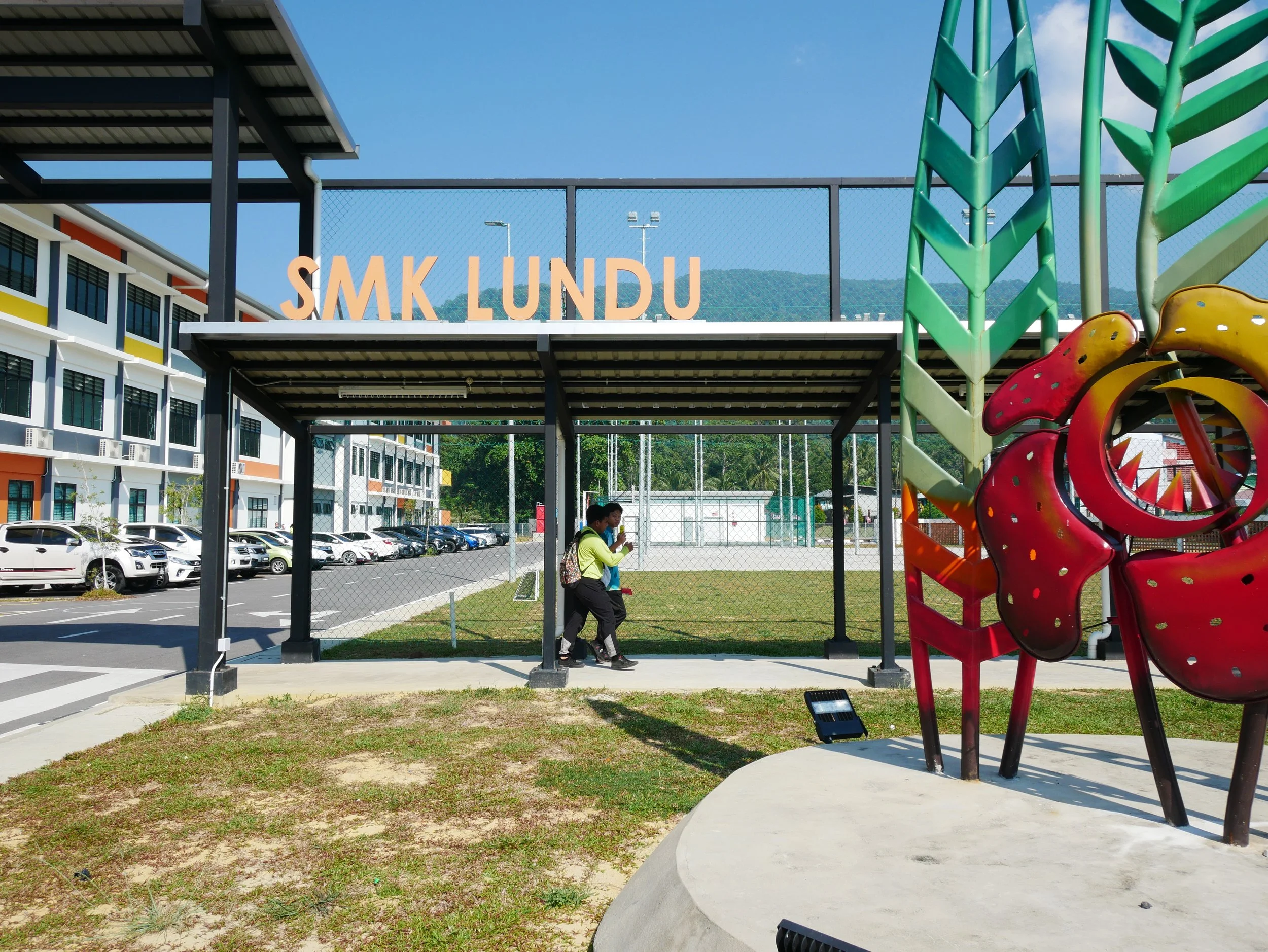
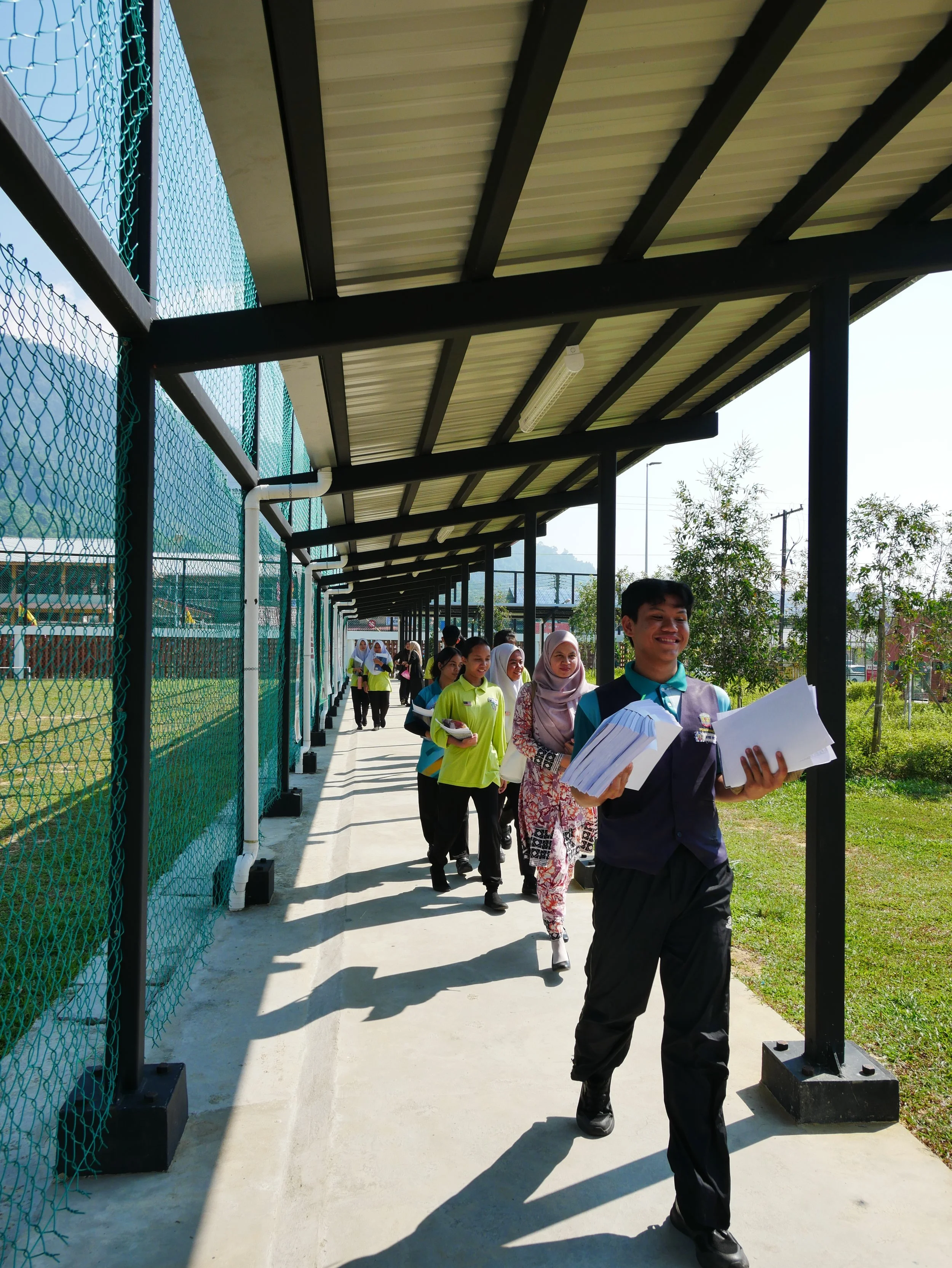
The covered walkway is designed as a path of encounter, guiding one from the main gate and passing through the landscape and sports courts to the new classroom blocks. Architecturally, it functions as a binding element. The landscape extends the column grid westward, while the structure seamlessly integrates with the high fencing of the sports courts. Youthful energy, natural surroundings, and the walkway itself are conceived as three elements forming one cohesive spatial system.
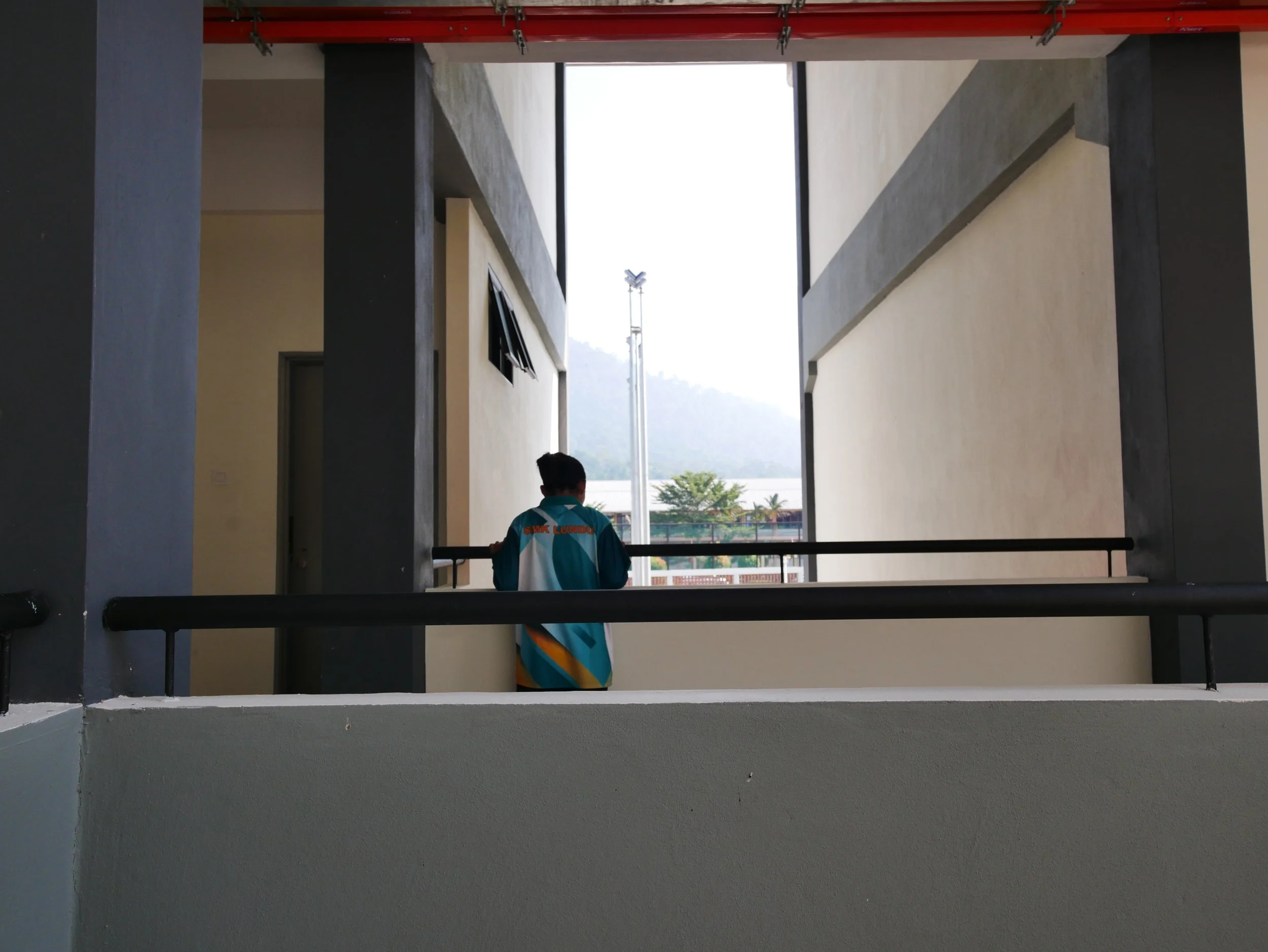
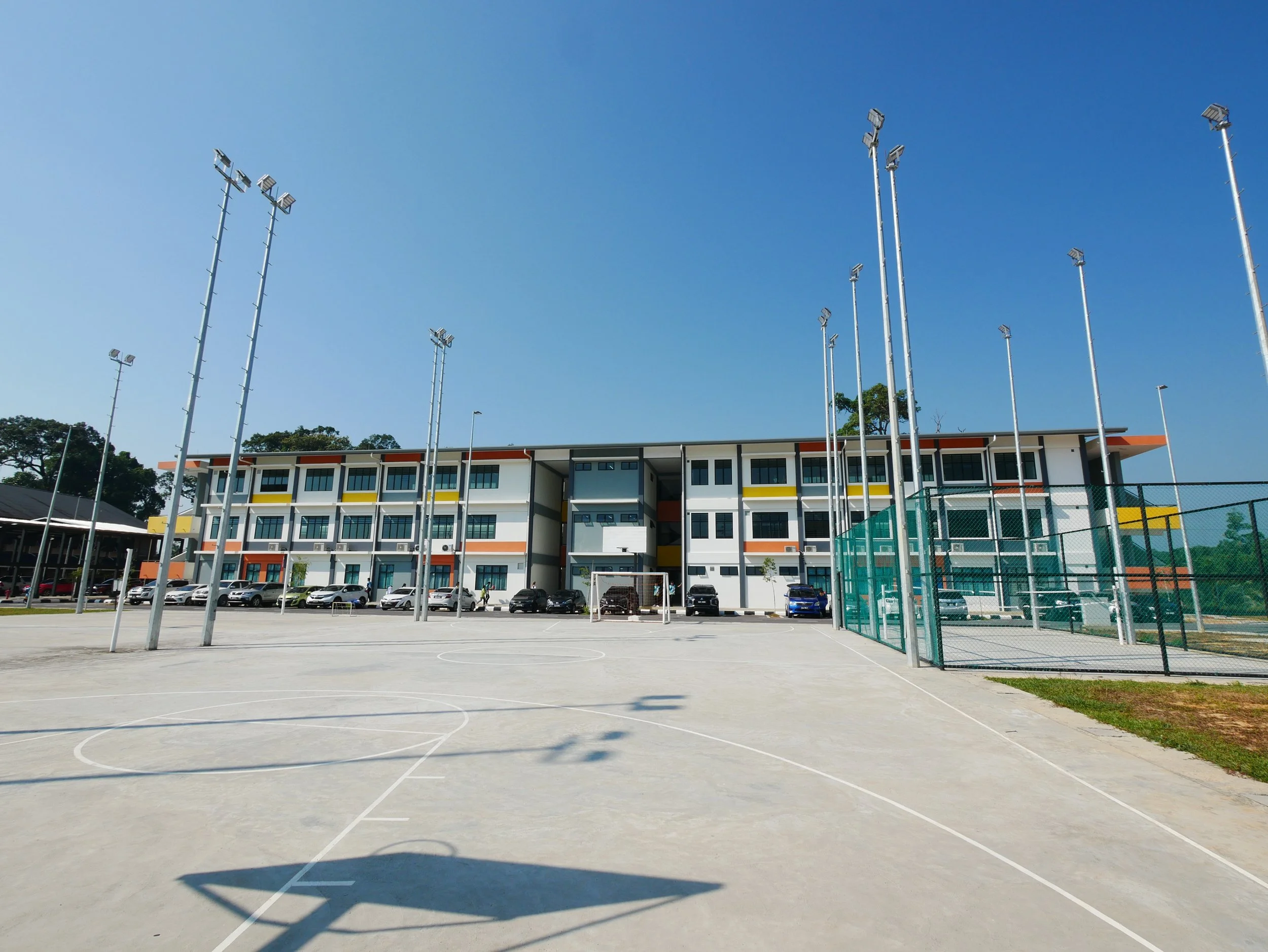
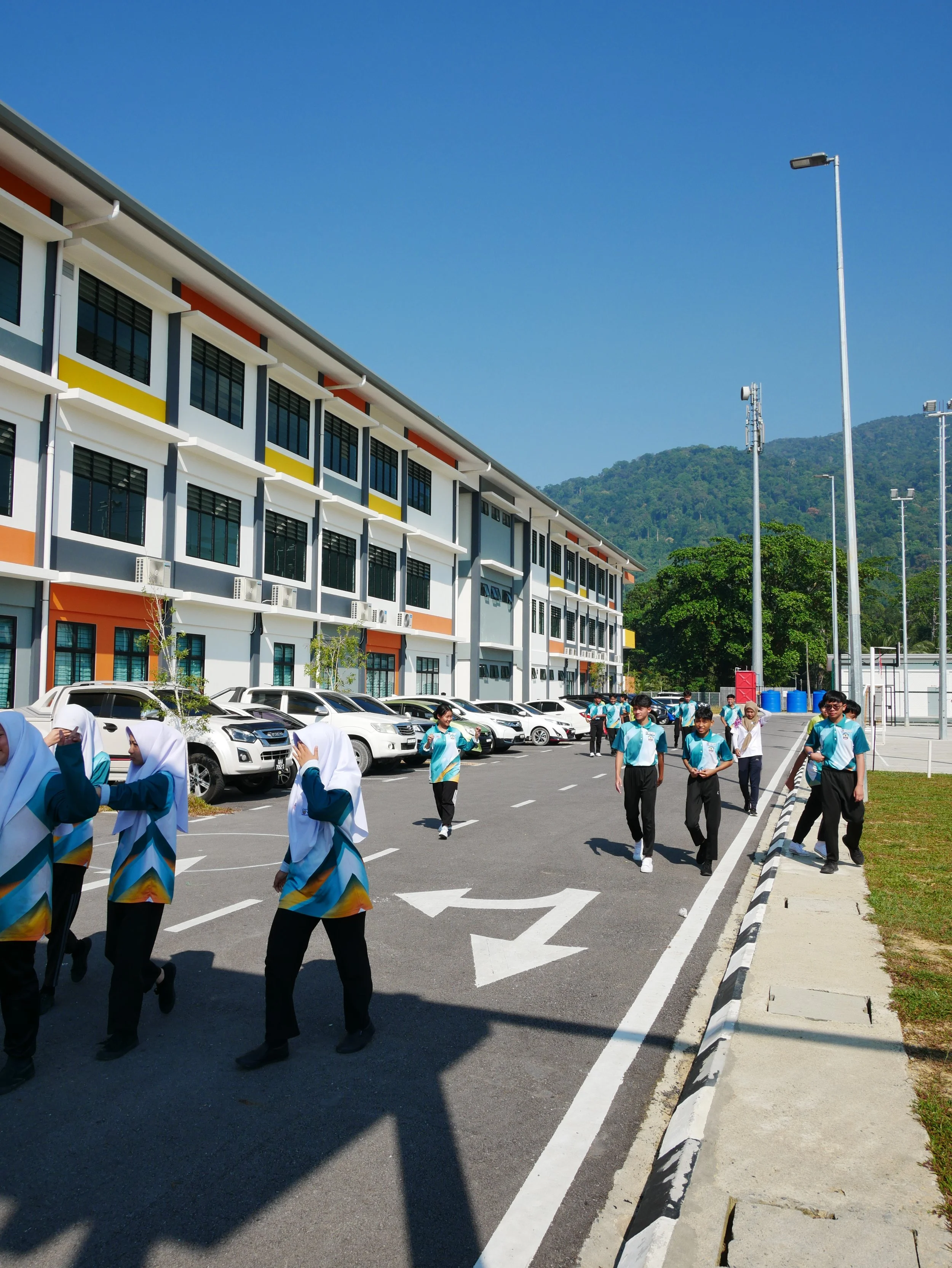
The overall building is oriented north to south, with blocks arranged in parallel. Toilets and mechanical services are placed at each block's center, creating a natural wind tunnel effect. To address this, a central spine staircase and bridge were introduced — not only connecting all four blocks, but also softening the rigid linearity of the layout. Carefully positioned along the central spine, the staircase is designed to offer framed views and spaces to pause. More than just a circulation space, it has become a social focal point — where students gather, take photos, and spend time together, turning movement itself into memory.
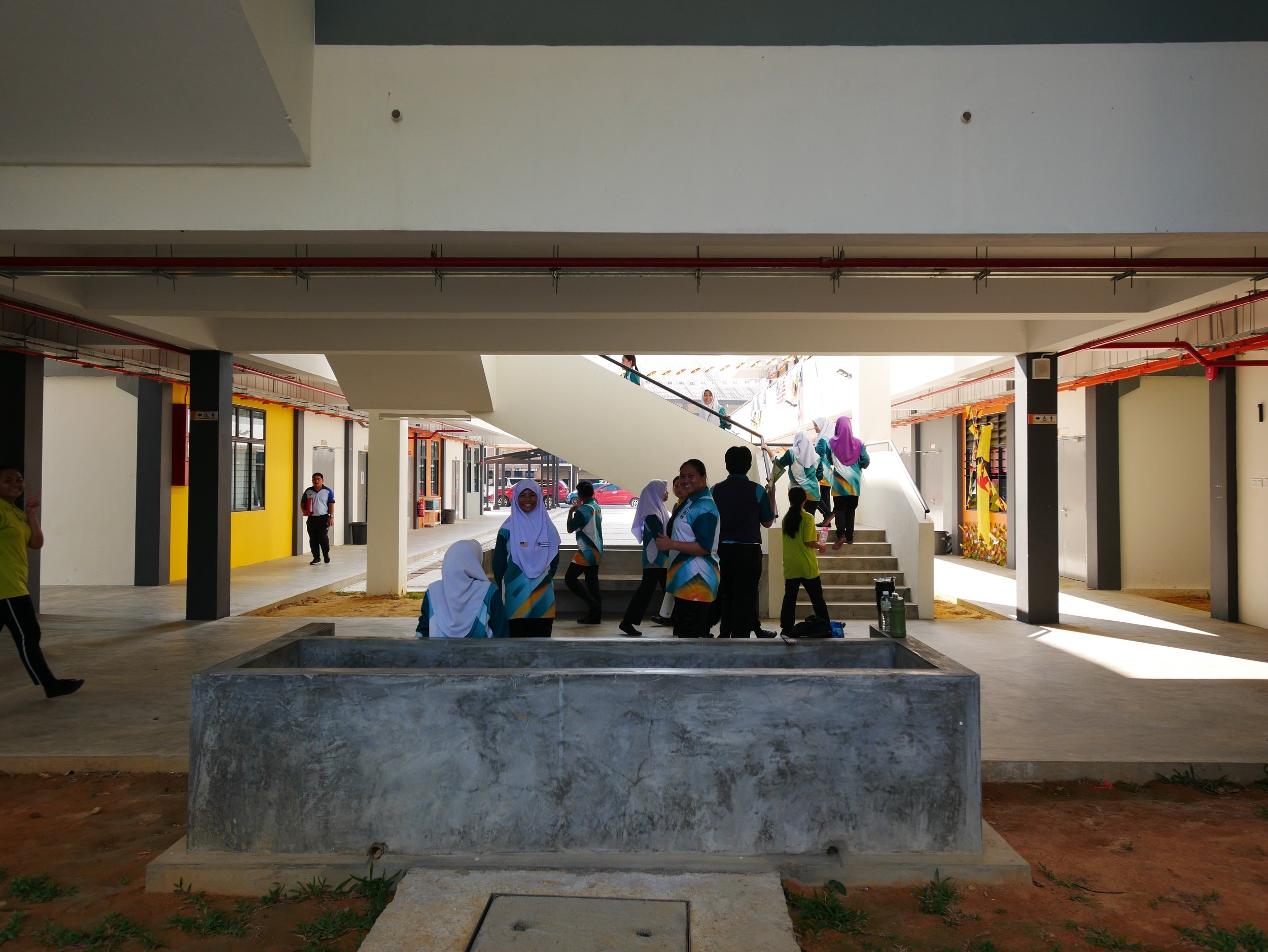
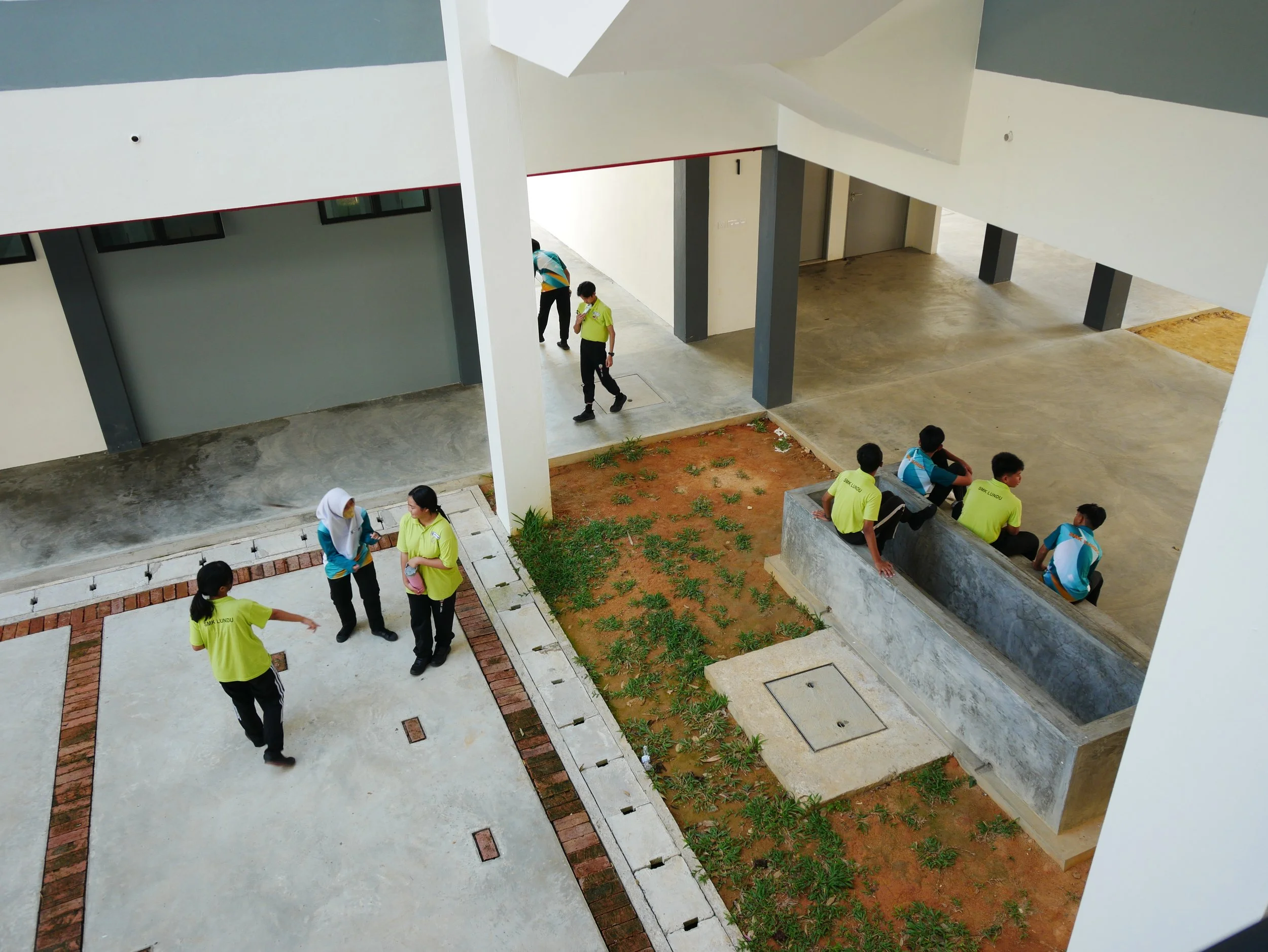
Between the main buildings lies the concourse, an in-between space where the built form reaches into the unbuilt. This is achieved through simple architectural gestures that allow the structure to extend into the open. For example, a plain concrete slab is punctuated by patches of brick, laid within an invisible structural grid, creating a space for informal interaction. These subtle interventions invite people to stop, sit, and talk.
At the far end of the school, a cantilevered stair projects from a shear wall, extending with a bold architectural line and framing the space with its strength. More than just a means of circulation, the stair acts as a pause in motion — a kind of comma during the school days. It offers a moment for reflection between movements. Students often gather here between classes — not just to pass through, but to connect. The design treats movement and stillness equally, recognising both as vital to the school experience.
Planting a Belian tree towards the end of construction carries symbolic weight. Echoing the following Chinese proverb:
“百年树人
To grow a tree takes ten years, but to nurture a person takes a hundred.”
It speaks to the immense patience, time, and effort required in education, where the most meaningful results take the longest to grow. The project began with the removal of Belian trees and ends with the planting of a new one along the central axis of the site. This gesture marks a full cycle and reflects a long-term view of education, growth, and responsibility.
Originally planned as a wall mural, the work evolved into a sculpture by local artist Petrus Alfred. Positioned at the entrance to the new classroom blocks, it serves as a strong visual statement that reflects and celebrates local culture. The sculpture is intended to inspire future generations not only to appreciate but also to promote the art and heritage of the region. It depicts three leaves representing the Malay, Chinese, and Dayak communities. At its centre, the Rafflesia flower, renowned for its size and rarity, symbolises the richness of the area’s natural environment. Within the flower, crescent and thorn-like elements echo the moon and crown found in the Sarawak state flag, leaving a lasting impression of place and identity.
“The sculpture represents the people and heritage of the surrounding region. The three leaves symbolise the communities in the Lundu area: the Malay, Chinese, and Dayak. The Rafflesia, one of the largest flowers in the world, can be found in this region and symbolises the richness of its natural resources. At the centre of the Rafflesia flower, the crescent—or half moon—appears alongside thorn-like elements, representing the crown seen on the Sarawak state flag.” — Petrus Alfred
Text by the architect
PROJECT GALLERY
-
Architect : Project Shop PLT
Architect of Record : Dual Architect
Client : Kementerian Pendidikan Malaysia
Area : 4,576 m²
Project Location : Kuching | Sarawak
Year : 2024 -
C&S Engineer : Perunding Prima Jaya Sdn Bhd
M&E Engineer : PEMS Konsult Sdn Bhd
Quantity Surveyor : LT Juruukur Bahan Sdn Bhd
Contractor : Izra Enterprise Sdn Bhd | Hevision Sdn Bhd
Sculpture Artist : Petrus Alfred
Photography : Ricco Soh | Clarissa Sze | Freddie Lo -
—
Share this project