
Park 2
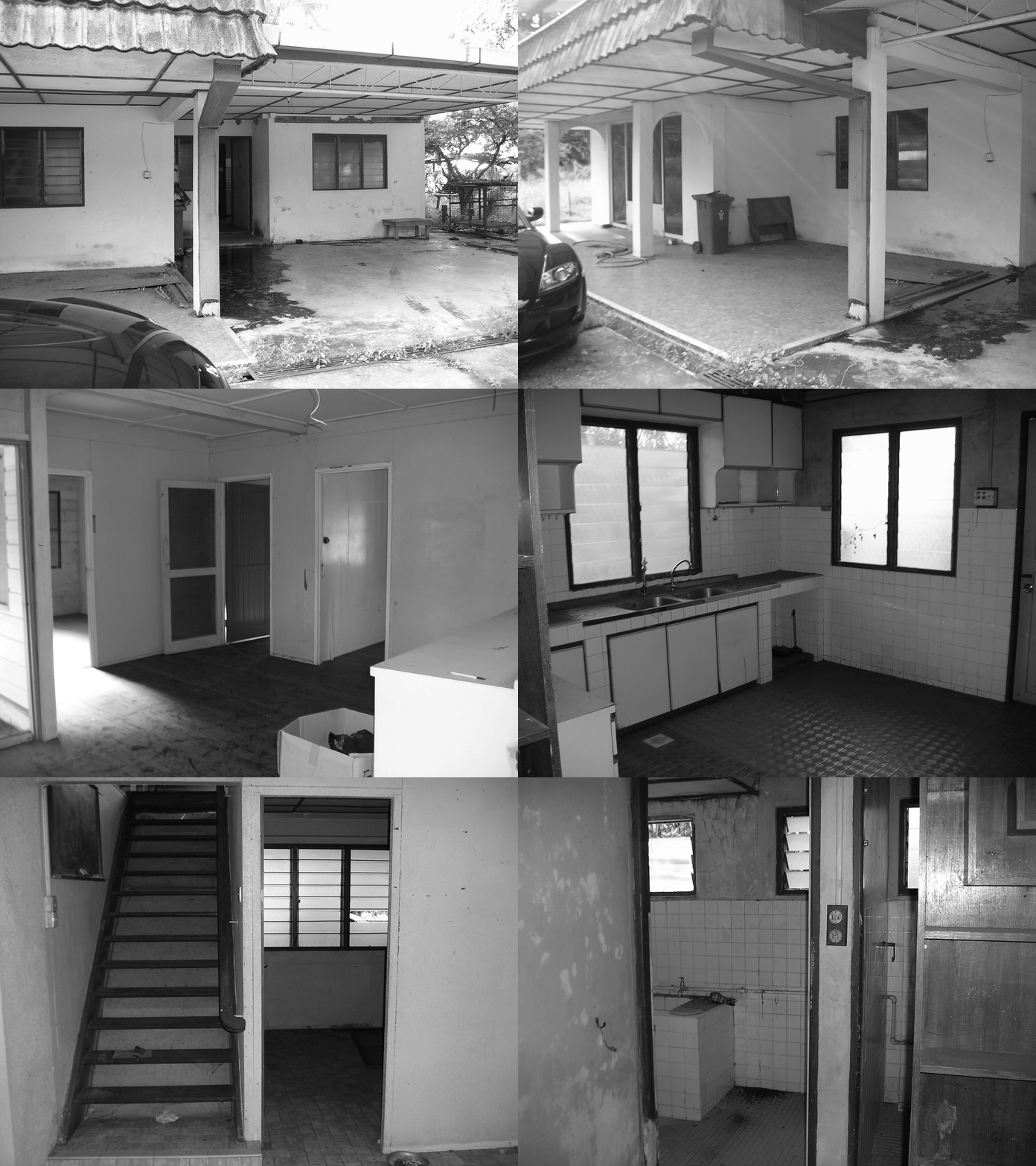
An existing 1960s 'kampung-style' house was transformed into a modern and environmentally friendly city dwelling. Located minutes away from Kuching City Centre, the half an acre site is serene and peaceful. Completed in 2007, the design attempted not only to capture the essence of the original house, but to reinterpret it with the use of raw materials which blend with the surrounding greenery.
While the client originally wanted to demolish the existing house and start afresh, certain requirements by the authorities stipulated that the original footprint be maintained. So, the house was upgraded with modern amenities to suit the lifestyle of a young family.
Besides fulfilling the functional needs of the occupants, the design is an expression of, and a response to, the local traditional architecture. Locally and commonly available raw materials, coupled with, limited skilled workmanship, were used to express the true nature of the materials. The resultant home has a rough industrial feel, which suits the family’s low maintenance philosophy and adventurous lifestyle.
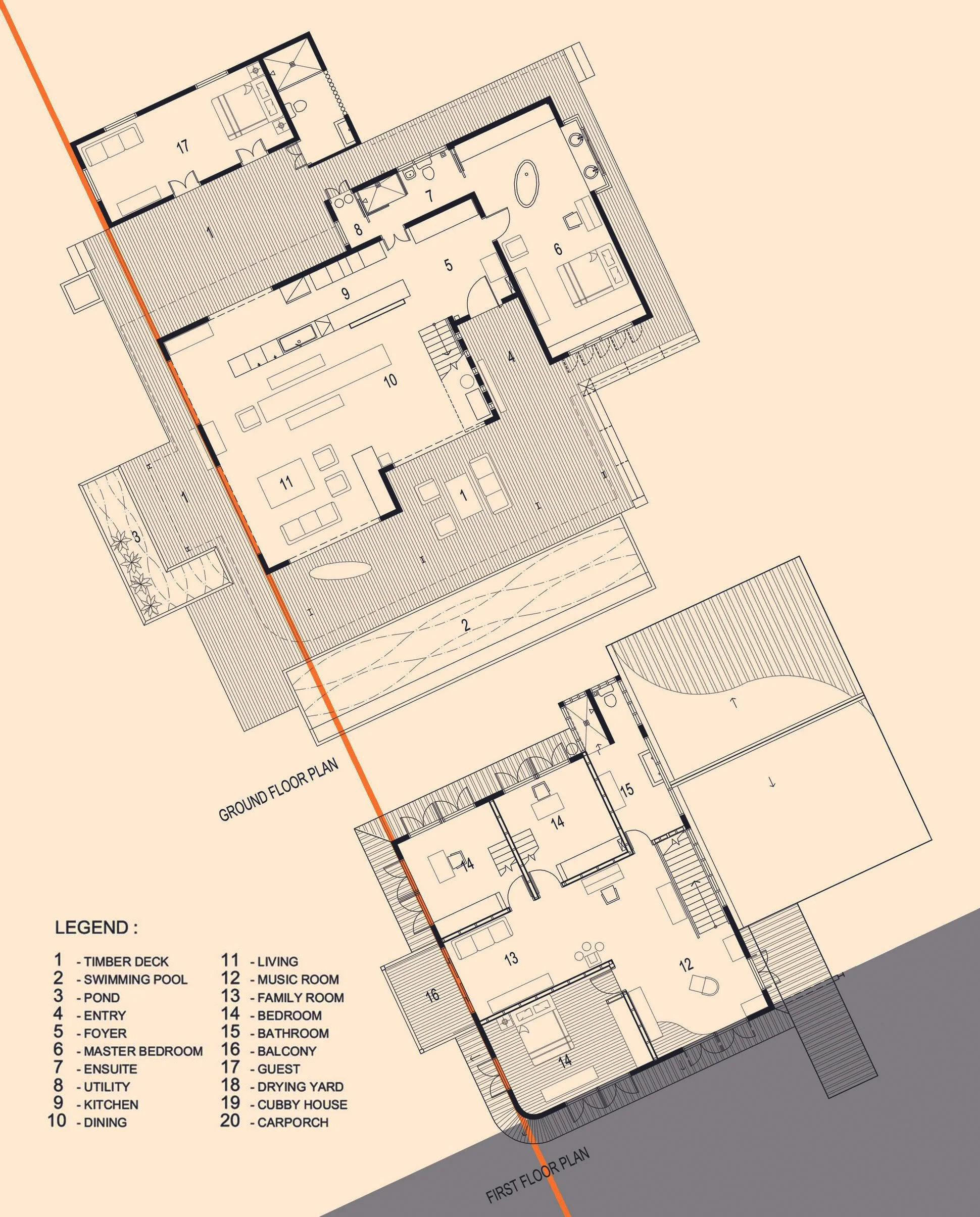
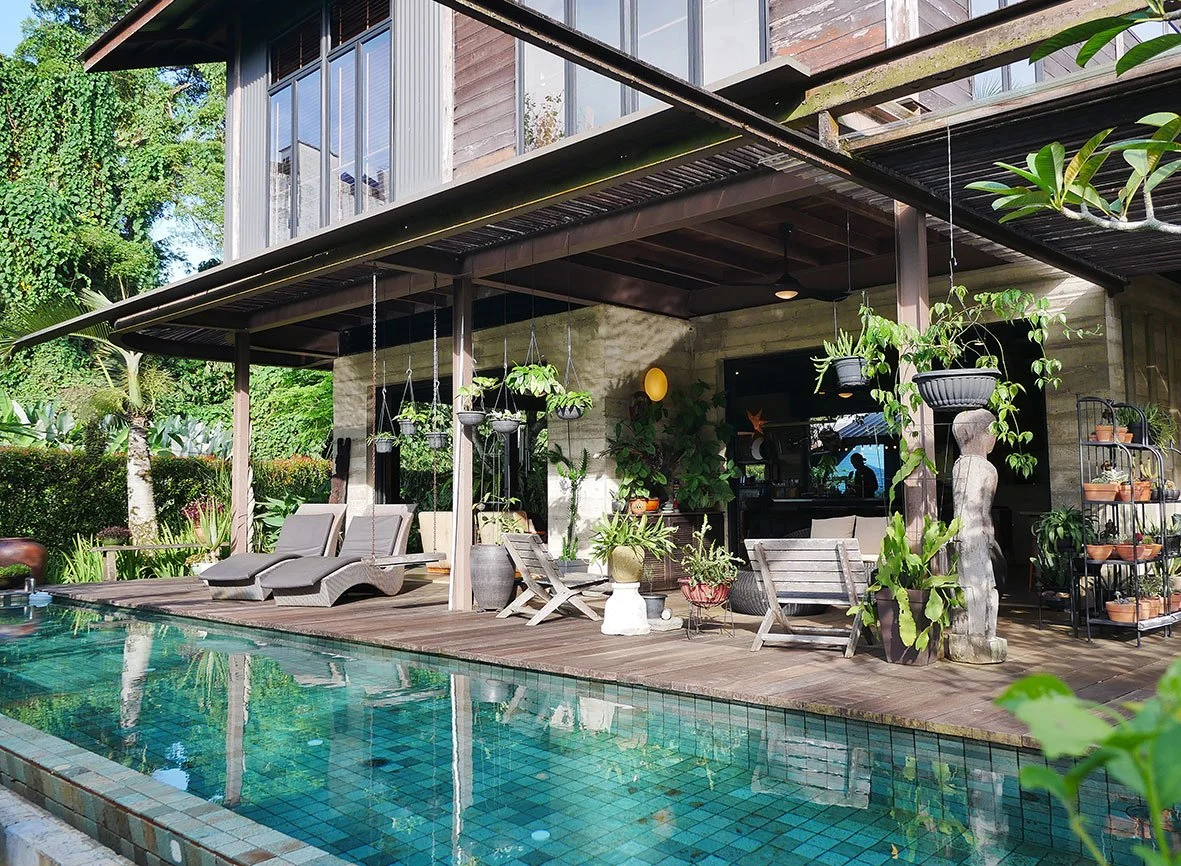
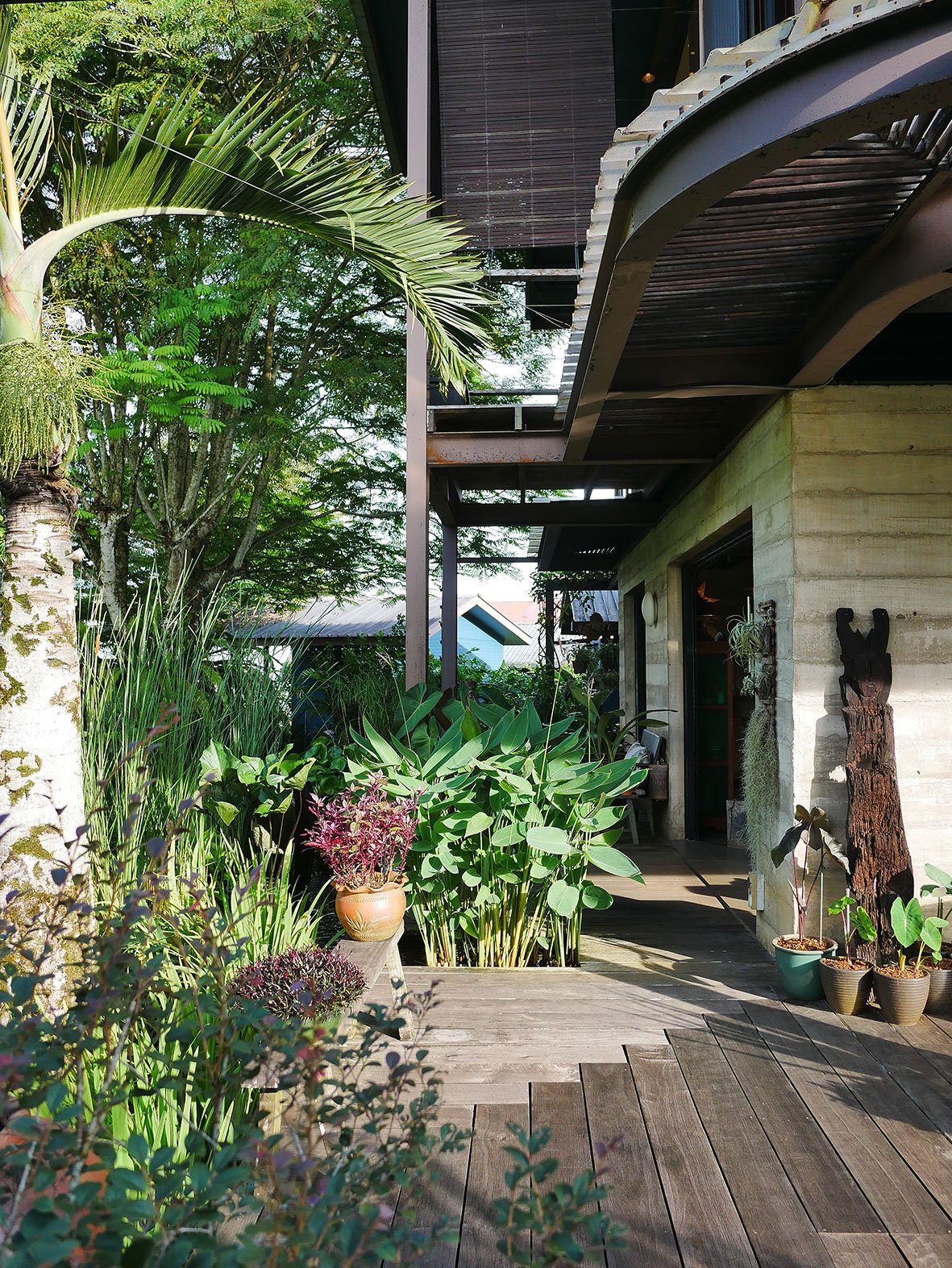
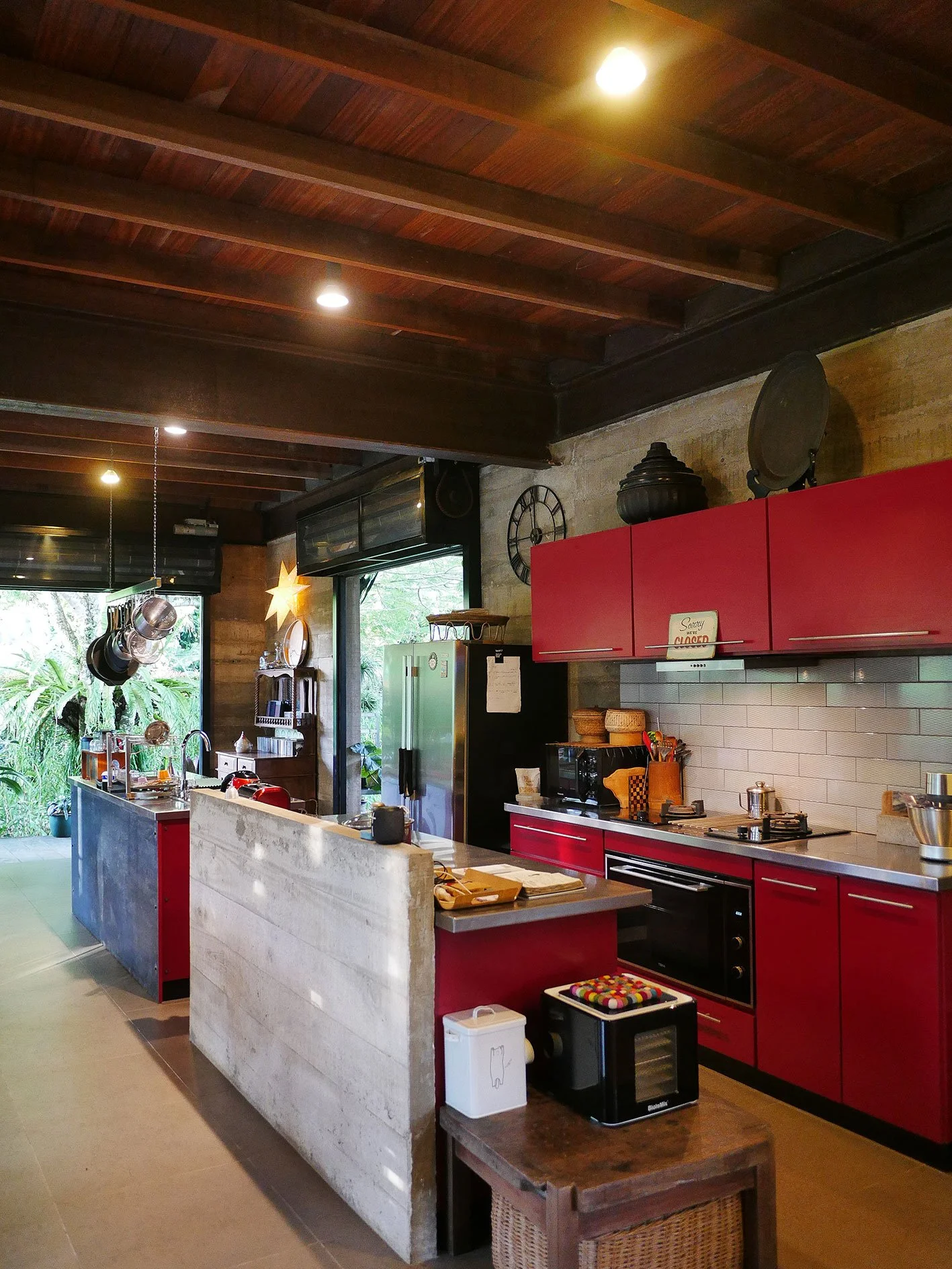
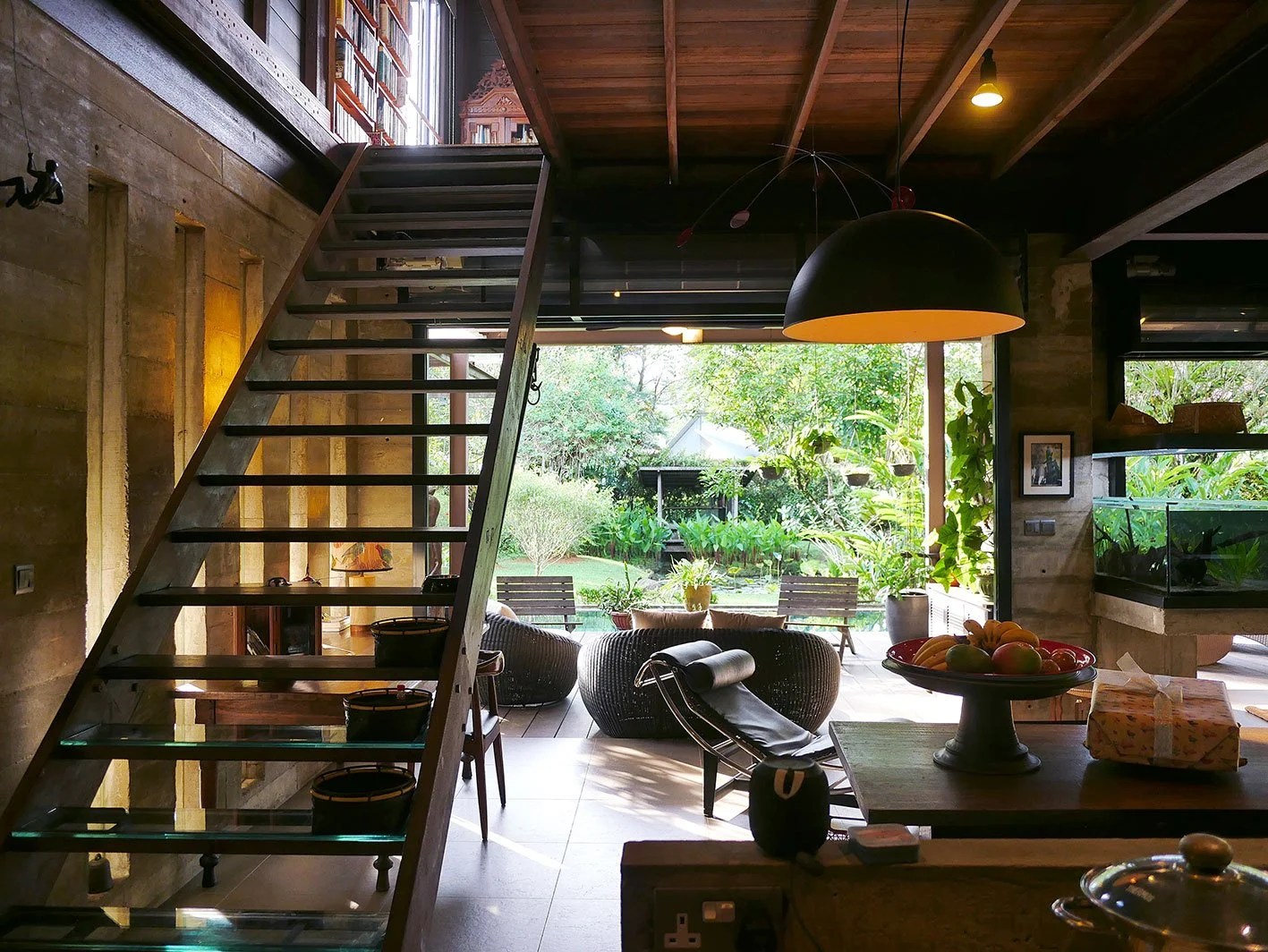
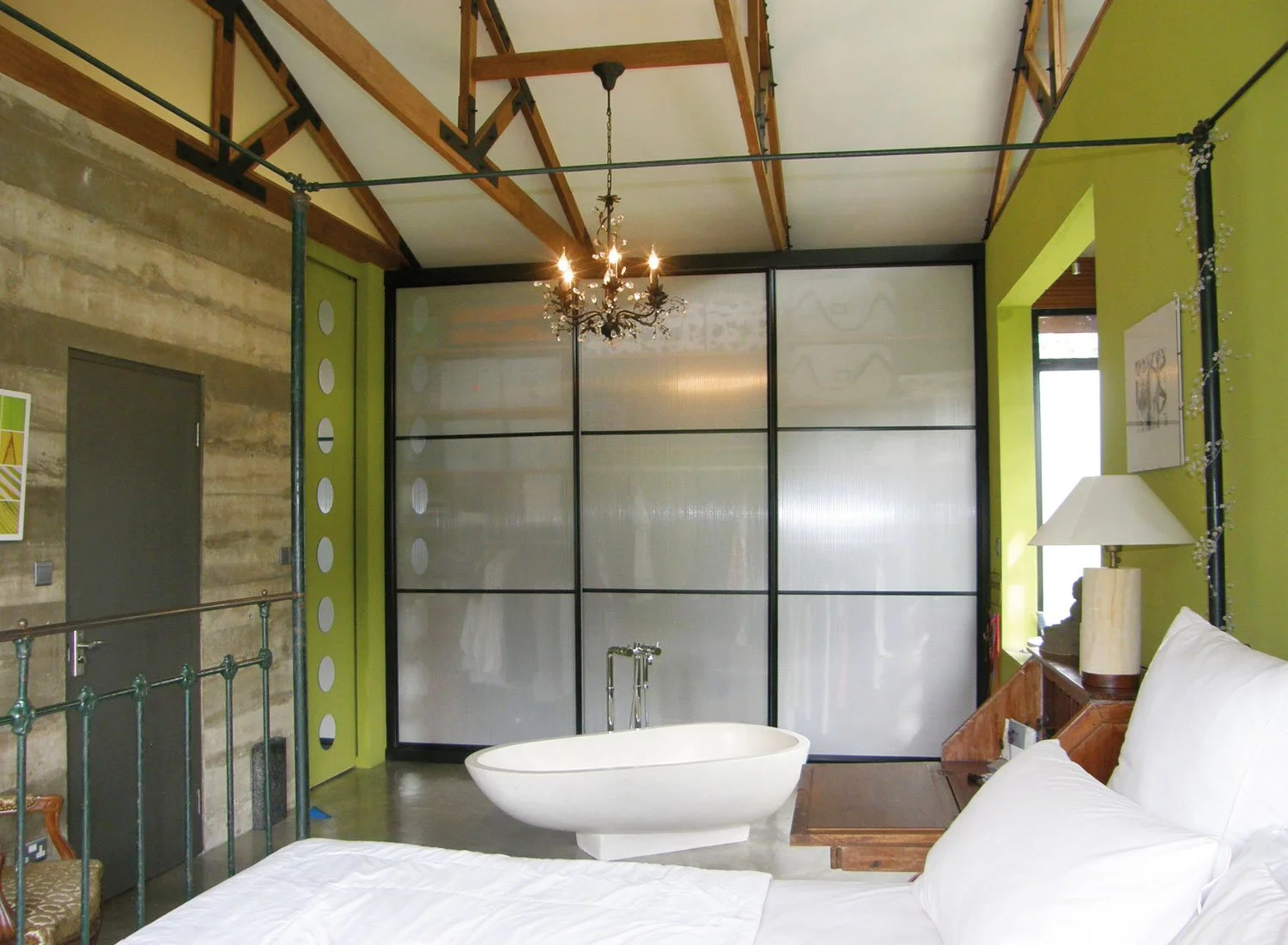
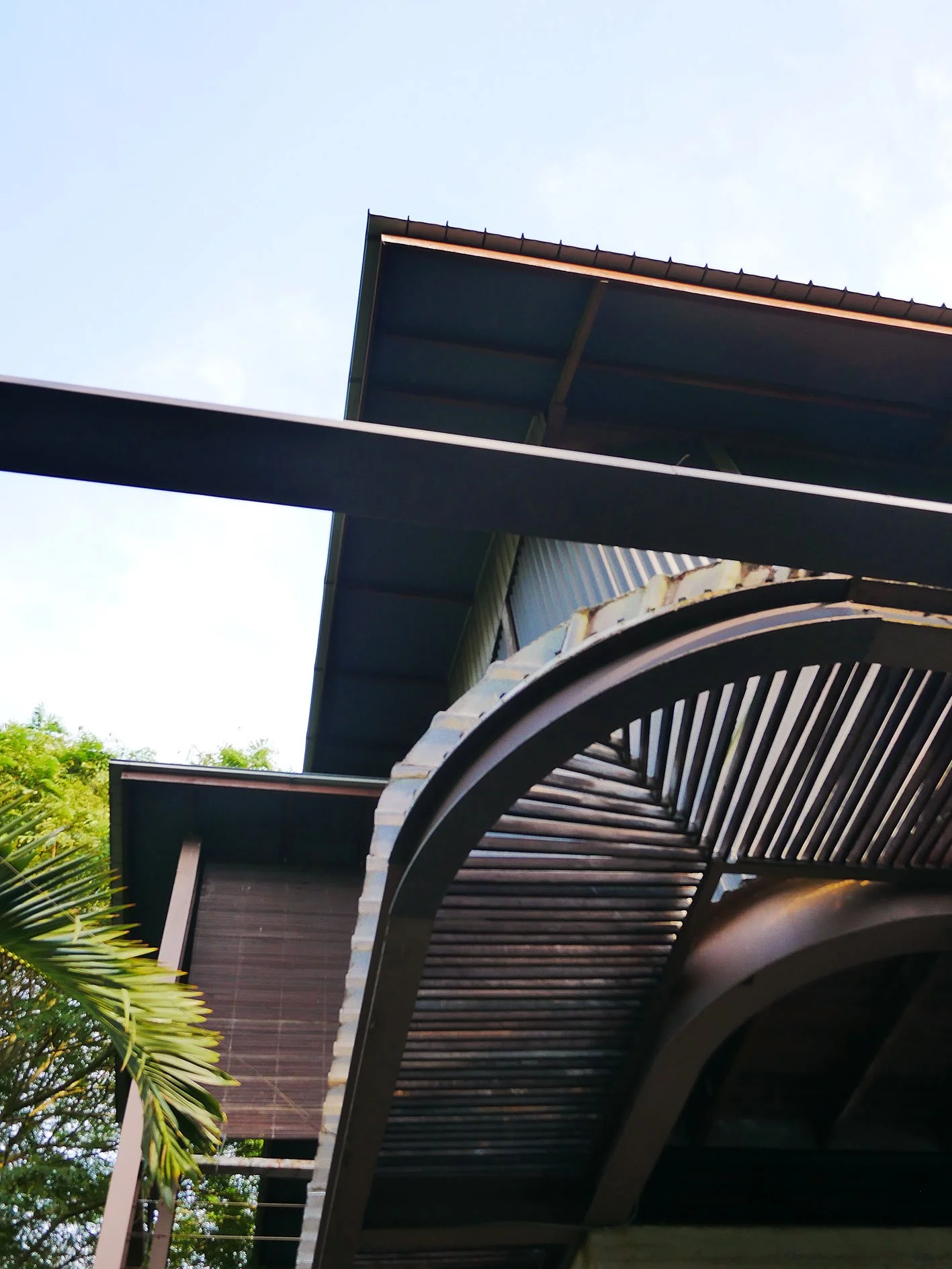
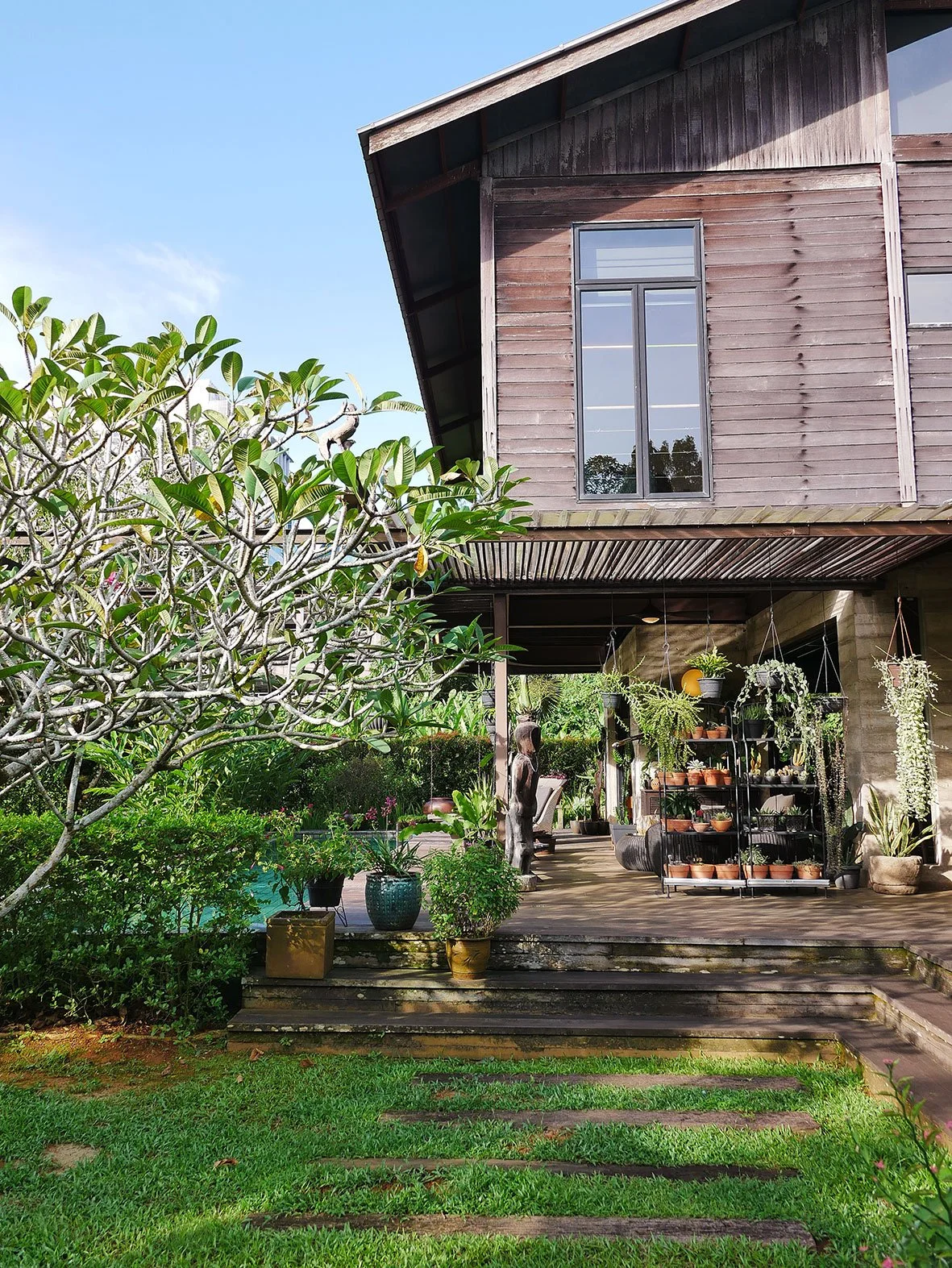
Entry to the home is clearly indicated via a long steel-framed pergola stretching out over the swimming pool. This leads, up a belian deck and between raw concrete walls, to a large rusty steel front door. The ground floor uses materials such as rough off-form concrete and raw steel. Exposed underside of the floorboards creates an industrial loft feel to the large living /dining / kitchen space. The floor is polished concrete, and the kitchen, with bright red joinery, contrasts with the natural palette of concrete, rusted steel and timber. Roller shutters were installed, allowing full openings to maximise ventilation, whilst providing security. The mechanism was left exposed, adding to the raw industrial feel of the space. The parents’ retreat features a freestanding terrazzo bathtub in the bedroom. The bay windows, with terrazzo handbasins, bring the garden into the room.
A timber deck at the back of the house is used for outdoor dining and connects to a guest house. The guesthouse is built from recycled timber from the original house and incorporates antique carved doors from a longhouse. It also has an outdoor bathroom with a bamboo screen sourced from the garden and a sewing machine table as the support for a wash basin. The existing timber stair was recycled and extended by the addition of steel-framed perforated metal steps at the bottom to differentiate between old and new.
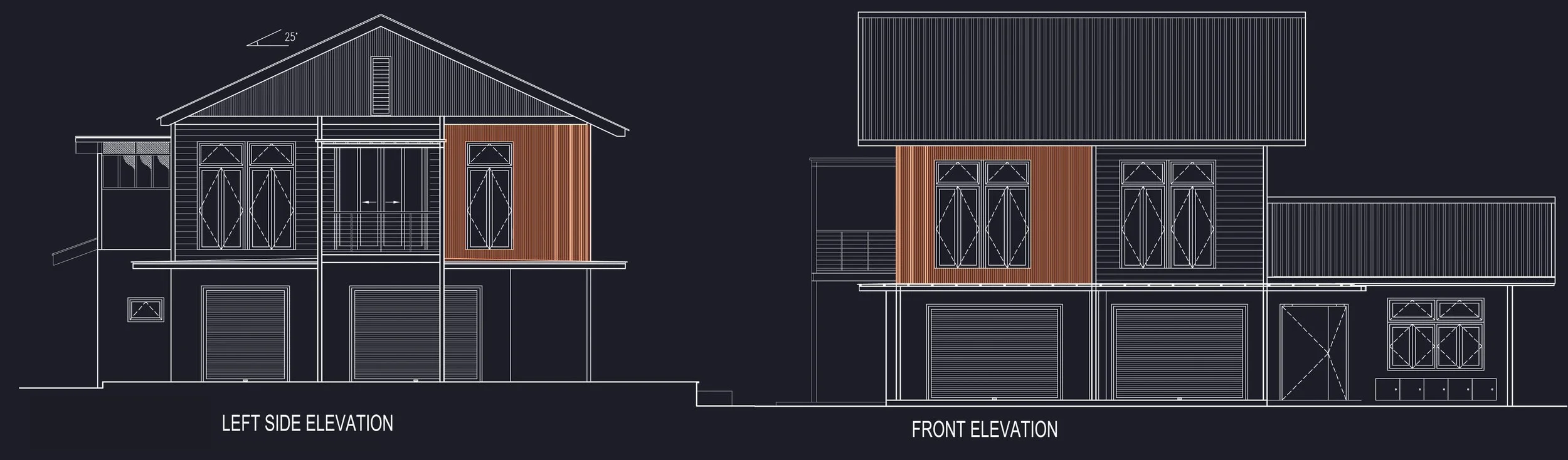
For the first floor, the structure is timber framing with recycled timber walls and floors. New timber trusses were installed with glass infill between them, which allows the space to flow through and maximise light into the bedrooms. The two boys’ bedrooms make the most of the soaring ceilings with elevated built-in bunk beds accessible by ladders. The children share a bathroom with a clear butterfly roof that brings the sky and surrounding trees into the room.
In the girl’s bedroom, a curved steel-clad wall, chosen because of its ability to curve neatly, pays homage to the original 1960s curved balcony that has been incorporated into the room. The first-floor windows are based on the traditional 'kampung' house, a full-height door with a balustrade, but are of modern materials: aluminium tensile wires and galvanised steel.
A black-rendered swimming pool and pond are adjacent to the house and help to cool the interior. Belian timber decks surround the house, providing a transition space between the indoors and outdoors, like a traditional 'lanai'.
The car porch uses raw concrete blade walls and steel columns to support a simple black tensile membrane roof. Landscaping is kept simple, with a large natural fish pond and a playhouse for the children. Screening trees have been planted to improve the views, and as many of the original trees as possible have been maintained.
The house was designed to be sustainable by using readily available, low-maintenance raw materials, which are incorporated in a way that expresses their qualities and for ease of construction. By using natural cross ventilation, via large roller shutters and the cooling effect of water adjacent to the house, to eliminate the need for air conditioning on the ground floor. And by using recycled materials from the existing dwelling, and maintaining as many mature trees as possible in the garden.
It was fortunate to have owners who were able to contribute during the design and construction process. Further, they had a very authentic collection of antique furniture and artworks, and they had clear ideas about how these would fit into the new house. They shared our passion for using raw materials and encouraged us to experiment with materials and interesting ways of detailing; to reduce the budget and come up with an innovative, sustainable and pleasant family home.
Text by the architect
PROJECT GALLERY


-
Architect : CC Chan Architect
Client : James and Servane Lo
Area : 2,023.43 m²
Project Location : Kuching | Sarawak
Year : 2007 -
Design Team : Ar. Chan Chaw Chuan | Megan E. Chalmers
Photography : Sean Wee | Mohd Khaliq Nadzmi bin Hamkar | Mark Eng | Ar. Chan Chaw Chuan -
—
Share this project