
Open House II
Updated April 2026
The Open House II is a continuation of an earlier house that was completed almost a decade ago. To cater for the growing needs of their four boys, the owners bought the adjacent plot for a new house. Besides that, it is expected that this new house will be the venue for family gatherings and parties for friends and colleagues. The house, therefore, has a formal entrance from the west and a family entrance from the older house due east.
The client has Iban ancestry as well as a prominent standing in the local Chinese Chamber of Commerce. We saw this as an opportunity to infuse some of the family’s heritage into the design and the planning of the house.
The plan is derived from linkage to the existing house, in the form of a ruai, which serves as a gallery with rooms behind the display walls for servants and amenities. We also wanted to evoke the streetscape of Kuching Main Bazaar, with its five-footways, shop fronts, and tall shutter windows facing the street. These were some of the design ideas at the beginning of the project.
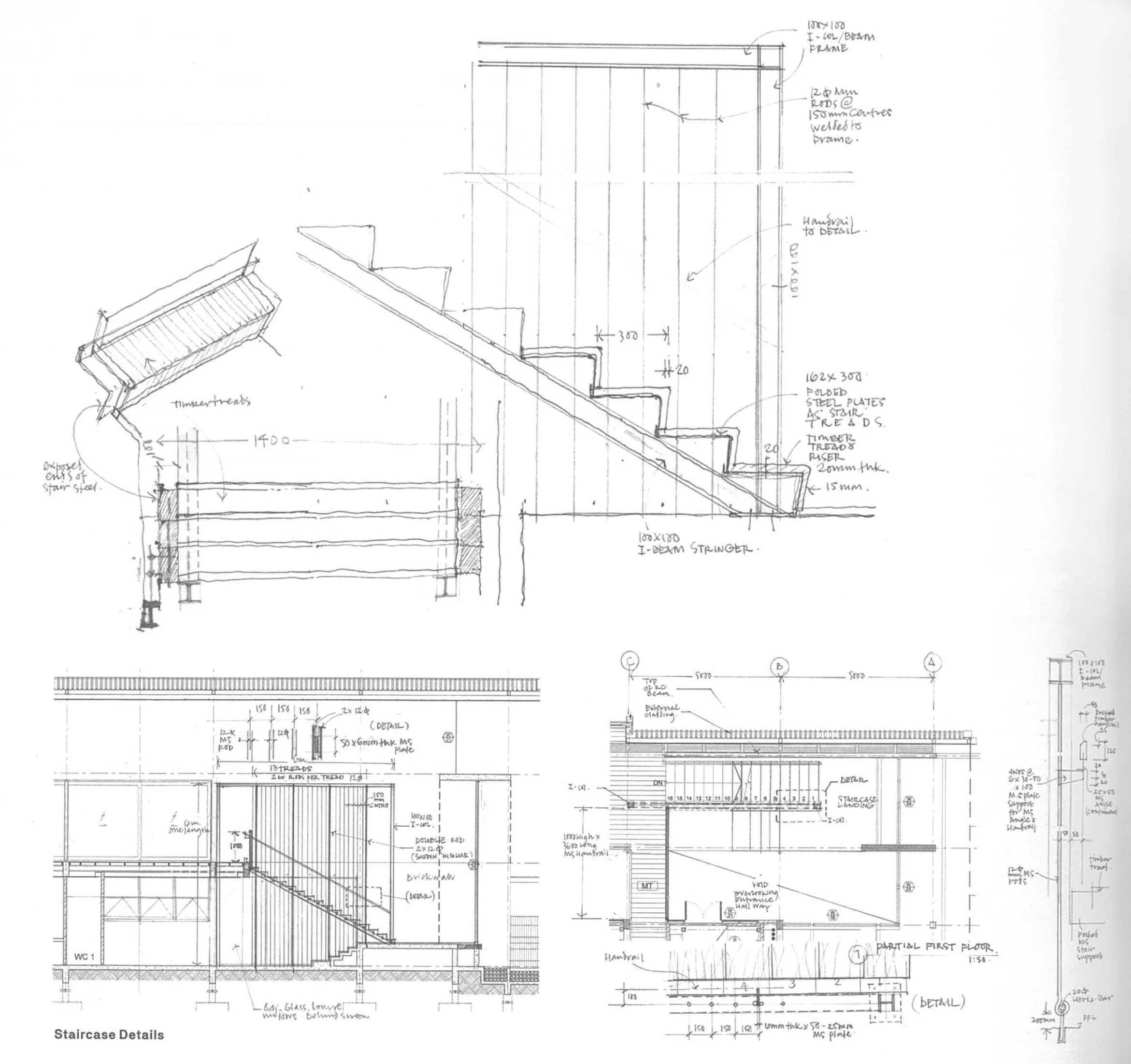
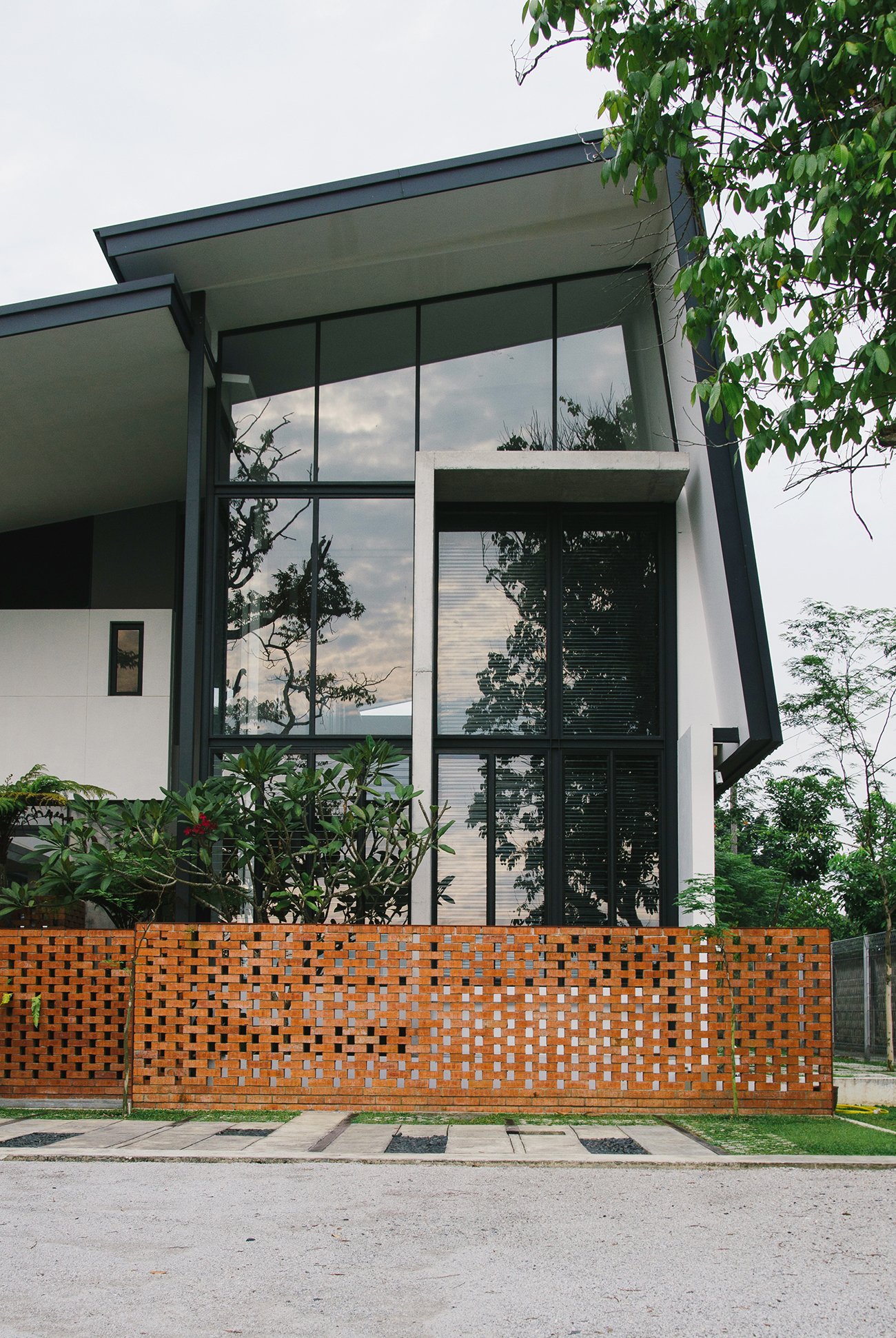
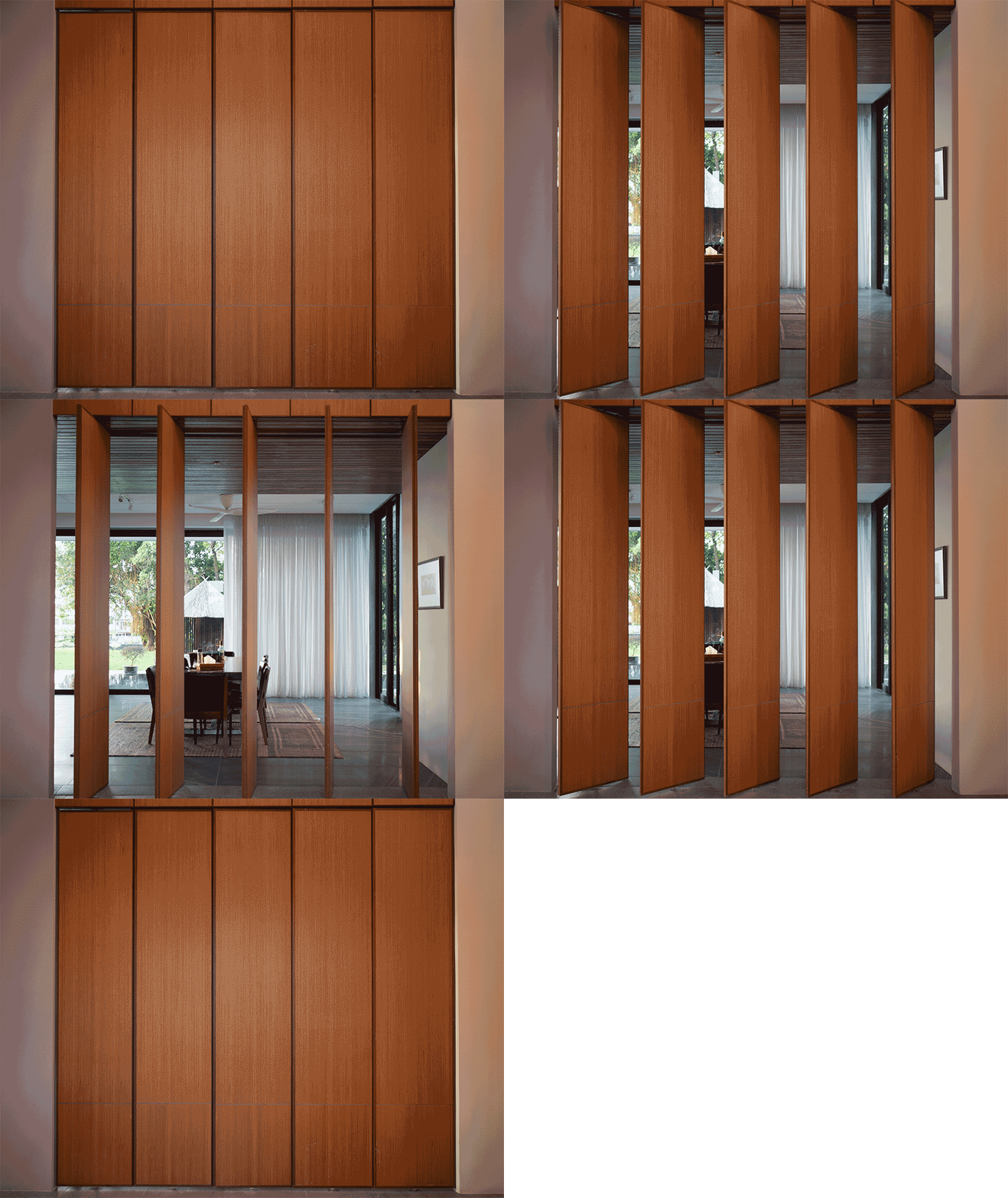
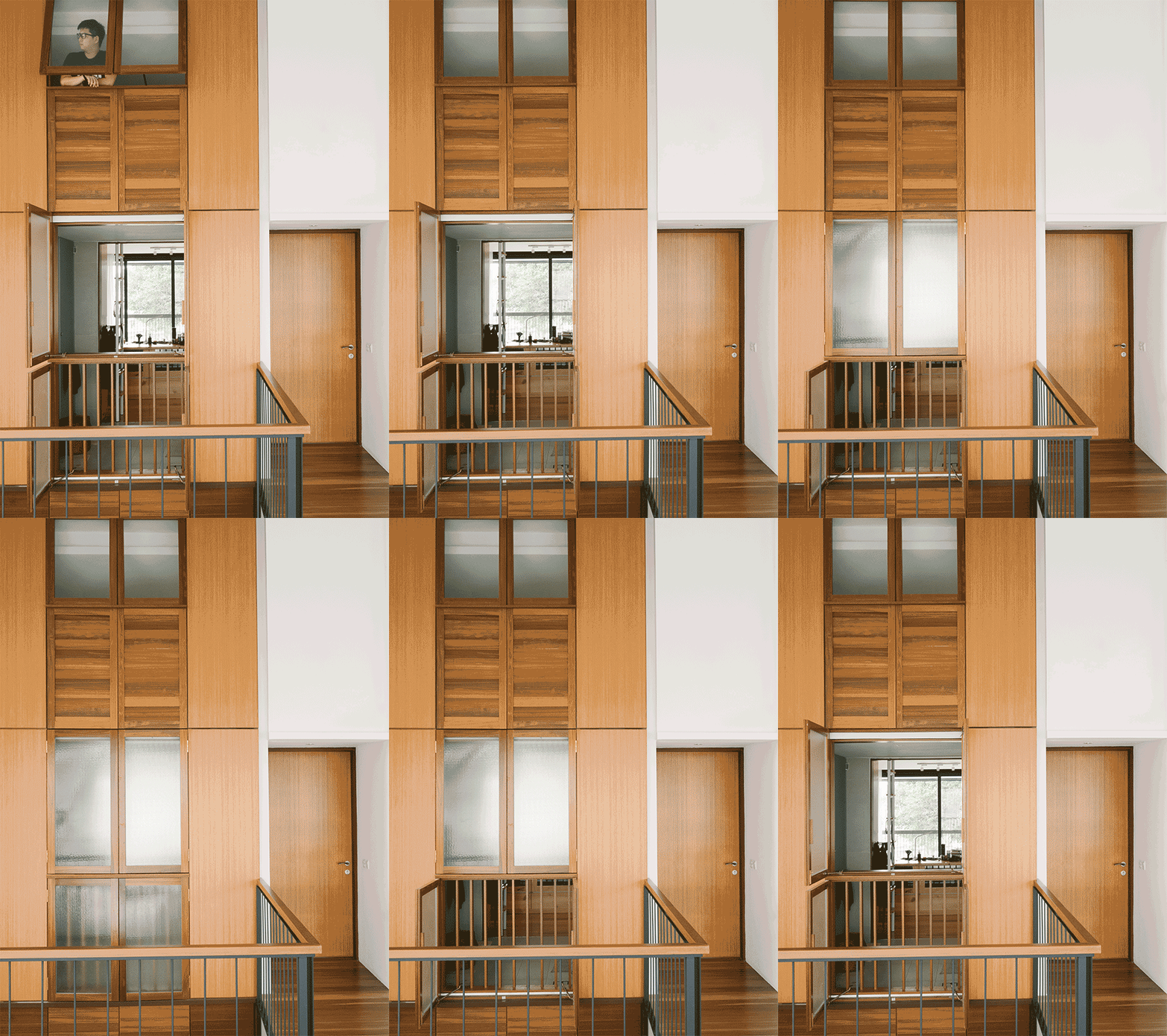
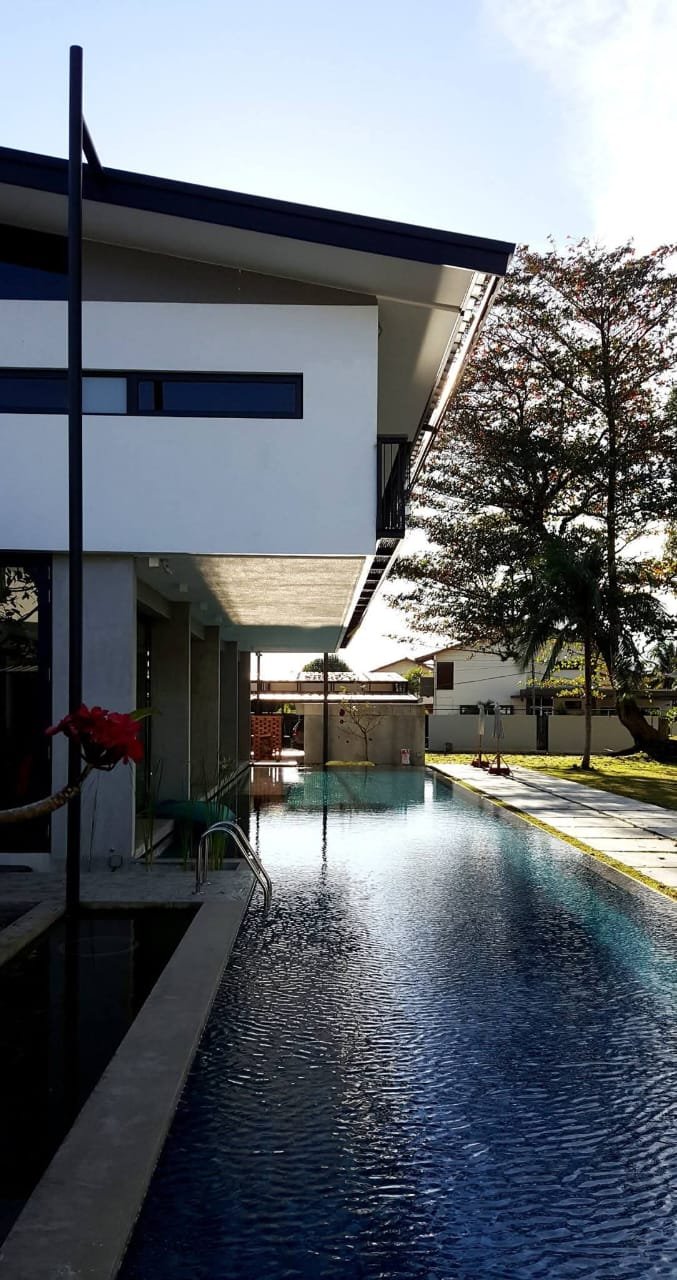
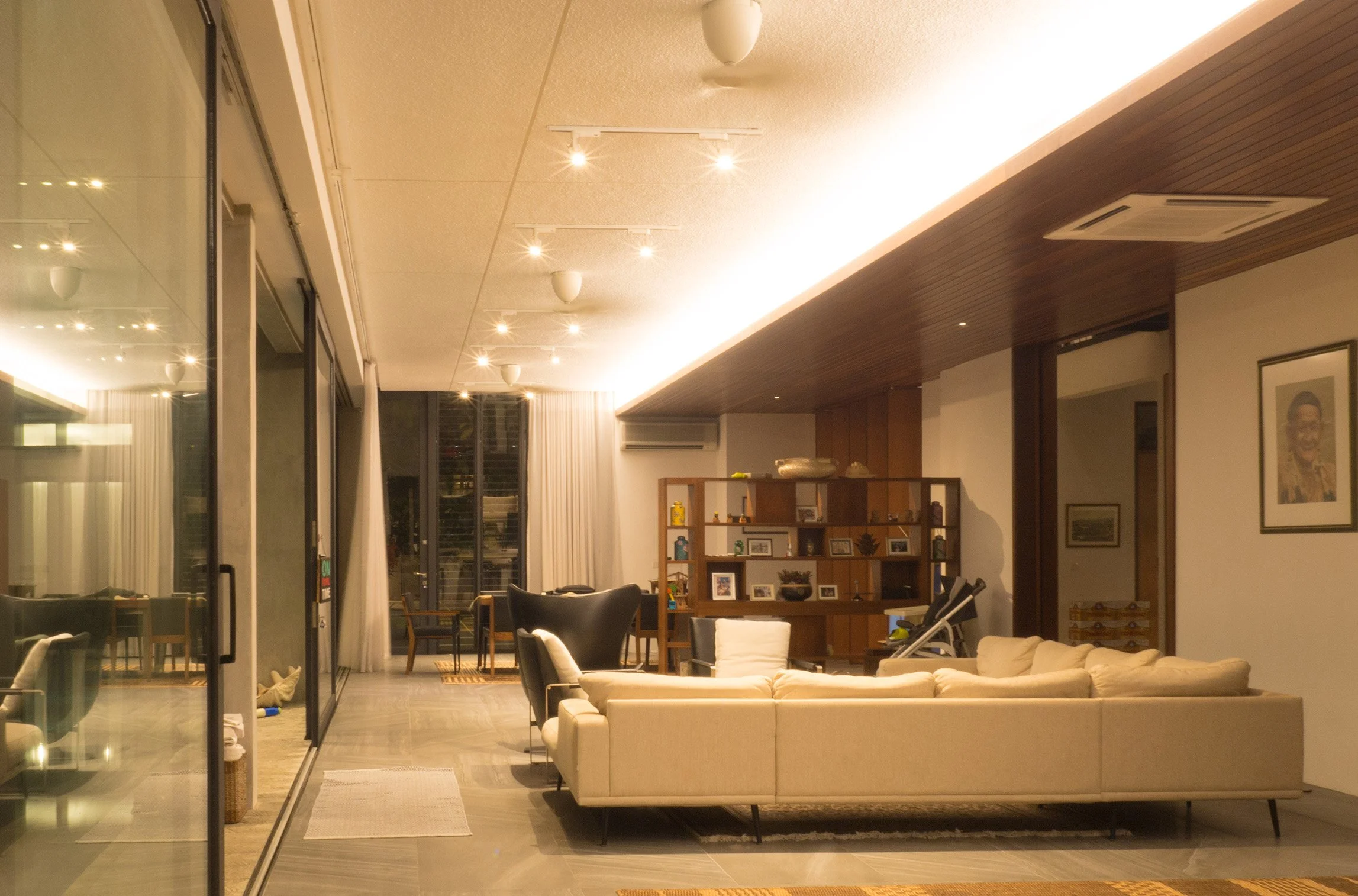
In the new house, the ruai evolves into a double-height space with the bridges leading to the boys’ bedrooms, forming part of the streetscape. The tall elevation of the boys’ bedrooms is lined in timber panelling, alluding to the old bazaar shop fronts and adding a simple yet effective variation to the whitewashed walls. These timber panels slide or pivot away to reveal the new living and dining spaces, which are one simple open space. The linear plan benefits from a north–south orientation with views of the pool and the garden beyond. First-floor beams are turned up and concealed in the walls dividing the four bedrooms, resulting in a clean soffit of slab, which becomes an economical ceiling for the ground floor. This reinforces the idea of the undercroft space of a traditional house when the sliding doors are open, especially as the afternoon breezes permeate the spaces.
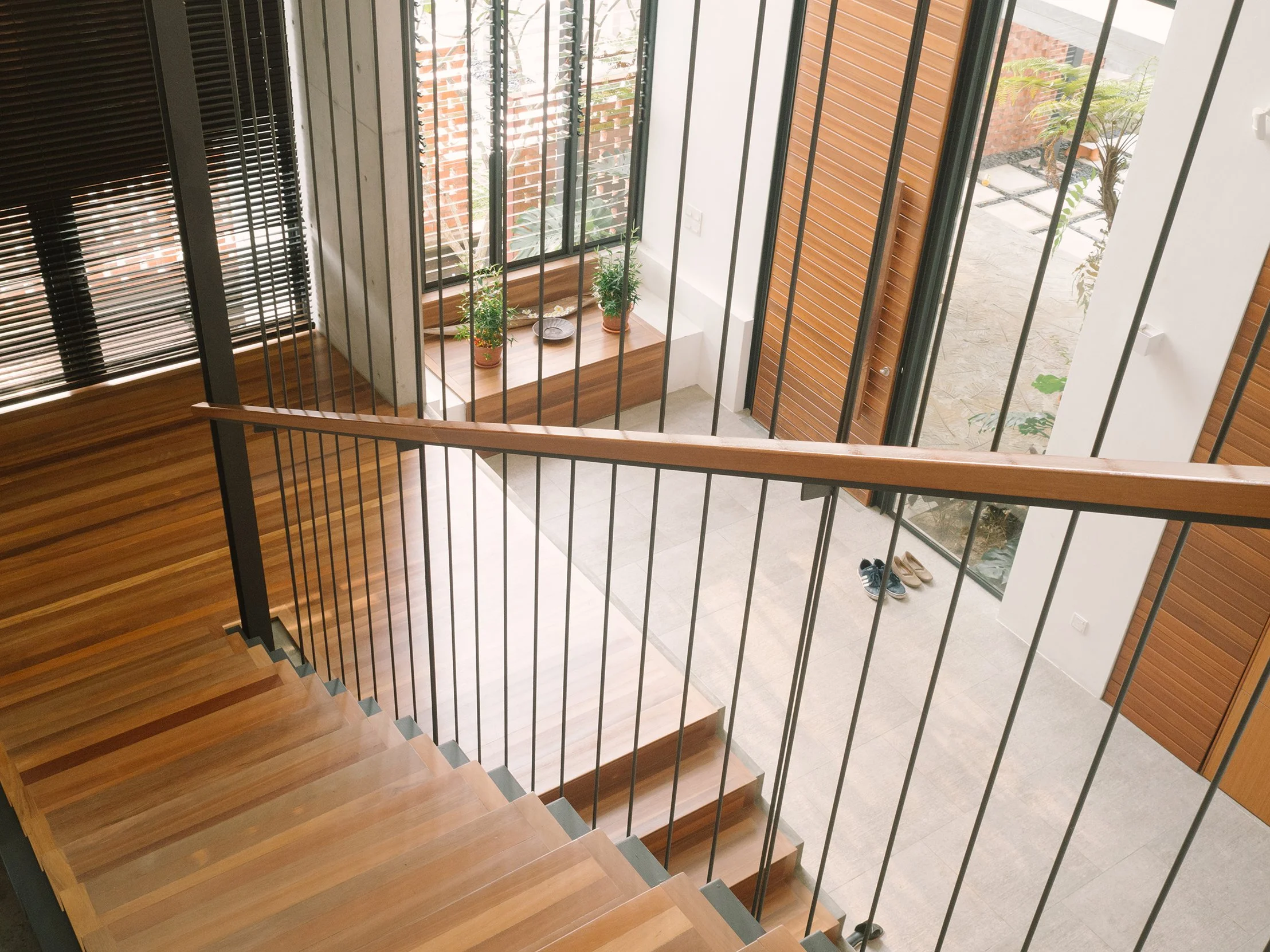
On the first floor, a series of bridges link the family space to the bedrooms. The bridges are perhaps a reminder of the riverside jetties the boys’ great-grandfather would have been familiar with in their business — or perhaps they are simply a device to accentuate the height of the ruai. Nonetheless, they create a sense of privacy for the rooms, especially as the doorways to the rooms are slightly recessed from view below. The rooms upstairs cantilever 3 m to shade the living spaces below and to allow the boys to launch themselves into the pool from their bedroom balconies.
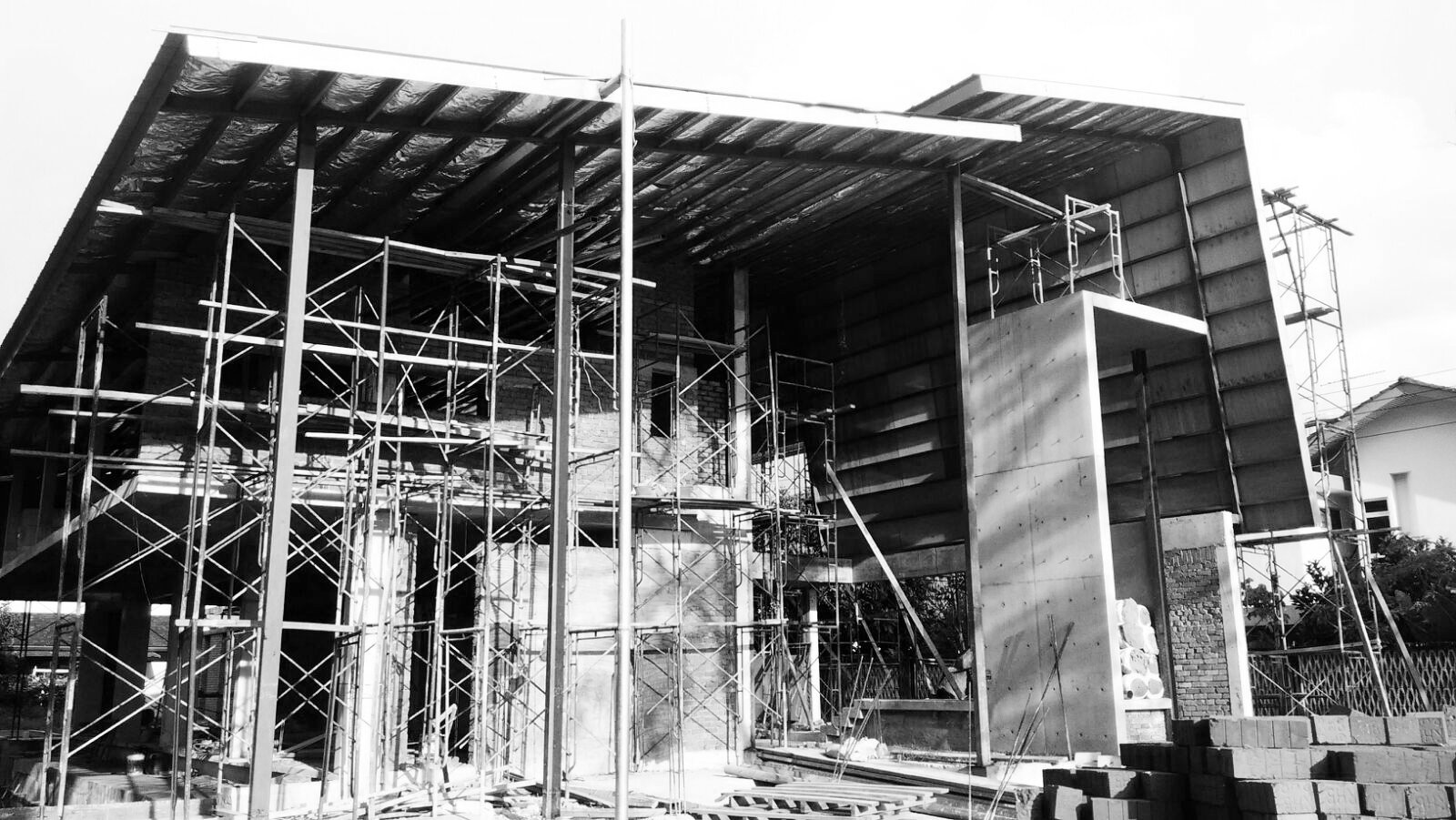
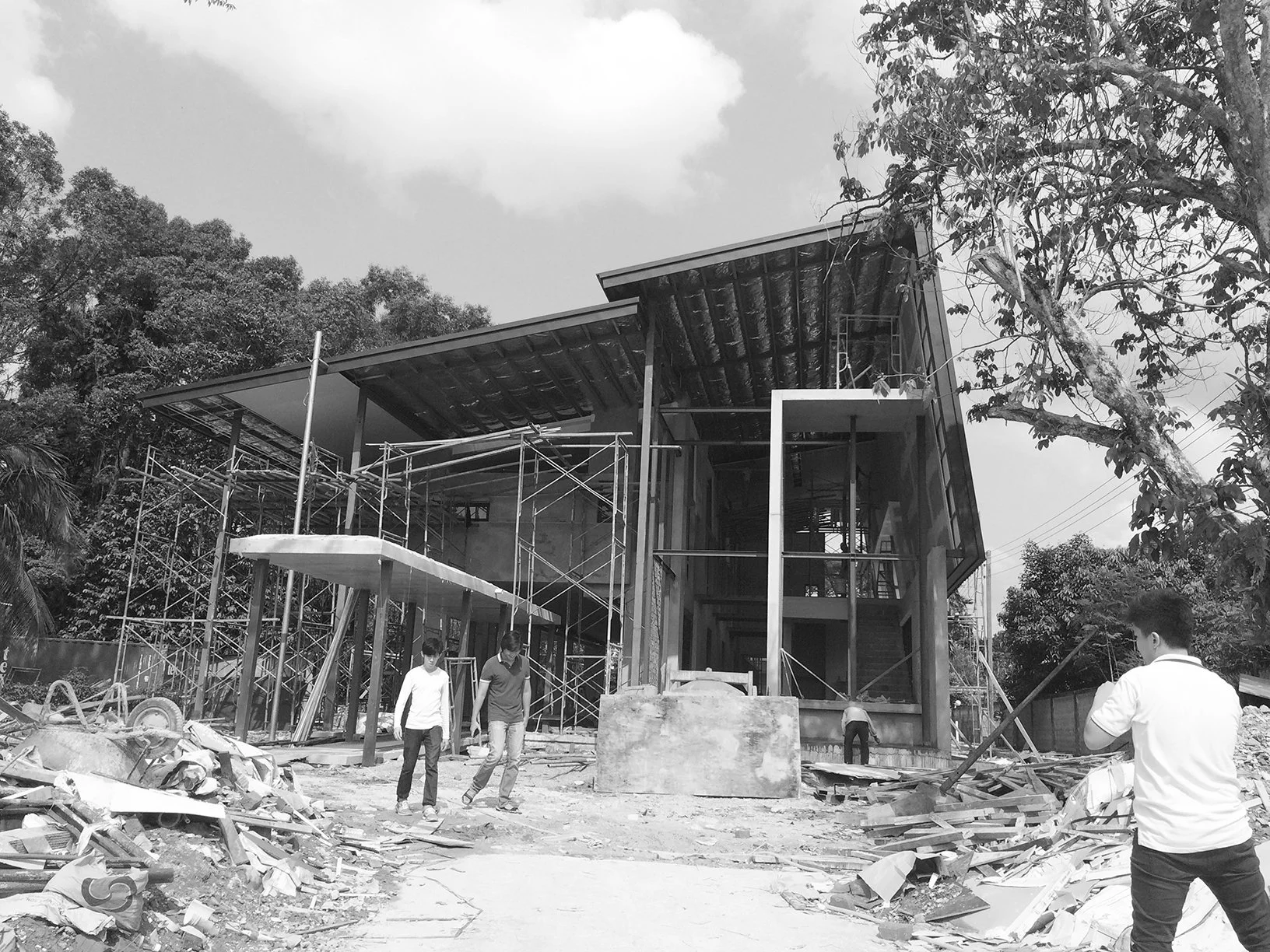
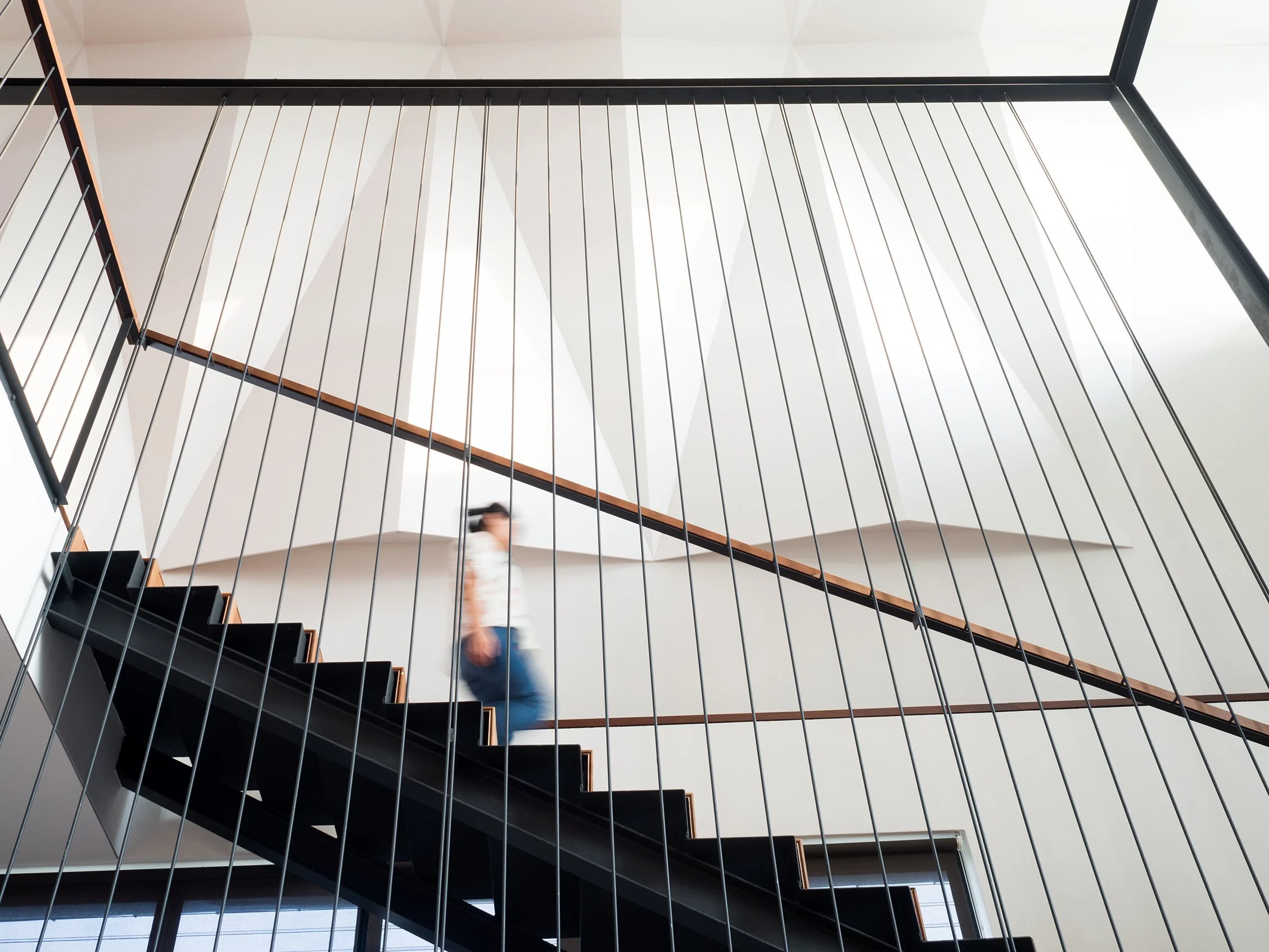
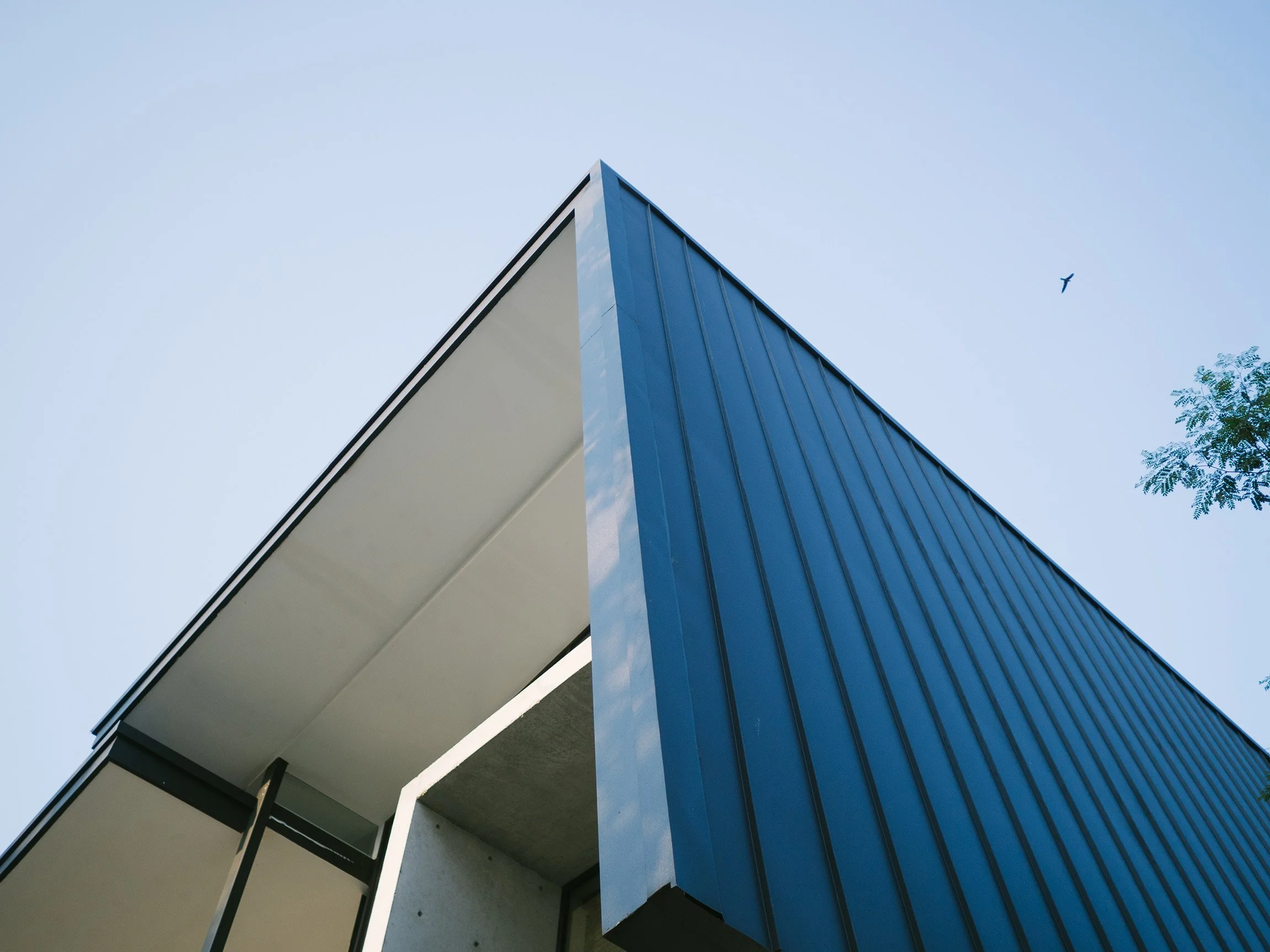
A distinctive feature of this house is the roof — a re-adaptation of the traditional gable roof expressed as a sheltering element under which the living modules are inserted. There is a jack roof to ventilate the double-height ceiling of the ruai. From the street, the architectural expression seems quite straightforward — but the origami ceiling of the ruai and leaf patterns at the entry footpath hint at moments of whimsy throughout the house, mostly created from a simple palette of concrete, timber, and steel.
Shortly after the completion of this house, a dining pavilion was commissioned at the mid-point of the journey between the two houses. It is a break in the journey, a subtle gesture to distinguish between ‘theirs and ours’, a place for parents and children to congregate for meals, and a sculptural element to end the pool vista. Later still, a nursery was commissioned and built on top of the ruai when the newest member of the family arrived in late 2017.
Perhaps the most interesting part of this design journey is one of continuation — a house that is able to adapt to change as the family grows up without growing apart.
*ruai - the communal verandah of the ‘biliks’ (rooms) in an Iban longhouse, often the venue for community activities and celebrations
Text by the architect
PROJECT GALLERY










-
Architect : Design Network Architects
Client : Dato Richard L.C. Wee and Datin Dona Drury-Wee
Area : 483.51 m²
Project Location : Kuching | Sarawak
Year : 2017 -
C&S Engineer : Wee Hii Khoon
Contractor : Liew Kuet Chen
Landscape Contractor : My City Landscape
Design Team : Wee Hii Min | Claudia Law | Fiona Law | George Lee | Vivian Kuan | Tan Sher Lin | Sean Wee
Photography : Lionel Kueh | Eunice Chai | Sean Wee -
Wall Finishes
• Wall Covering : Curtain and blinds by Maxtrack
Roofing Systems : UNISEAM 360 by UGI
Aluminium and Glazing : Seng Lee Glass
Pool Systems : Aquatech
Kitchen Fittings | Systems : HomeMax
Lighting Design | Fittings : JustLight | Ower
Share this project