Pearls of Wisdom
阅读中文版
Late last year, our friend from Taiwan, Eric Chen invited us to participate in a Land Art Festival that he was organizing in Taoyuan in the following year. Eric is a Professor at Chung Yuan Christian University, he is skilled in organising collaborations between local government agencies, universities with fellow architects and artists. Indeed, at that same time he was also planning an art exhibition in Taichung titled “Tanah+Air” to celebrate artists from Malaysia and Taiwan - our Chai Kit Siang; local history and cultural researcher is a collaborator with Malaysian architectural firm; Tetawowe to curate this exhibition.
In my limited Mandarin, I lost much of the plot as Eric explained the mechanics of these events; I nodded along fueled by Eric's enthusiasm, placing my trust in my other 2 collaborators, Tay Tze Yong and Chai Si Yong to understand what is required of us. From memory, my only contribution was what architects typically do at the hint of a project - I asked for a project brief. And a site plan.
Three months passed.
And then the brief arrived - 59 pages detailing the festival’s project's broad objectives for 35 km of Taoyuan’s Coastal Corridor, which has been grouped into 6 precincts with distinctly different terrains and cultural backgrounds. It became clear to us then that this is a consolidation of efforts by the organisers who have been implementing community engagement projects in Taoyuan in the past few years.
For the 2026 Taoyuan Land Art Festival however, there is a transition into a cross regional, biennial framework, which is no longer centered on single exhibition areas or short-term displays; art as a precious object to appreciated at a distance. Instead, the festival focuses on the "Pearl Coast" (珍珠海岸) a series of envisaged project/sites (pearls) strung along the 35 km coastal corridor composed of sand dunes, wetlands, algal reefs, stone tidal weirs, and fishing settlements.
The participants are asked to explore the coexistence between humanity and the ocean, as well as the tripartite of daily life, ecology, and industry. The brief also called for us to engage with the site and its cultural history, and in doing so successfully, the project becomes a medium to engage with the community, provoke dialogue about real world issues and foster a more profound understanding between cultures; both local and international.
In January 2026, Eric launched an international Open Call for submissions, and formally invited us to submit a proposal. We selected a site using Google street view and came up with some design concepts and narratives, and submitted our proposal to the organisers.
In March 2026, we were informed that our ‘site’ has already been pledged to another participant - we were to select another site, which we did and consolidated our design combining the two main ideas into a conical shelter ringed by tubes with a fabric sculpture within. We liked this outcome and thought it had a good balance of abstraction and buildability. We submitted it for approval.
Concurrently in Taoyuan, tenders are being obtained for the various Land Art installations – there were 72 of them within the 6 zones. A contractor has successfully bid for our scheme, and Tay started coordination meetings with them.
In May, Tay met with the co-curator and builder in Taoyuan when we were told that our site has been changed again, this time to the Caotao sand dunes (草漯沙丘). There were also changes to the design due to site accessibility, time, cost and some design suggestions from the co-curator.
Construction of all the 72 projects were targeted to complete at the end of June for the official launching on the 3rd of July 2026. The construction of these installations is carried out in several ways - by engaging local builders to construct for local and international designers. Yet another method is construction by the designers/artists themselves who arrive in Taoyuan months earlier and construct while 'inresidence'; funded by the grants obtained from their successful bidding during the open call for submissions. There are also local participants who are self funded by universities and agencies; keen to contribute to the dialogue and leave a physical legacy.
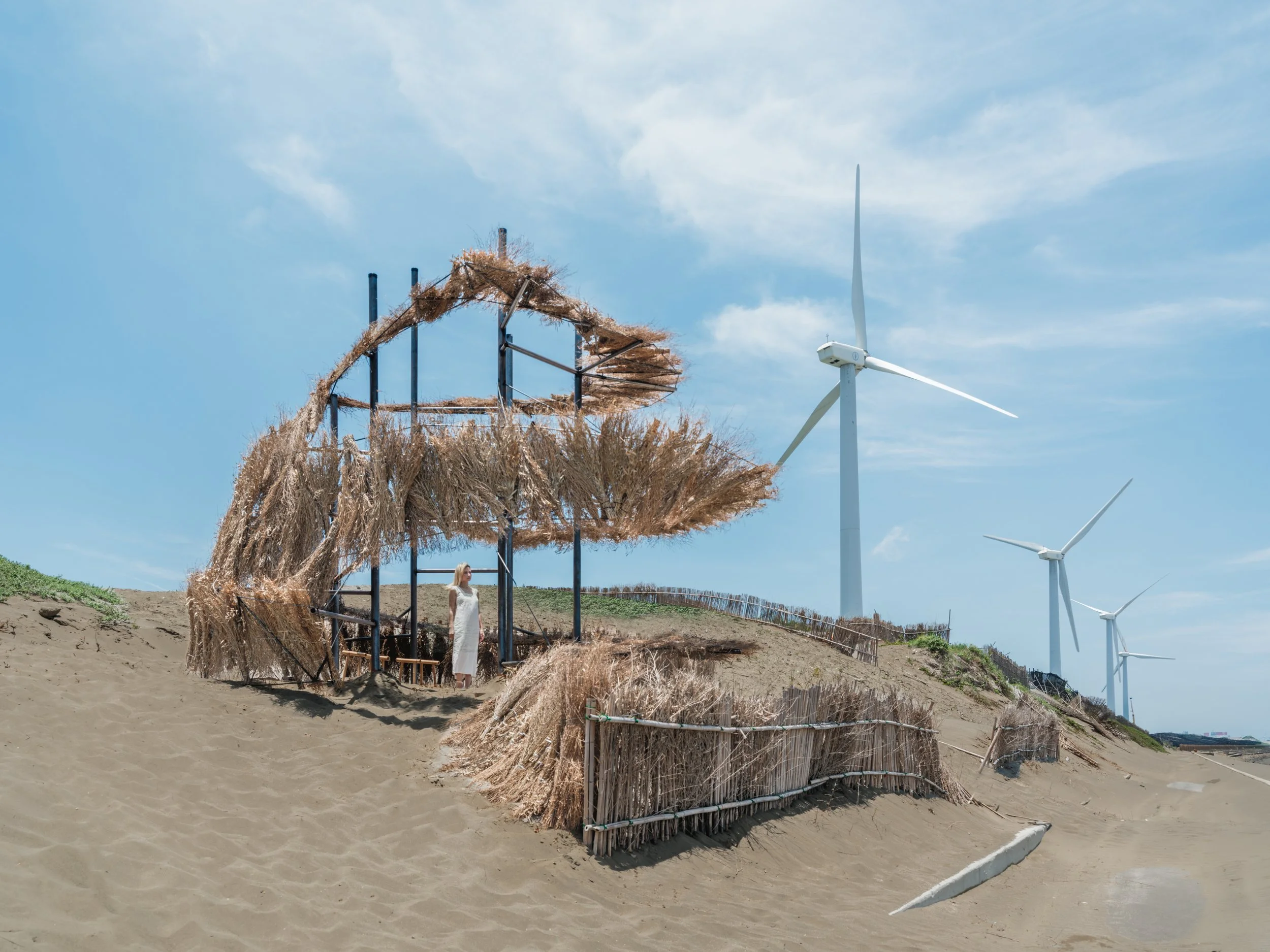
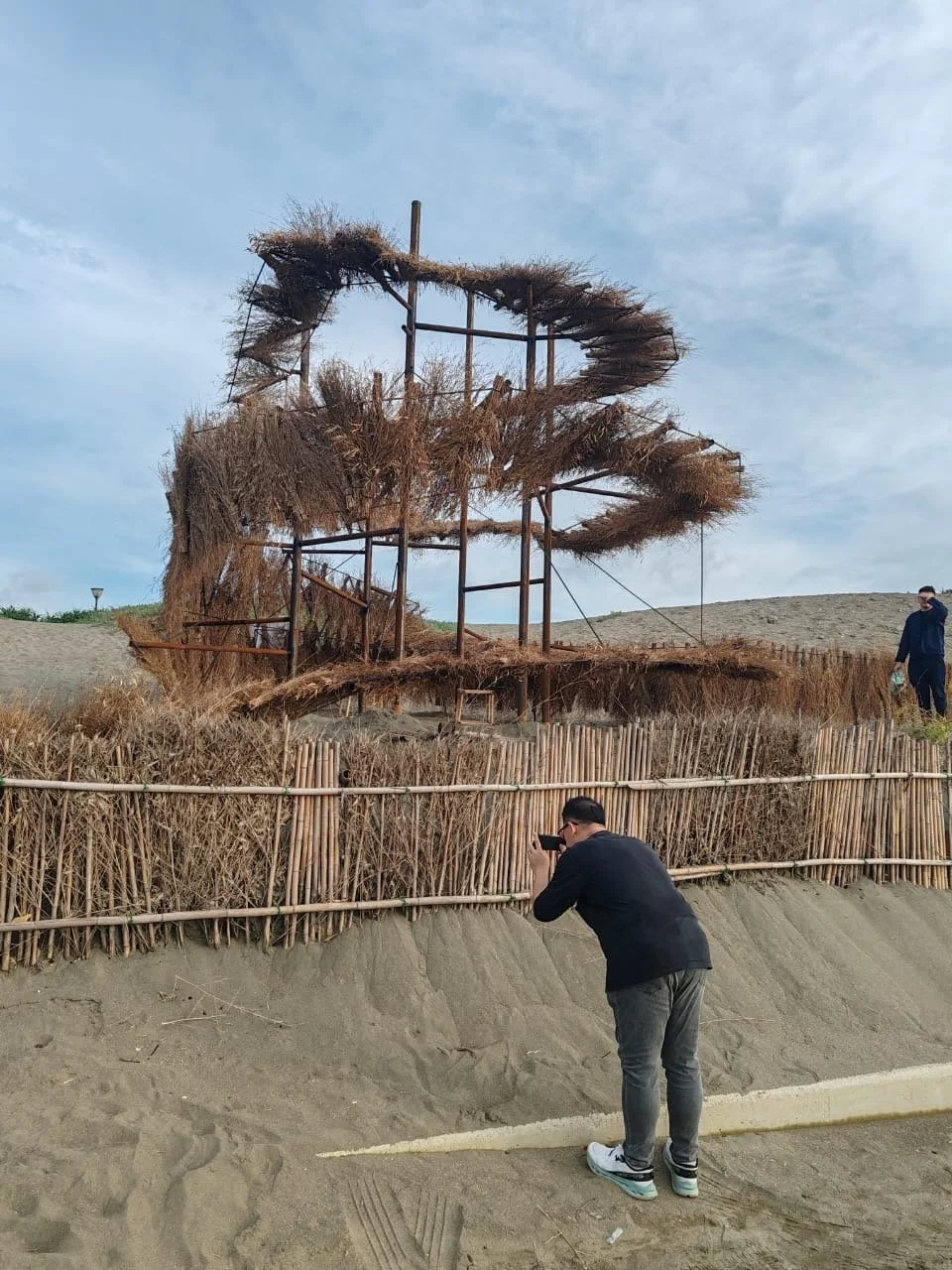
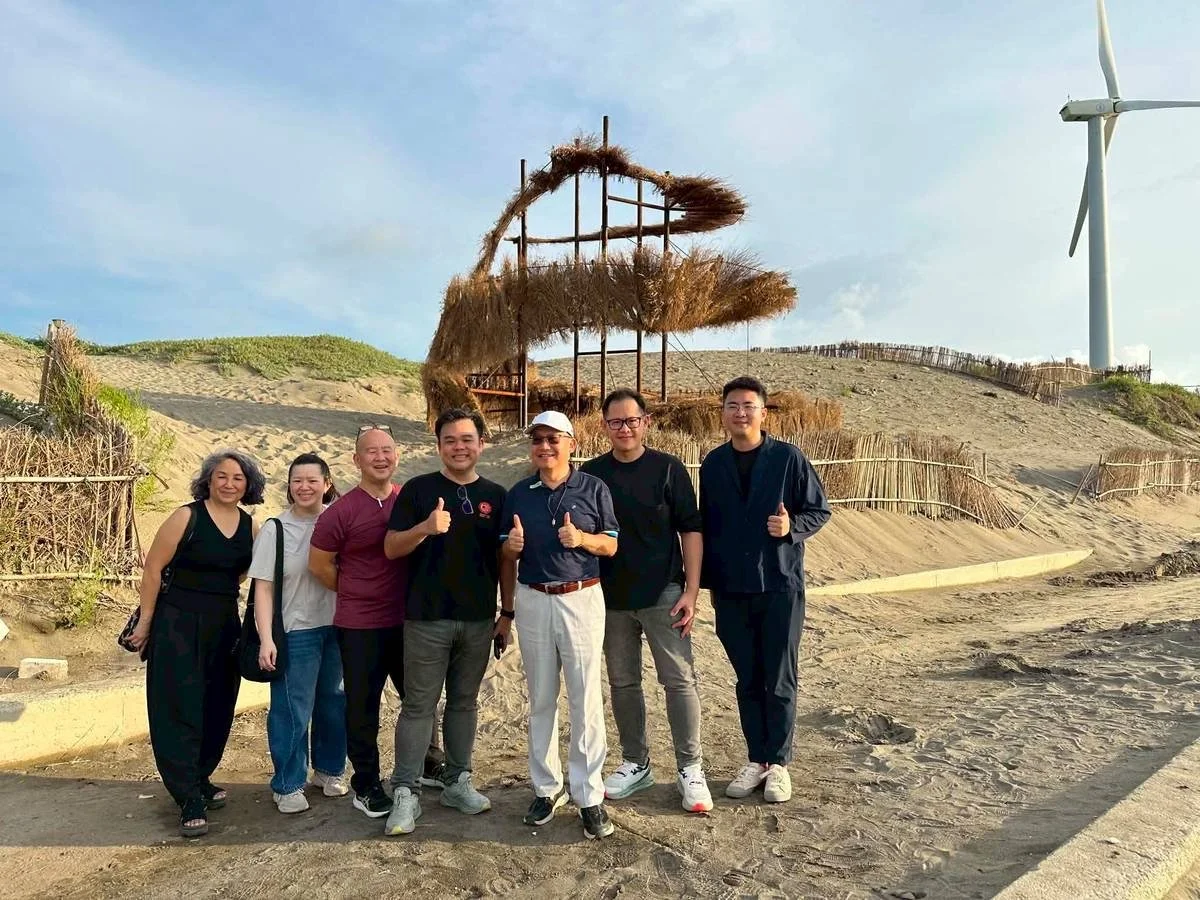
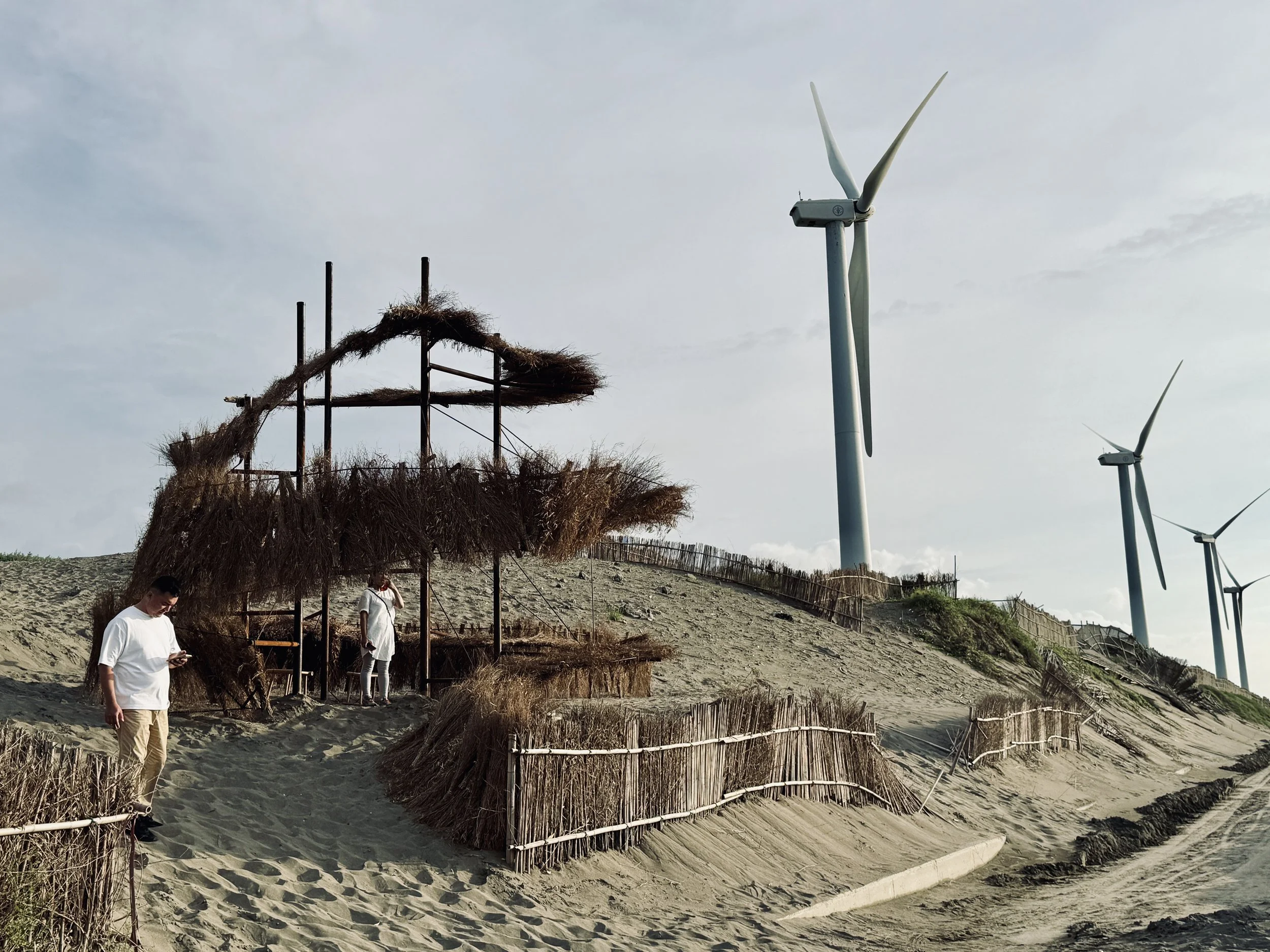
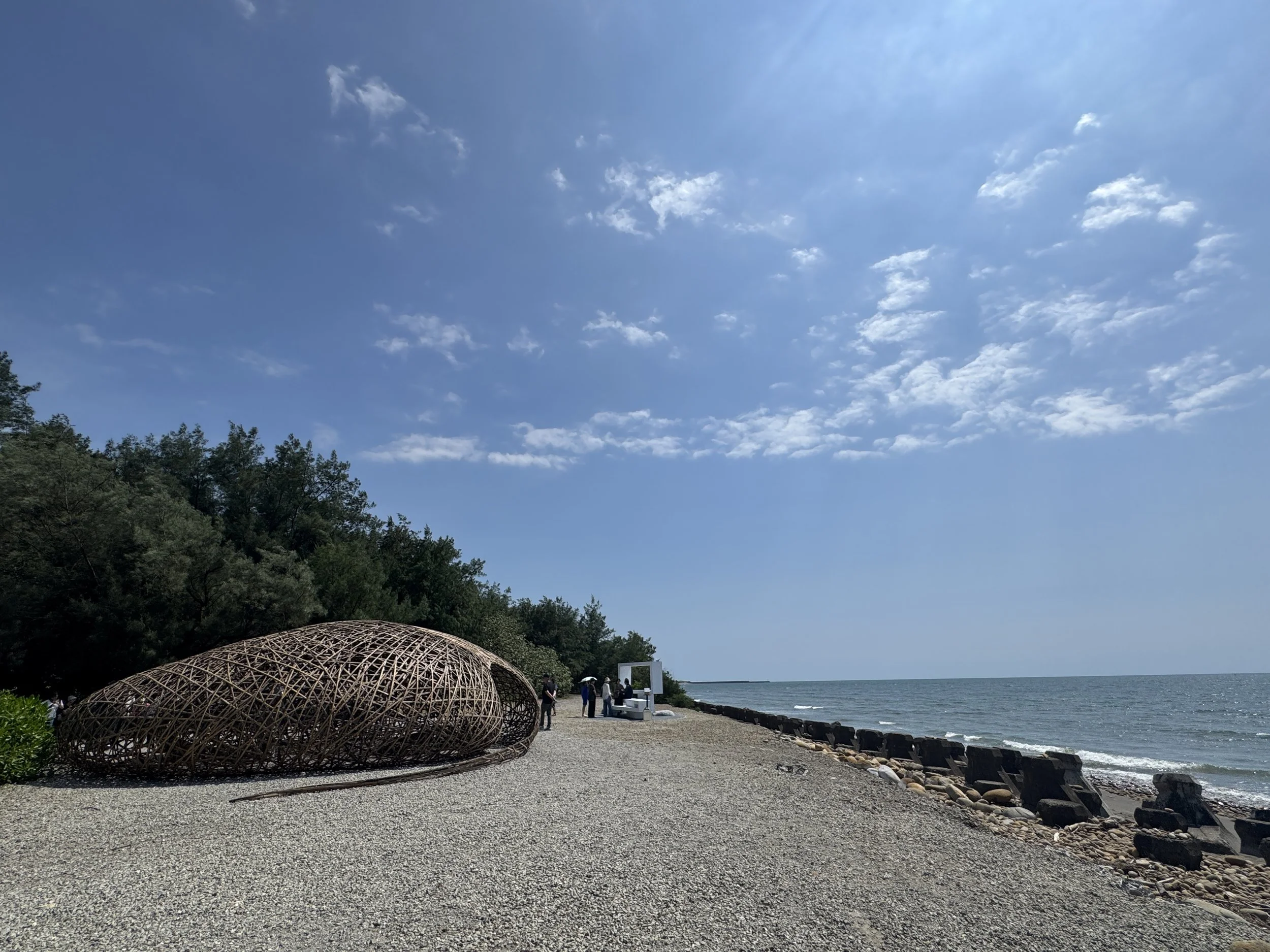
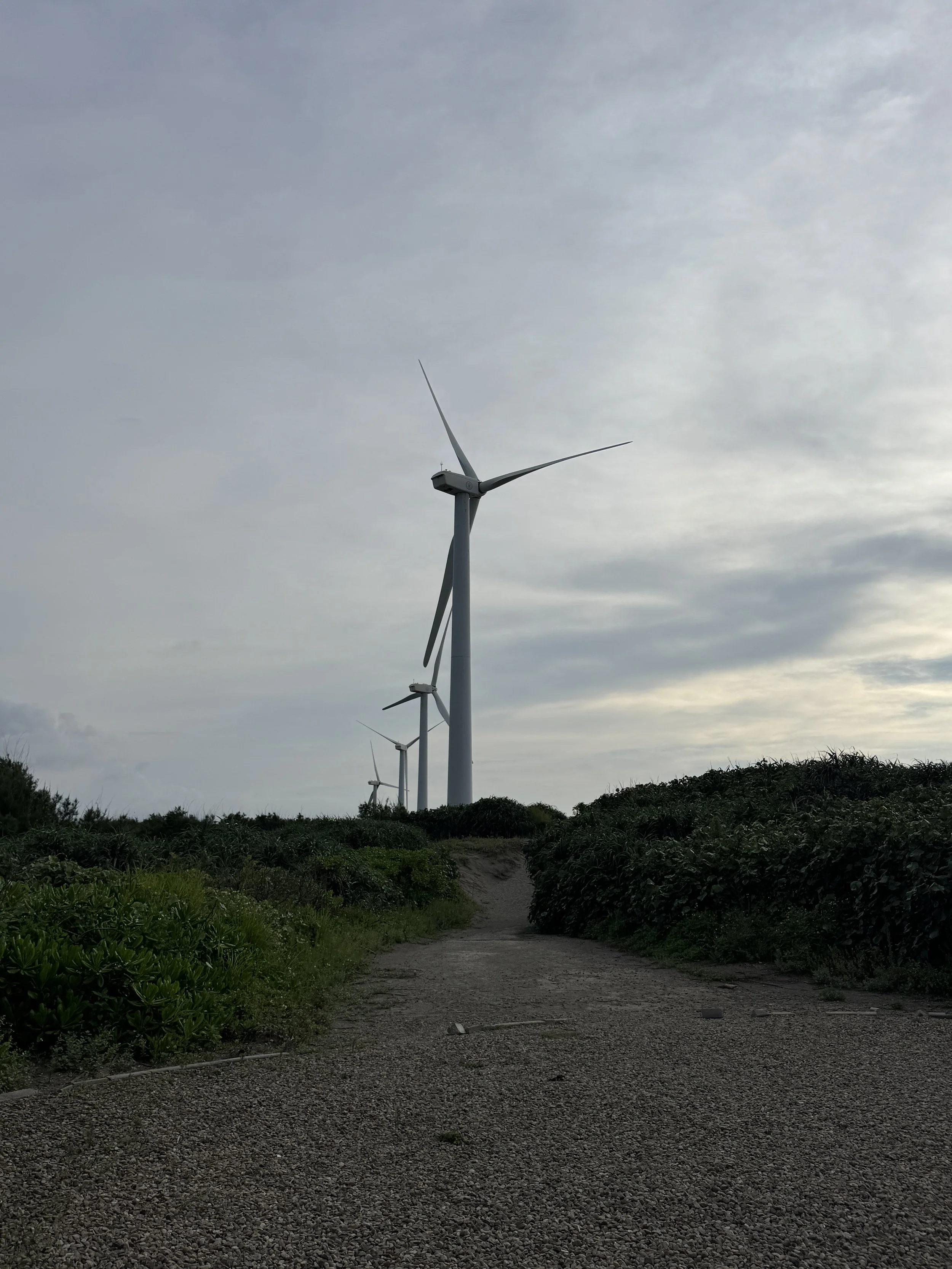
We arrive on the 1st of July 2026 to visit our completed project, and to participate in the official launching (3rd July) and Design Forum (5th July). Our site is a walk through dense vegetation which opens to a sandy beach; small traditional houses and tall wind turbines provides a stark contrast in the coastline. Stretches of bamboo fences act as barriers to mitigate sand migration. Our design takes a cue from this device; the bamboo thatch is used to frame and clad our pavilion before feathering out in the sky. As we were admiring our handiwork, the Director of the Department of Cultural Affairs in Taoyuan City, Mr. Chiou Jengsheng (邱正生) arrives, and complements us for coming this far to participate. He is familiar with Sarawak and has been to Kuching recently.
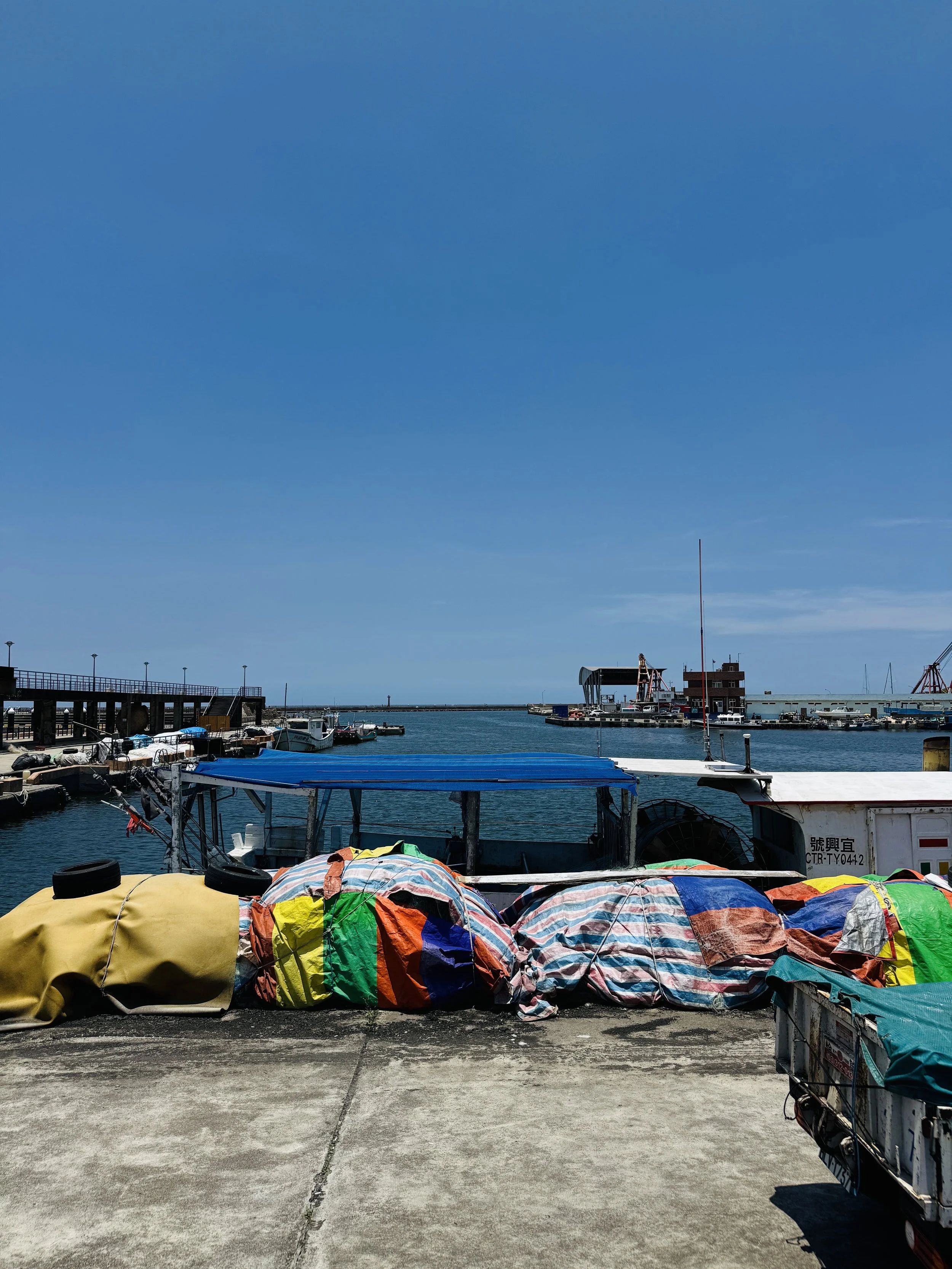
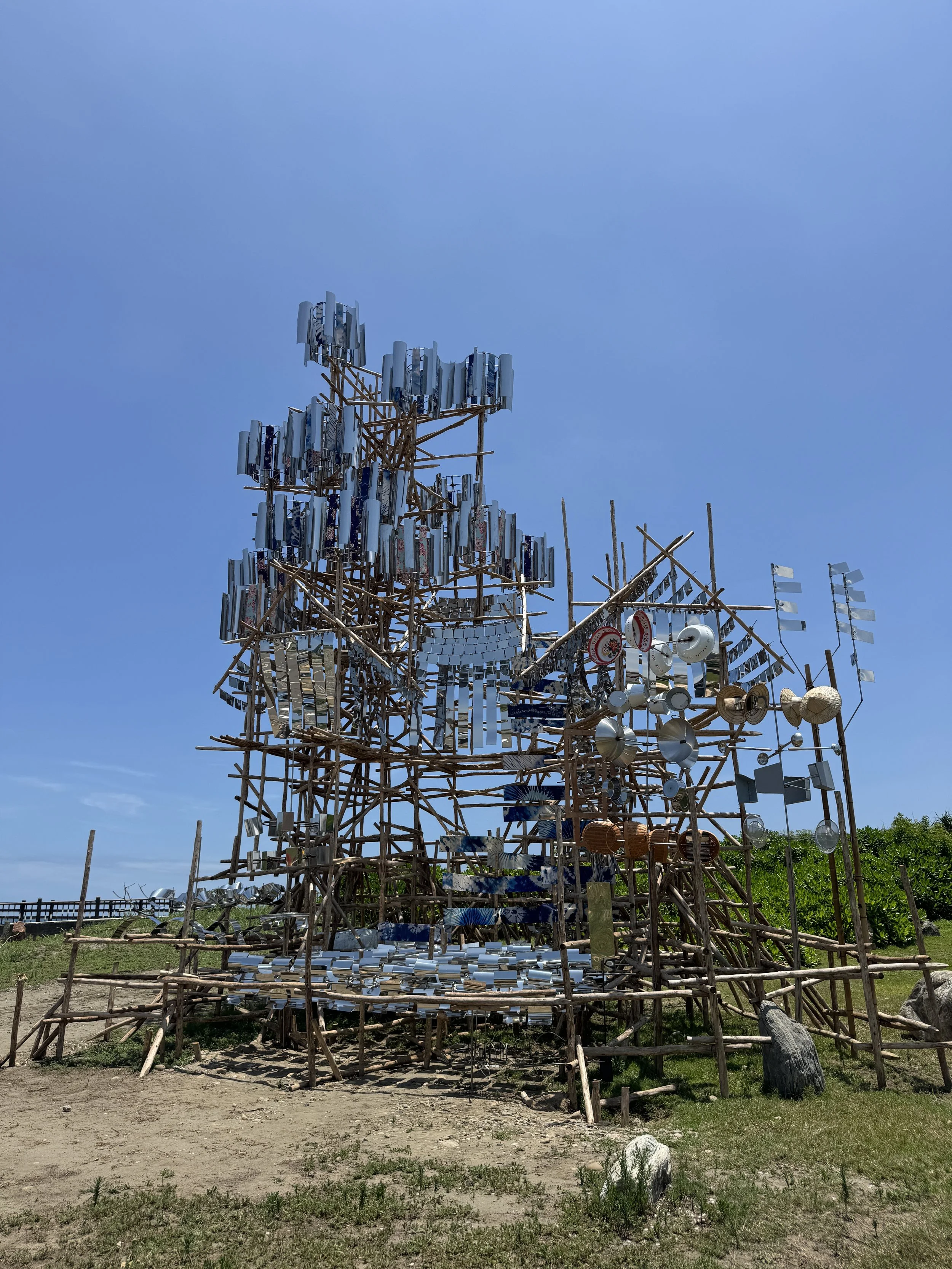
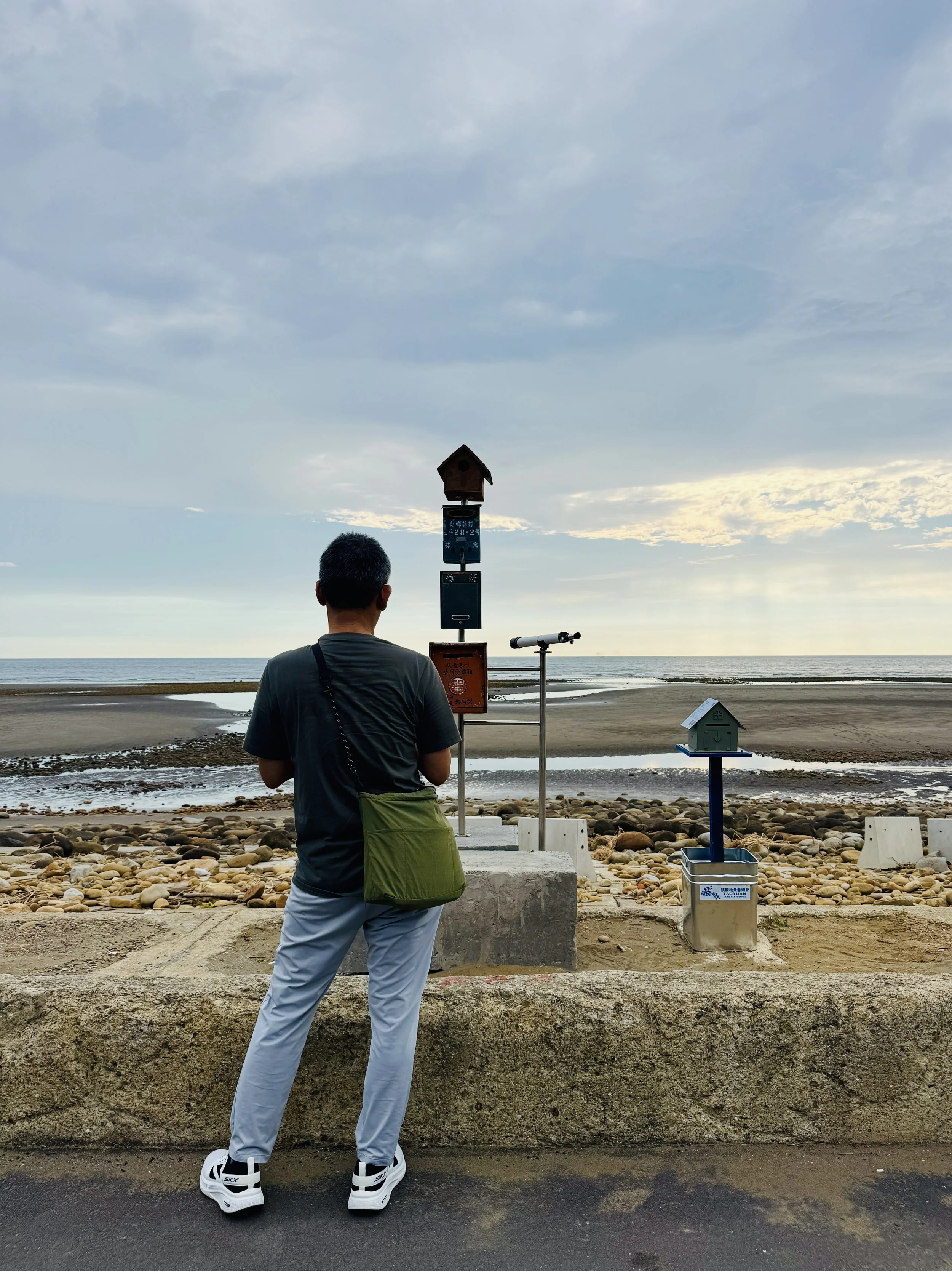
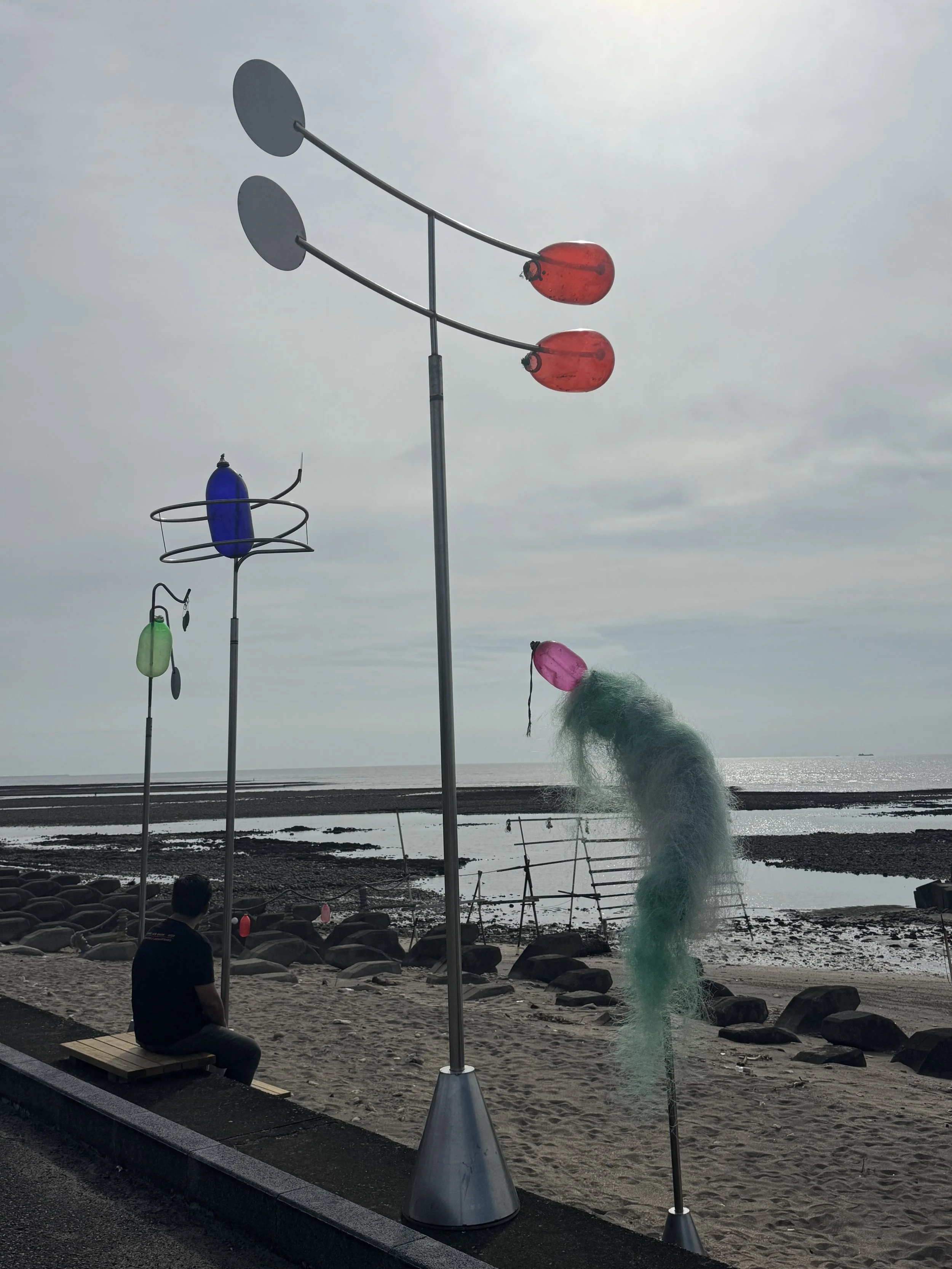
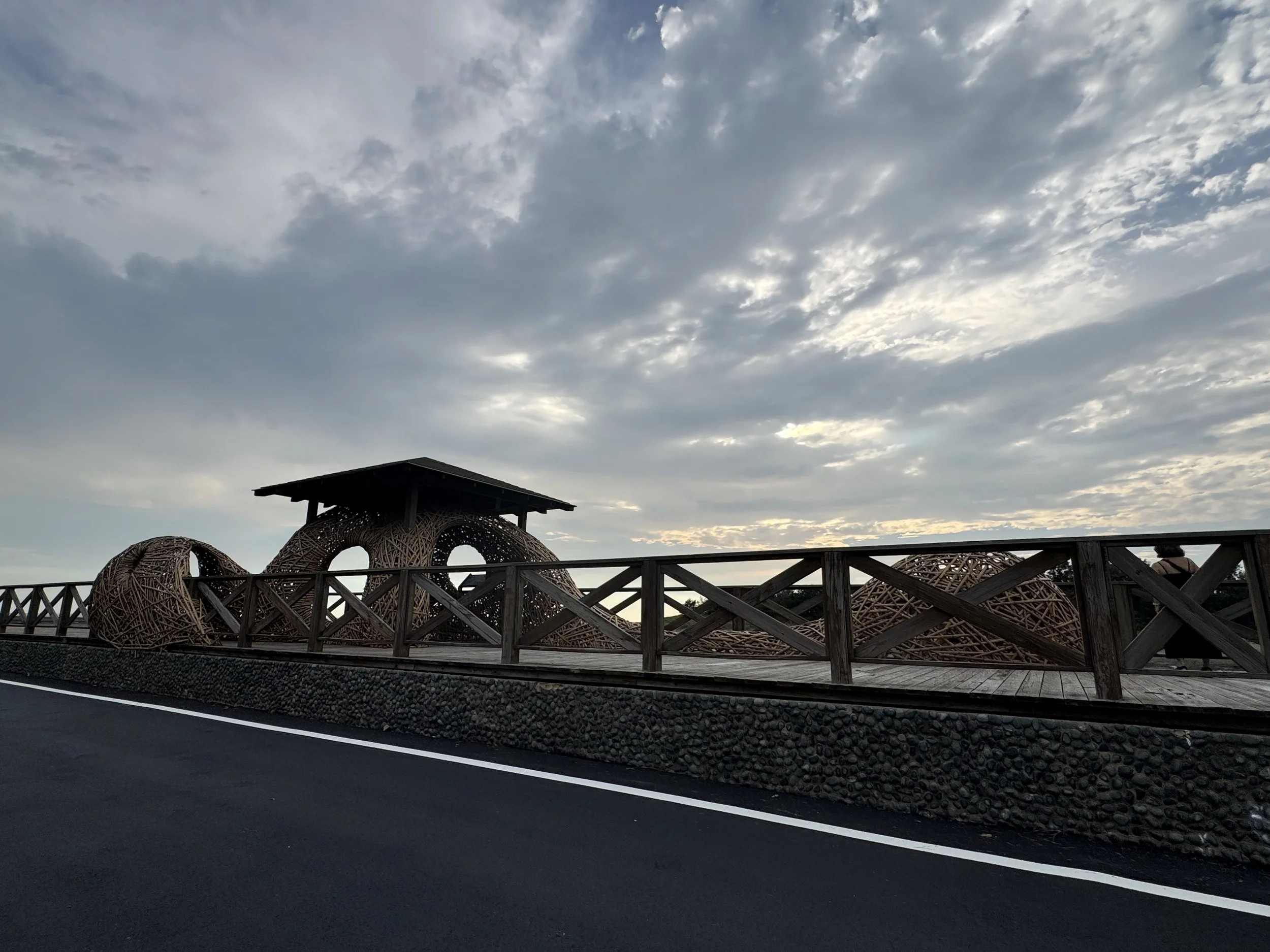
On the following day, we take part in the dress rehearsal for the launching the next day, we travel up and down the coastline visiting the built works. In total there are 72 installations by artists from 14 countries; Taiwan, Malaysia(4), Romania, Hungary, the Netherlands, Italy, France, South Korea, Spain, Bulgaria, Mongolia, Japan, the United Kingdom, and the Philippines. (Click on this link to find out more about the individual installations and artworks)
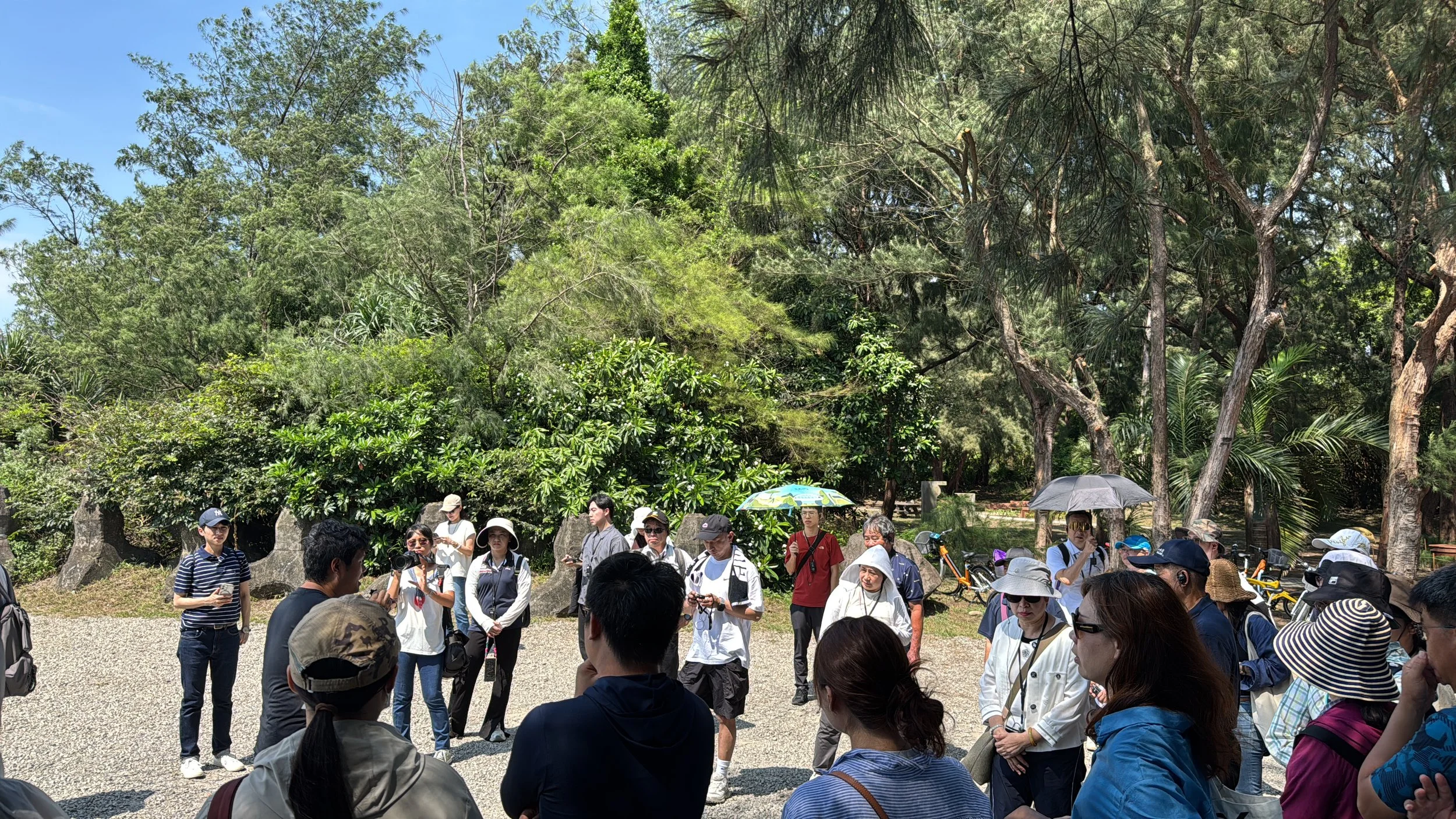
The official launching of the 2026 Taoyuan Land Art Festival saw the government officials, invested parties and artists visit each and every one of the built works. At each stop, artists and curators would briefly explain the concepts of each piece. In some instances, the local residents have already ‘colonised’ the artwork – using it to stage impromptu performances for the visitors; fulfilling one of the objectives of the Festival for local engagement and investment.
On the 6th July 2026, a design forum was held at the Taoyuan Children Art Centre (https://tmofa.tycg.gov.tw/ch) a building by the 2024 Pritzker Prize winner, Riken Yamamoto. The forum is designed to showcase lectures by prominent Land Art proponents; however, I am especially impressed by the presentations by Mr. Chiou Jeng-sheng (邱正生) and the Deputy Mayor of Taoyuan City, Mr. Su Chun-pin (蘇俊賓) who gave a presentation using 40 of his hand-drawn slides – a personal insight of the local cultural landscape and the recently completed installations. Both spoke about a continual transformation, moving beyond simply staging one successful event to using this recurring cycle to gain a deeper understanding of and connection to Taoyuan.
It is one thing to speak with heart; it is another thing to see it through and yet another thing to set the scene for those who arrive after us – and that is the final pearl of wisdom.
Written by Wee Hii Min in collaboration with Tay Tze Yong and Chai Si Yong.
PHOTO GALLERY
Share this post