Ar Andrew Tan: Revisiting Kenyalang Park
Pioneer Architects in Sarawak
This is the first in a series of interviews that BAJ will be conducting with pioneer architects from Sarawak; those who were working in Sarawak in the 60’s and 70’s.
We caught up with Ar. Andrew Tan Boo Seng when he was in Kuching recently. He now lives in Perth, and visits 2-3 times a year to look in on friends and visit the office. One of the founders/directors at Konsortium Malaysia until 1990’s when Arkitek KM Sdn Bhd was formed as a full architectural practice. He was instrumental in the design and implementation of significant projects in Sarawak in his heyday; notably the Council Negeri buildings, the BDC Housing Schemes and Shopping Centres at Kenyalang Park (Kuching) and Rajang Park (Sibu) among others.
Here's an excerpt from our interview with him.
BAJ: Let's begin with the architect first, shall we - and then progress to the architecture. You were born in Sibu in 1938, and your family moved to Kuching?
AT: That's right, we moved to Kuching when I was one. We lived in a house in Jalan Ellis , which was little more than a earth dirt track then. I started schooling in 1946; the first few years of my schooling was at St. Mary's, and then later to St. Thomas's Secondary School until 1956 when I passed with my Higher School Certificate HSC.
BAJ: When did you know you wanted to study architecture?
AT: When I was in Form 5, the school built a new Science Block - I recalled that there was a plaque on the building saying “this building was declared opened by so-and-so”. The thing which caught my attention was the architect/designer was named as well - Ngo Poh Long (later Goh Poh Long, who became a close friend of mine). This impressed me, the man must be quite learned, I thought. So after Form 6, I applied for a state-government scholarship - my parents couldn't afford to send me abroad. I was hoping for a degree scholarship to Australia or somewhere overseas, instead I was offered a 4-year scholarship to the KL Technical College. What to do? I accepted and did 3 years of studying, and a year-out working for the P.W.D. in Kuching, graduating in 1961.
BAJ: After graduating with the diploma, you returned to Kuching to work...
AT: Yes; because I accepted the scholarship, I had to serve an 8-year bond. I worked for 2 years as an architectural assistant in the drawing office. Luckily, my professor in KL recommended me for further studies; and wrote to the director of P.W.D. Kuching, a large Polish man (J. K. Wardzela) who agreed to recommend me for further studies as an architect. The training branch of the government offered me the British Commonwealth scholarship to study in the UK.
BAJ: And you applied to study in the Architecture Association (AA)?
AT: No... I didn't know about the AA, I thought I'd apply to Sheffield, or Leeds, whatever. But one of my colleagues, an English architect Harry Alderton told me, “you must go to the AA”. So, I applied to the AA, and they sent me a design exam - a 3-hour paper. I did a sketch design and sent it back, and got accepted into 4th and 5th years! (laughs)
BAJ: … and you were one of the first Sarawakians to be accepted into the AA…
AT: The first, according to the registrar! My life at the AA, 1963 to 1965, it wasn't easy - winter in London, I was homesick, I failed my first building construction exam. But I got away with an honours diploma and a certificate in tropical architecture. I returned to Kuching and continued working at P.W.D. for another 2 years, during which time my tutor and mentor from KL Tech, Norman Lehey, an Australian asked me to join him. He had a small office at the Electra House, doing resettlement schemes for SDFC (Sarawak Development Finance Corporation - a forerunner to SEDC).
BAJ: When did you venture into private practice with Norman Lehey?
AT: He had been asking me for a long time but I wasn't sure that I was suited for private practice, I had a secure job at that time. But then in 1967, he got this large housing scheme, Kenyalang Park from the Borneo Development Corporation (BDC); he really needed someone to team up with him. So I joined him in 1967, managing his small office at Electra House while he was on and off between Kuching and KL. On that same year, I got married to Helen. (laughs)
BAJ: The Kenyalang Park Shopping Centre is one of your many notable projects, a lot has changed since then - what are your thoughts about that?
AT: First of all, I think Norman did a good job; the site is hilly and he followed the topo instead of cutting the land, that's why you have the interesting landscape of houses. The houses were meant to be affordable - low to medium cost, 5-6 design types for about 1400 units. I remember the number of units because I inspected all of them during the defects liability period. (laughs) The town planning is based on the Radburn Planning, where the service roads are at the rear of the houses, leaving the front clear for pedestrians - that's why the carporch was planned at the back of the house. But now I think the situation is all reversed, people park by the main roadside.
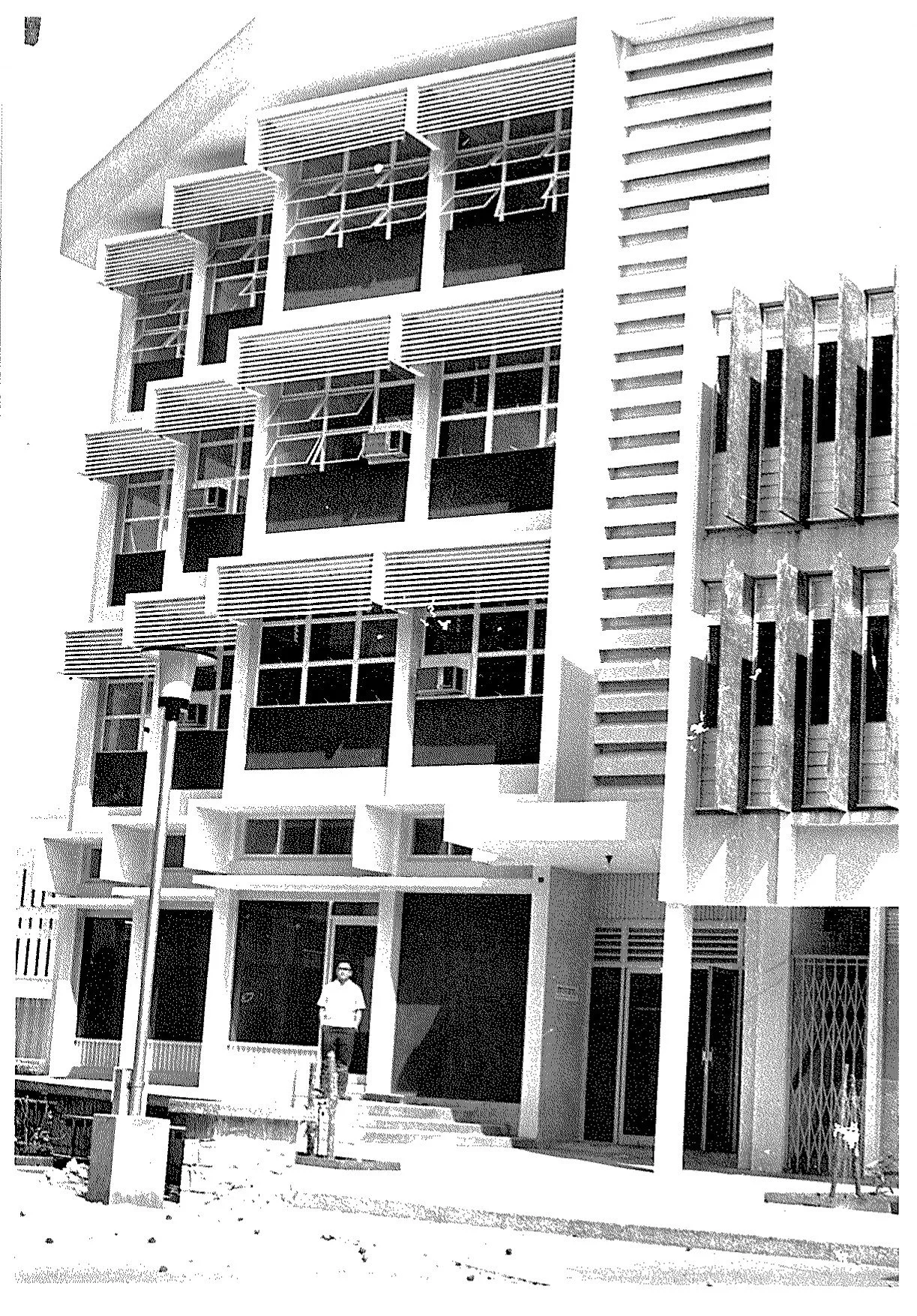
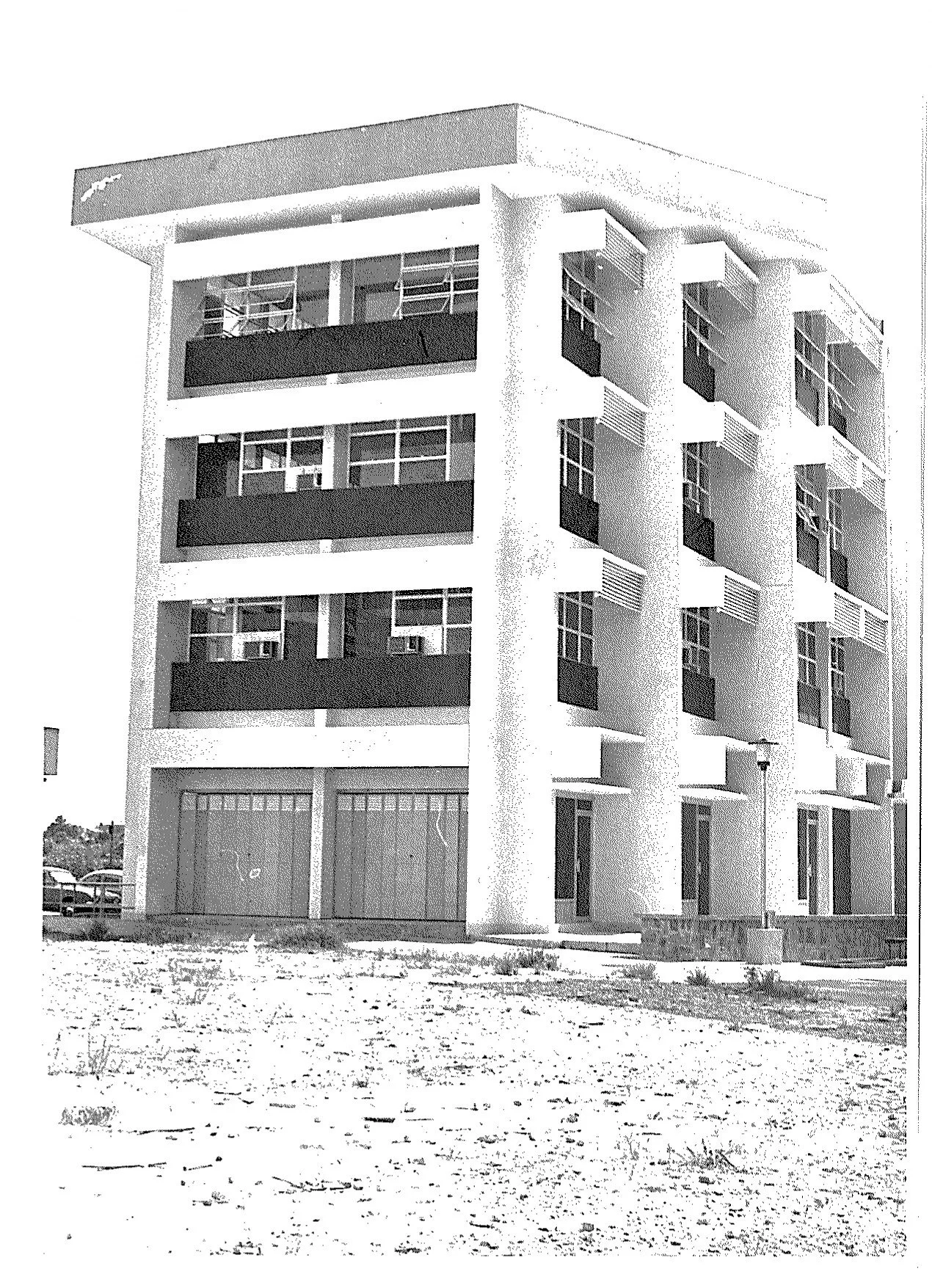
AT: Norman did the overall scheme for the houses, and left a blank site for the shopping centre. So, one day he passed it to me - Andrew, this is your project. Aiya! (laughs in disbelief) So I scraped here and there for inspiration; my main intention was the create a pedestrian precinct. The shophouses are quite straightforward, with an office block and a cinema. The office block became our office (gleeful laughter) - my friends thought we were crazy to move away from the town centre (Electra House) to the suburbs, but we thought “why not”? Something different, and we have been here since 1971. (laughs again) Someone wanted to build the cinema, so I designed it and they built it; it was very successful for many years.
AT: Nowadays, the pedestrian areas are invaded by cars, they have removed the seating and stand lamps in the centre of the mall, and there are metal awnings everywhere. I meticulously designed brick paving patten, it's more natural than the concrete imprint they replaced it with. Change is inevitable, I suppose - businesses need to do what they can to improve their trade. The barber started his business when the shops first opened, AND he's still here! In fact, I'm going to see him next week. (laughs)
BAJ: The local chapter of the Pertubuhan Akitek Malaysia will turn 50 next year; you were part of the committee during the PAMSC's inauguration in 1976 - what are your thoughts on the current architecture landscape and profession?
AT: I was part of the organising committee for the Inauguration Dinner in 1976, I can't recall my role was - the menu, maybe. It was a big do, held at the former Holiday Inn, attended by many dignitaries and VIPs (download pdf of the programme here). I would have liked to be part of PAMSC's celebrations next year, but unfortunately I have made other plans. I stopped practising actively in the 90's but some principles still hold true - one has to uphold the name and the dignity of the profession; that's why I think it's important for graduates to pass their registration exams, so that they understand their duties and their responsibilities.
BAJ: Thank you for taking the time to share your experience and expertise with our readers.
End of interview
PROJECT GALLERY